Canada’s critical minerals challenge: Why processing may matter more than mining
Canada is often described as a future critical-minerals superpower. The country possesses substantial reserves of copper, nickel, cobalt, graphite, lithium and rare earth elements, all of which are essential for electric vehicles, battery storage, renewable energy systems, defence technologies and advanced manufacturing. Yet a new analysis suggests that simply extracting more ore may not be enough to secure future supply chains.
According to research from GEM Mining Consulting, shortages of critical minerals through 2035 may depend as much on whether companies can process, refine and reliably deliver usable products as on the amount of material mined from the ground. The findings challenge a common assumption that increasing mine production alone will solve looming supply problems.
The report examined six key mineral groups: copper, lithium, nickel, cobalt, battery-grade graphite and magnet rare earths. Using projections based on the International Energy Agency’s (IEA) 2035 outlook, GEM found that expected supply will meet only 68 percent of projected lithium demand, 74 percent of cobalt demand and 75 percent of copper requirements.
In Canada, Federal and provincial governments have invested heavily in developing domestic critical mineral industries, seeking to capitalize on accelerating demand from the global energy transition. However, the research highlights a less visible vulnerability: the capacity to convert mined materials into the forms required by manufacturers.
Traditionally, discussions about mineral security focus on reserves, mine development and production capacity. GEM argues that this perspective is incomplete because it overlooks what happens after ore leaves the mine. The consultancy introduces the concept of “reliable tonnes,” suggesting that announced production capacity frequently overstates future supply. Permitting delays, financing challenges, commissioning issues, metallurgical recovery rates, customer qualification requirements and operational disruptions can significantly reduce actual deliverable output.
In one illustrative example, a project with a theoretical nameplate capacity of 100,000 tonnes annually produced only 60,200 tonnes of reliable output after accounting for real-world constraints. While not intended as a market forecast, the example demonstrates how supply estimates can diverge sharply from practical reality. This is particularly relevant in Canada, where new mining projects can require lengthy environmental assessments, Indigenous consultations, infrastructure investments and regulatory approvals before reaching full production.
Lithium and copper under pressure
The report identifies lithium as facing the greatest volume challenge, assigning it a score of 80 on GEM’s Volume Scarcity Index. Copper also faces significant supply pressure, scoring 62. These findings align with broader market concerns. Demand for lithium continues to be driven by electric vehicle batteries and stationary energy storage technologies. Copper, meanwhile, remains fundamental to electrification because of its extensive use in power transmission, electric motors and data centres.
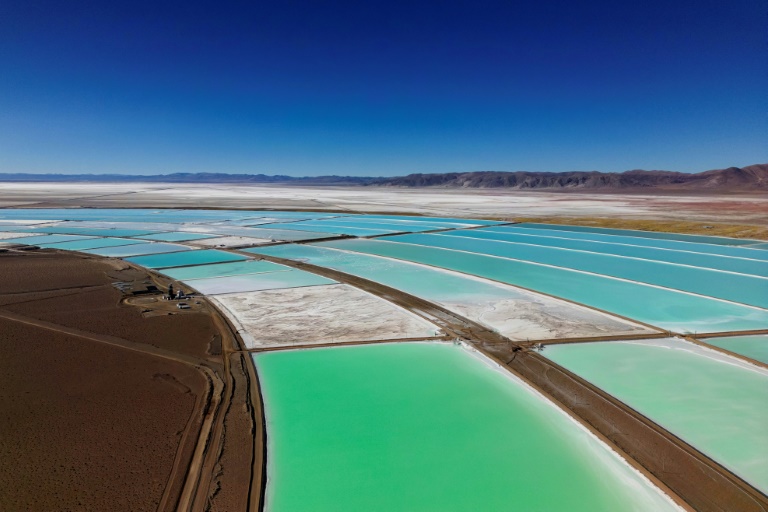
Canada is actively developing lithium resources in provinces such as Quebec, Ontario and Manitoba, while copper exploration and mine expansion projects are advancing across British Columbia and other regions. However, bringing projects online at the pace required by demand growth remains a major challenge. The lesson from GEM’s analysis is that identifying resources is only the first step. Success ultimately depends on transforming those resources into commercial products that can reach manufacturers consistently and at scale.
The hidden vulnerability of graphite and rare earths
Despite projected supply coverage of 96 percent and 107 percent respectively, these minerals received the highest supply-chain fragility scores in the study: 89 for battery-grade graphite and 95 for magnet rare earths. This apparent contradiction arises because supply-chain resilience is not determined solely by production volume. Processing capacity, technological expertise and geographic concentration also play critical roles.
Much of the world’s graphite processing and rare-earth refining currently occurs in China. As a result, even where adequate raw material exists globally, manufacturers may still face supply risks if processing capacity remains concentrated within a limited number of jurisdictions. For Canada, this represents both a challenge and an opportunity. The country has sought to build domestic processing capability in partnership with allies including the United States and members of the European Union. Expanding refining and materials-processing infrastructure could help reduce global dependence on single-country supply chains while adding economic value to Canadian mineral production.
The report also highlights the need for mineral-specific strategies. Nickel appears relatively well supplied, with projected coverage reaching 92 percent of requirements by 2035. Yet it receives a chain-fragility score of 66 because refining remains heavily concentrated in Indonesia and China. Cobalt presents a different risk profile. Supply coverage reaches only 74 percent of anticipated demand while its fragility score climbs to 78. In other words, the market faces both volume shortages and supply-chain vulnerability simultaneously.
Canada produces both nickel and cobalt and has positioned itself as a lower-risk source of supply compared with some competing jurisdictions. However, the analysis suggests that mineral production alone may not be sufficient to create resilient supply networks.
The broader message emerging from the research is that critical-mineral security should be viewed as an integrated industrial challenge rather than a mining challenge alone. For minerals such as lithium, copper and cobalt, governments and industries may need to accelerate project development and improve reliability of production. For graphite and rare earths, greater emphasis may be required on processing technology, refining capacity and diversification of supply chains.
Canada’s Critical Minerals Strategy already recognizes many of these issues by supporting exploration, mining, processing and manufacturing. However, if projected shortages materialize, the competitive advantage may increasingly belong to jurisdictions capable of moving material efficiently from mine to finished industrial product.
Canada’s critical minerals challenge: Why processing may matter more than mining
#Canadas #critical #minerals #challenge #processing #matter #mining