The live-event industry’s next growth story is close to home
This article has been reviewed by a Digital Journal editor and may be licensed for reuse.
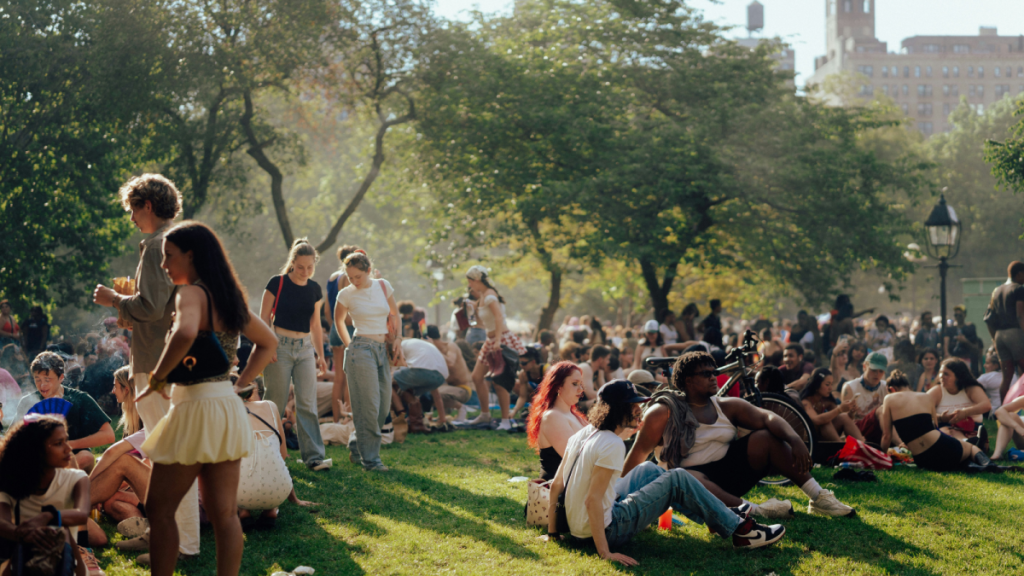
Live entertainment is facing a strange contradiction. Today, audiences have more access to entertainment than ever, yet the appetite to gather in person is intensifying. Eventbrite’s 2026 Social Study found that 79% of 18-to-35-year-olds plan to attend more events this year, while 89% say it matters that an event helps them feel connected to their local community.
The economics of major live entertainment are becoming harder to ignore. Deloitte found nearly 60% of surveyed consumers had skipped a live event they wanted to attend because the cost was too high, terming it “Funflation,” a defining crisis for modern entertainment. Those who did attend reported paying an average of $150 for a concert ticket and $132 for a professional sporting event.
Demand is shifting from passive spectatorship toward participation. Eventbrite reports that 33% of respondents want more opportunities to take part rather than simply watch, while half say a cause-based event gives them a reason to attend. An event does not have to dominate a market to matter. It has to give a particular community a reason to leave the house.
Local events may be especially well positioned because they offer something national entertainment brands cannot manufacture easily: familiarity. A food festival can become part of a city’s calendar, while a holiday lights display can become a seasonal ritual.
Ed Levine has watched that relationship change alongside the media business. After 36 years as CEO of Galaxy Media Partners, Levine has now retired from the company, but remains active in the industry, launching BigDawg Events to focus on the future of experiential entertainment and live events. His experience has led him toward a new focus on the event economy, particularly in growing U.S. markets where established local concepts can be developed without stripping away their identity.
“People want to do stuff in their community, where they live,” Levine says. “I think there are certain identifiable places that we can go to offer audiences something new.”
The shift became unmistakable during and after the pandemic, Levine argues. COVID accelerated the move from traditional media toward digital consumption while making live gatherings impossible. Once people could meet again, demand returned with force. Now, Levine notes that the rapid rise of AI is intensifying that need for human connection, as more interactions, content, and experiences become automated and screen-based.
“In this increasingly digital environment, people tend to worry that AI will replace their events, but that face-to-face experience offers something technology cannot replicate: genuine human interaction,” Levine says. “It made the events bigger and better because there was a real desire to interact with other humans.”
He points to a Syracuse food festival that grew to about 200,000 attendees annually, reinforcing his belief that focused concepts can become major community attractions. A holiday lights event produced with a Syracuse municipality drew roughly 40,000 cars on average. None of them started as mass-market products, Levine notes. All three were built first by independent entrepreneurs before Galaxy Media took them further. “There’s a strange little niche that’s really not very little,” he says, referring to the mom-and-pop event industry.
Unlike the concert business, dominated by industry giants, this corner of live entertainment remains fragmented, local, and, according to research from Events Industry News, still built on relationships. Many local operators have built profitable concepts without the infrastructure or appetite to expand across markets. Levine sees an opportunity to acquire proven events, retain their builders, and strengthen operations while preserving local character.
“We would not want to acquire something that’s broken and try to fix it. We want to take something that an owner has proudly built and developed over many years,” he explains.
Scale, in this model, is not the enemy. Indiscriminate scale is. Levine argues that a successful concept can travel if organizers resist treating every market as interchangeable. An event can be replicated operationally while being adapted to its community.
Audience expectations do not stand still. Levine recalls bringing back a concert format that once attracted thousands of people and finding that its older audience wanted a different experience, prompting changes such as additional shade and premium seating. “Think about what worked 20 years ago for a 20-year-old. That person’s now middle-aged. Naturally, their preferences have changed,” he adds.
For organizers, Levine believes details can determine whether an experience feels worth the trip. “You’ve got to deliver quality,” he states. He puts particular emphasis on logistics, arguing that small operational decisions shape an attendee’s memory as much as the headline attraction.
The opportunity is to rethink where scale begins. It can start with a community that already cares and an event strong enough to earn repeat attendance. Levine believes that model can grow across markets while retaining the local character that made it work. “You want to create quality,” he says. “That’s what we want to do.”
The post The live-event industry’s next growth story is close to home appeared first on Digital Journal.
The live-event industry’s next growth story is close to home
#liveevent #industrys #growth #story #close #home