New mmWave communications module targets the growing UAV and defence market
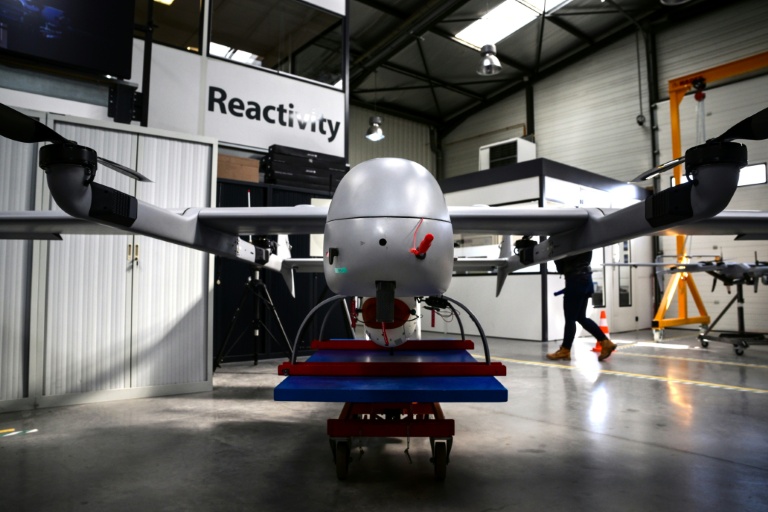
As unmanned aerial vehicles (UAVs) become increasingly important for defence, infrastructure monitoring, public safety and commercial operations, attention is shifting from the aircraft themselves to one of their most critical enabling technologies: communications.
Recently Peraso Inc. (NASDAQ: PRSO), a company specialising in millimetre wave (mmWave) wireless technology, announced a new communications module designed specifically for UAVs, autonomous systems and defence applications. The product, called the PRM2145, aims to provide high-speed, low-latency wireless connectivity in environments where traditional communications systems may struggle.
The launch reflects broader trends across both military and civilian sectors, where drones are moving beyond simple remote-controlled platforms and becoming sophisticated autonomous systems capable of gathering intelligence, coordinating activities and transmitting large quantities of real-time data.
Why communications matter
The value of a drone increasingly depends on its ability to communicate reliably. Modern UAVs frequently carry high-definition cameras, thermal imaging systems, radar payloads and environmental sensors. These generate substantial amounts of data that need to be transmitted rapidly to operators or other autonomous systems.
In military settings, communications links support command and control functions and areas like intelligence, surveillance and reconnaissance (ISR). Commercial applications create similar demands. Drones inspecting pipelines, electrical infrastructure or transportation networks often require continuous transmission of images and sensor information. Emergency services increasingly rely on drones during search-and-rescue operations, wildfire monitoring and disaster response.
Peraso’s solution uses 60 GHz millimetre wave technology, a part of the electromagnetic spectrum capable of supporting extremely high data rates. Unlike conventional radio systems that operate on lower frequencies, mmWave communications use much shorter wavelengths. These wavelengths can support gigabit-per-second throughput while enabling more focused and directional transmissions.
Millimeter Wave (MMW) technology, also known as E-band or V-band, is increasingly used for high-bandwidth applications, from enterprise data centres to individual smartphone users.
The company says these capabilities are particularly valuable for airborne systems where payload weight, available power and physical space are often constrained. Ronald Glibbery, Chief Executive Officer of Peraso, said the product was specifically developed to address the unique requirements of UAV communications, particularly in environments where reliability, security and resilience are critical.
One of the most interesting aspects of the technology is its potential security advantage.
The use of advanced beamforming enables communications to be transmitted through highly focused directional links. Unlike traditional omnidirectional radio transmissions, these focused beams are potentially more difficult to detect, intercept or disrupt. This is becoming increasingly important as concerns grow regarding electronic warfare and signal jamming.
Conflicts in Eastern Europe and elsewhere have highlighted how vulnerable conventional drone communications can be to interference. Military planners are therefore seeking technologies capable of maintaining reliable communications in contested environments.
The increasing use of autonomous systems in defence operations is creating demand for communications systems that combine high bandwidth with resilience and security.
A Canadian perspective
For Canada, developments in advanced UAV communications are particularly relevant. The country’s vast geography presents unique monitoring and surveillance challenges. Border security, Arctic sovereignty, remote infrastructure inspection and environmental monitoring all require communications systems capable of operating over long distances and in demanding conditions.
The Canadian Armed Forces have increased their focus on autonomous and remotely operated systems in recent years, while federal agencies continue to explore drone applications for Arctic monitoring and situational awareness.
Canada also faces growing environmental monitoring demands. The severity of wildfire seasons across several provinces has increased interest in drone-based detection and assessment technologies. Reliable high-bandwidth communications could enable more effective transmission of imaging and sensor data from affected areas.
The technology could also have implications for resource industries operating in remote locations. Mining, energy and transportation sectors increasingly use UAVs to inspect assets where traditional communications coverage may be limited.
Overall,the UAV market continues to expand globally. Industry analysts project strong long-term growth driven by increasing adoption across defence, logistics, agriculture, industrial inspection and emergency response sectors. As platforms evolve, communications are becoming a larger portion of overall system capability. The ability to move data quickly, securely and reliably is often as important as the sensor payload itself.
New mmWave communications module targets the growing UAV and defence market
#mmWave #communications #module #targets #growing #UAV #defence #market