What it takes to keep growing as a technology leader
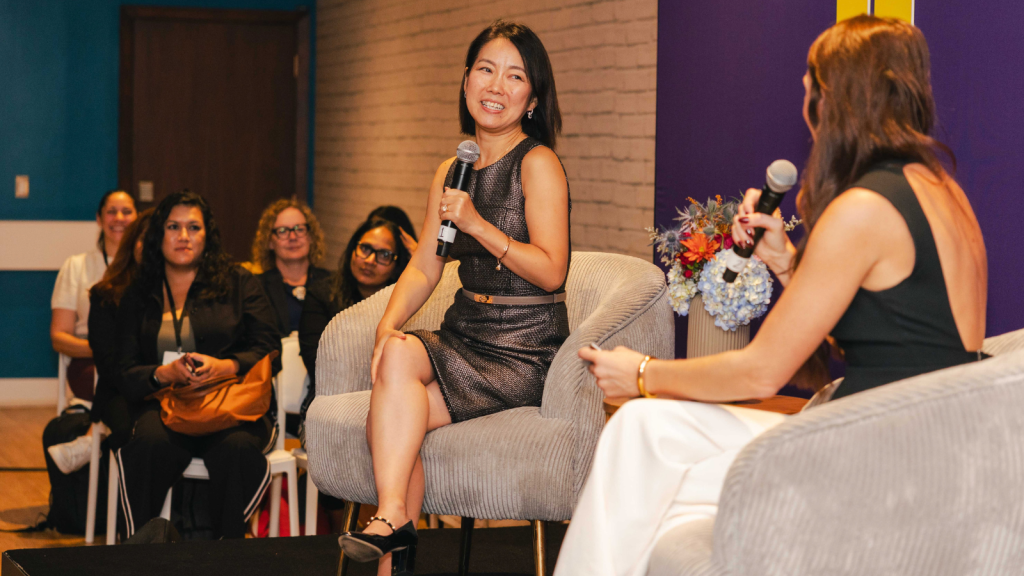
“The CIO is very lonely,” said Janet Lin, senior vice president and CIO of EQ Bank.
“Nobody else talks about tech. You are the only one. If you are the only one who geeks about data center networks, well, nobody understands that.”
Moving into the C-suite means widening the lens to the business, the financials, and the outcome the company is trying to reach. Technology, in her words, becomes “an enabler of that.”
In conversation at Nrth Festival (formerly Elevate) with Toast CEO April Hicke, Lin talked about self-advocacy, career risk, AI learning, and what it takes to keep growing once technology leadership becomes an executive job.
For Lin, getting to the C-suite meant widening her understanding of the business, its financials, and goals, with tech as the “enabler” of these. A means to an end, if you will.
It also meant taking on some big opportunities first.
Lin spent 10 years running IT at PC Financial, with successes like launching Apple Pay and Android Pay. When Loblaws acquired Shoppers Drug Mart, she was asked to run the merged PC Optimum points program, with its 20 million users.
She hesitated for about “two seconds,” she explained, which seems fair when you consider how many millions of Canadians probably used one or both of the loyalty programs.
“Who in this country doesn’t use PC Optimum?” she joked.
It was a huge opportunity, and she wasn’t about to let it pass.
“Always be ready,” she said. “Just jump on it, and you will be fine.”
The harder part, she admitted, has sometimes been asking for those opportunities in the first place.
“Do you want my honest answer? I suck at advocating for myself,” she said.
Lin grew up in a culture where you’re told that if you did your job well, people would recognize it.
It’s an idea she now calls “completely wrong.”
“You have to promote yourself,” she said. “You have to ask for what you deserve.”
The two pressures meet at the executive table. Lin can be the only person in the room carrying the technology conversation, while still having to advocate for herself and the opportunities she wants.
Learning AI while leading through it
The learning curve doesn’t stop once you reach the top.
When generative AI arrived in workplaces everywhere, there wasn’t a training manual for Lin to leverage.
“Today’s CIO’s job or CISO’s job has become so challenging, because AI basically disrupted every industry, disrupted technology, disrupted the traditional software business, and generated huge risks on cybersecurity,” she said.
Working around an already full CIO role, she had to learn all about it, including using her commute to talk through ideas with AI tools.
EQ Bank has since put more structure around that learning, said Lin, including AI training organized by the complexity of each job (White Belt, Blue Belt, Black Belt) and separate training and certification for executives (Executive Belt).
The response surprised her.
“The team actually are very motivated,” she said, adding that employees were posting their certifications once they completed them.
Contrast that enthusiasm against the backdrop of AI training in Canada’s workforce.
A 2025 KPMG survey found 83% of Canadian employees want or need to improve their generative AI skills, while fewer than half said their employer provides enough training to use the tools effectively in their role.
Hicke also brought up the issue of who stands to feel AI’s impact most, asking Lin how companies could build a more equitable future as AI changes work.
According to the International Labour Organization, across countries with available data, jobs dominated by women are nearly twice as likely to be exposed to generative AI as those dominated by men.
Lin reached beyond training.
Inside companies, Lin also wants leaders thinking less about building AI models and more about what happens when AI has to work at scale. She said executives need to spend more time on AI harness, or the layer around the model that connects it to company data, tools, permissions, and controls so it can be used reliably at scale.
Asked from the floor which agent had been most useful to her, Lin picked the one that preps her for one-on-ones. It reads the emails coming from her manager, works out what he or she cares about, and sets that against what she’s been working on.
“The agent actually captures more data than us human beings,” Lin said.
AI can collect information, summarize it, and help prepare for a conversation. Confidence still comes from the person having it.
What the next generation is walking into
Lin’s 16-year-old daughter runs a non-profit that teaches girls about AI, and Lin offered it up from the stage to anyone in the room with a daughter.
She said she worries about how different the working world will look for that generation, especially as companies start mixing human workers with AI systems.
“We are the first generation that will be managing real human beings and virtual employees,” Lin said.
The people entering the workforce next will be learning how to work in an environment most current leaders are still figuring out themselves.
Lin has spent years trying to put more structure around who gets prepared for leadership.
She founded Loblaw’s Women in Technology community with five women. By the time she left, she said it had grown to more than 500. The group developed programs around education, mentorship, recruitment, and building internal and external pipelines.
That structure reached succession planning, too. For every critical succession plan, Lin said leadership must identify both a male and a female candidate.
“They had to fight for themselves along their career,” Lin said of what women hear from other women who have already made it.
Lin’s comments on AI training and succession had something in common. Both start to wobble when the plan is basically “people will figure it out.”
Neither happens because somebody sends an email saying AI skills are important or that the company wants more women in leadership. Lin described systems that make people learn, identify candidates early, and give leaders something concrete to work with.
Final shots
- If AI learning still depends on what leaders can squeeze into a commute, the organization hasn’t really built a learning model yet.
- Succession planning gets more useful when the candidate pool is shaped before a vacancy forces the issue.
- The next generation will enter workplaces where managing people and managing AI systems overlap. Today’s leaders are learning how that works in real time.
What it takes to keep growing as a technology leader
#takes #growing #technology #leader