Skill Make Wound 12,000 Turns Into an EMP That Fries Real Gadgets


Skill Make spent most of his latest video doing the unglamorous part of high-voltage work: counting wire. A ferrite core got measured, a layered cylinder got designed around it, and a Formlabs printer laid that form down in clear resin. Hair-thin 0.1 mm wire then went on in sections of about 800 turns, tracked with a modified tally counter, until the secondary reached 12,000 turns.
The primary coil was created using nine thick rounds of wire. On paper, that ratio would multiply the input voltage by about 1333, but in reality the thin wire is a rebellious sort and throws up its hands in resistance, so the real output ends up being a lot lower, which is why the whole coil was stuffed into some epoxy with a bit less hardener in it than usual, then vacuum sealed to ensure there weren’t any air bubbles lurking that could become a path for a spark to take advantage of.

Bambu Lab A1 mini 3D Printer + LED Lamp Kit, Ready-to-Use for Beginners
- A1 mini + LED Lamp Kit for Creative Light Projects: Bring your ideas to life with the included LED Lamp Kit. Simply print compatible lamp models and…
- The Perfect 3D Printer for Beginners: A1 mini 3D Printer is designed to make 3D printing easy from day one with automatic calibration, simple setup…
- Experience the Bambu Lab Ecosystem: Access MakerWorld’s huge library of ready-to-print models, manage prints through the Bambu Handy app, and enjoy…
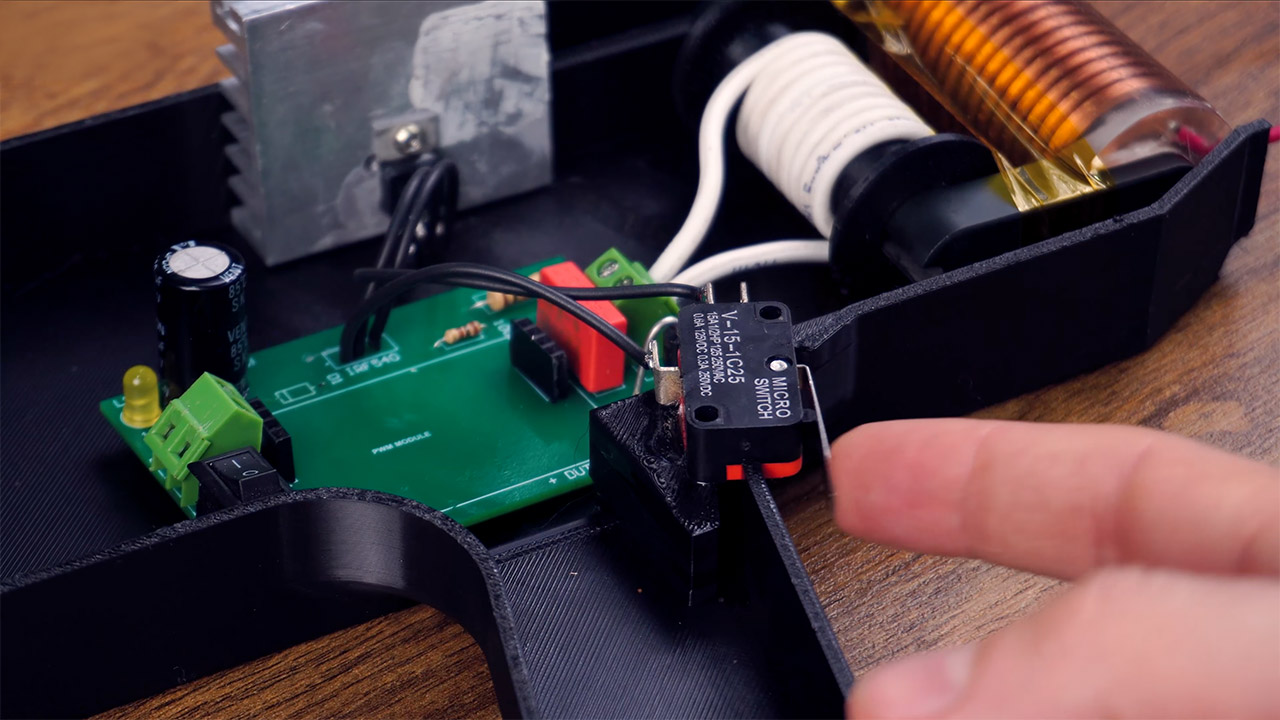
A flyback driver kept the front end very simple. A PWM module set to 12.5khz and 70% duty cycle powered a MOSFET, first from a 9v bench supply and then from a battered old 8V battery pack. High voltage diodes converted the transformer’s AC output to DC because the next stage is finicky about being charged with AC, as it is an eight-step Marx bank made of 15kv nanofarad capacitors. There are resistors between the capacitors to ensure that each one receives nearly the same voltage, giving the spark gaps a good cause to fire.
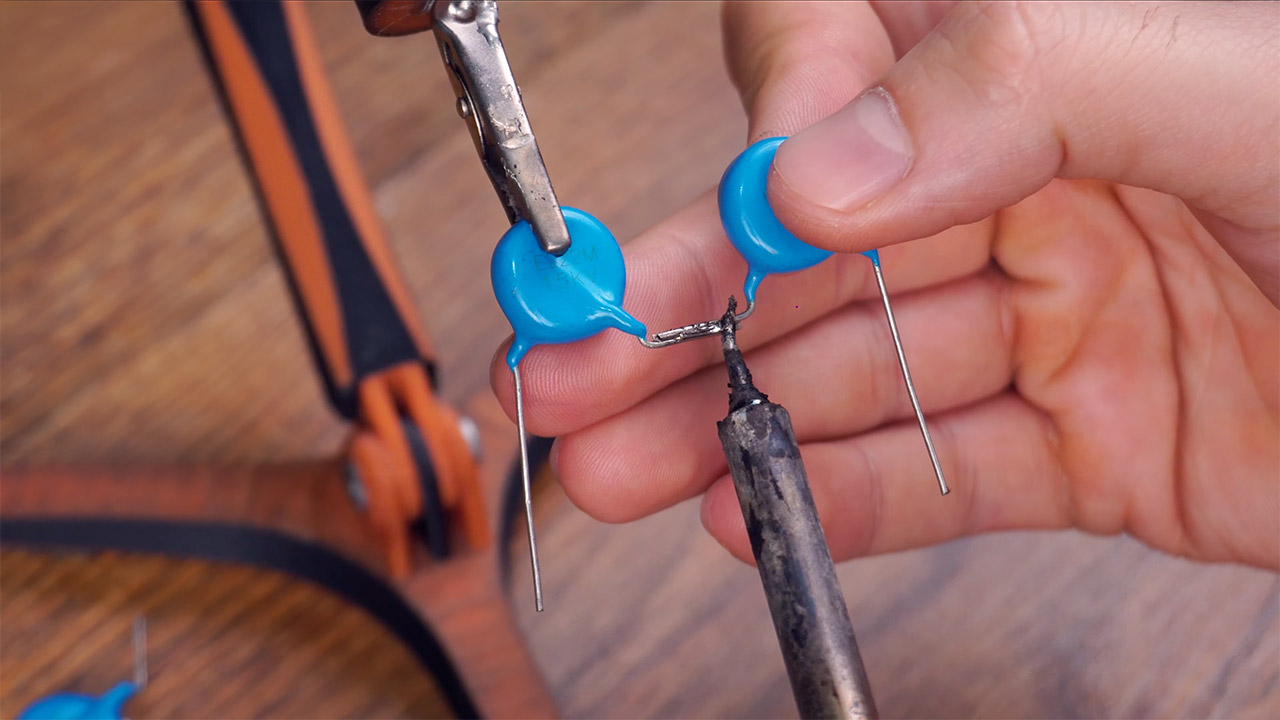
Capacitors charge side by side. When the gaps ultimately go bang, they become the path for the stored energy to follow, resulting in one large, brief, sharp pulse. Cylindrical coils tend to waste a significant portion of the pulse inside the winding. A flat pancake coil sends more of the magnetic field out the front . A metal plate behind the pancake simply sorts out the backward half of the field, similar to how a wireless charger prevents energy from spilling over into the table. Skill Make took the time to cover the camera in aluminum foil before capturing any shots, creating a makeshift Faraday cage to keep the recording equipment from getting fried.
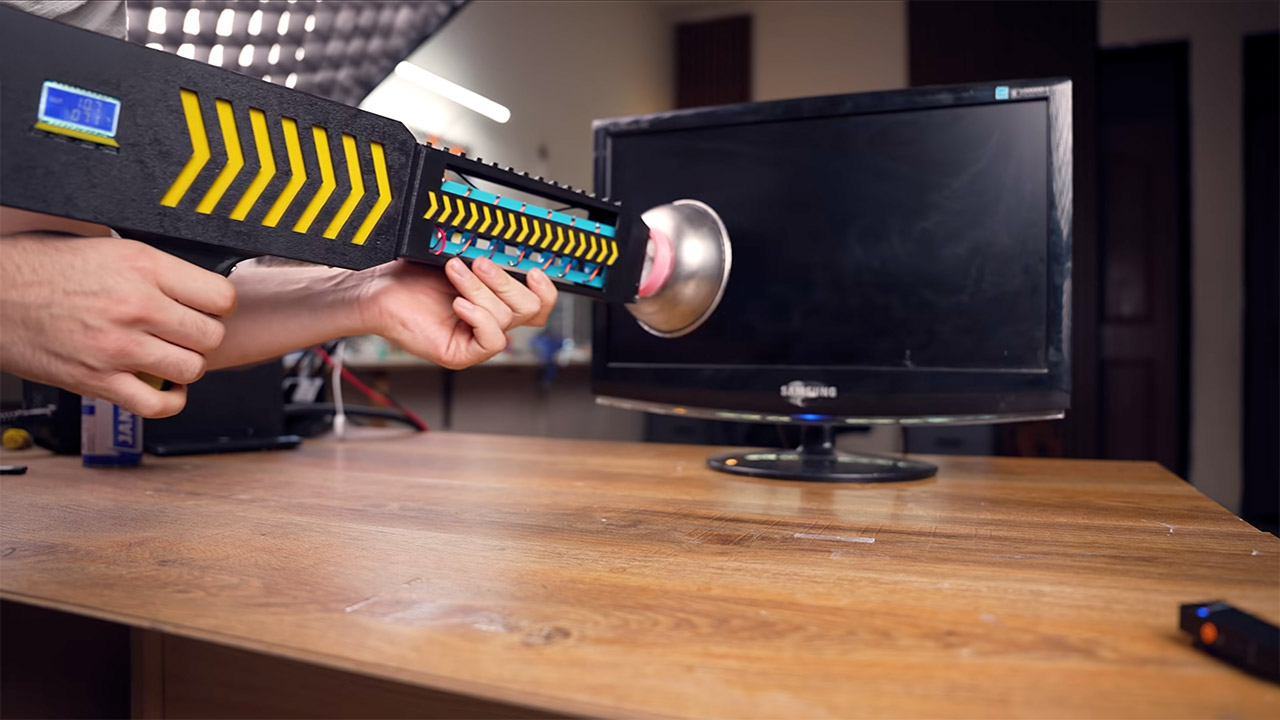
The first item was a digital caliper, which was held close before suddenly going lifeless. Next was a phony Apple Watch, which was still in good condition until the pulse detected it. The old monitor followed suit. None of this stuff does much when it’s more than a few inches away; movies like to think of an electromagnetic pulse as a citywide switch, but this build is actually a bench experiment: store a load of voltage, then dump it in a fraction of a second and watch as the collapsing field pushes current into whatever circuit is nearby. However, sensitive electronics and human hands do not get along well.
Skill Make Wound 12,000 Turns Into an EMP That Fries Real Gadgets
#Skill #Wound #Turns #EMP #Fries #Real #Gadgets