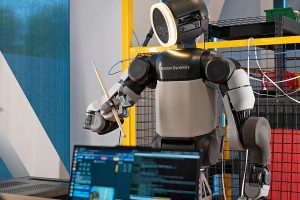
Q&A: Is robotics replacing AI as the next investment darling?
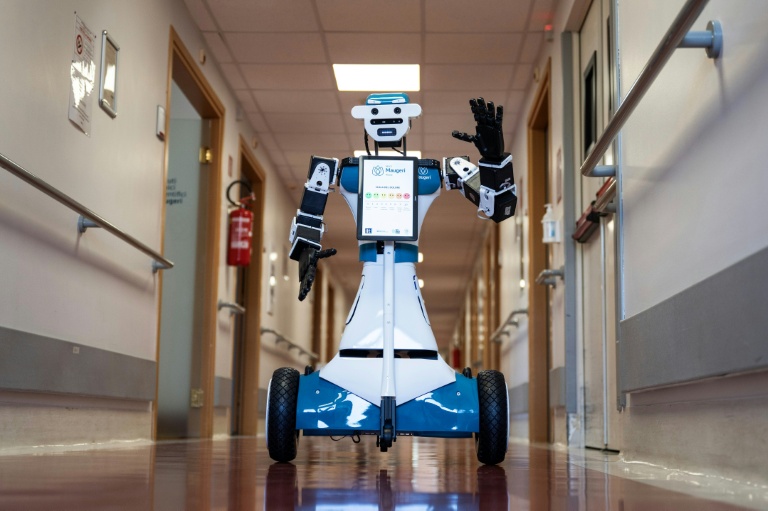
Growing up in the ‘80s and watching the Rosey the Robot clean, cook and fold laundry for the Jetson family, the thought of having a personal robot maid was nothing more than science fiction. Then, everything started to change in 2002, when we were introduced to the iRobot Roomba vacuum. Today, we have “smart” appliances/homes, autonomous drone delivery and self-driving cars. So, what’s next for personal home robotics?
Digital Journal sat down with one of the leading experts in robotics, Andrew Kang, CEO of RoboStrategy (NASDAQ BOT), the first publicly traded fund focused exclusively on robotics and physical AI, to discuss where the robotics industry stands today, and why physical AI could reshape nearly every sector of the economy.
Digital Journal: Many people view AI software as the next technology revolution. Why do you believe robotics deserves equal attention?
Andrew Kang: Robotics represents AI moving from the digital world into the physical one. While software has already transformed knowledge work, robots have the potential to automate physical labour across industries. Unlike many physical technologies that solve a single problem, robots can automate physical work wherever labour is required. In many ways, robotics is productizing physical labour, much like cloud computing productized computing power. Every economy depends on people performing physical tasks, so the addressable market extends far beyond traditional industrial automation. In 2025, Morgan Stanley reported that the global market for humanoid robots could reach $5 trillion by 2050. As AI continues to improve, robots will become capable of handling increasingly complex work, dramatically expanding the number of use cases. Today the sector is still relatively small compared with other technology markets, but innovation is happening rapidly among private companies. That combination of early-stage development and enormous long-term opportunity makes robotics one of the most compelling areas to watch over the next decade.
DJ: When do you expect robots to become a common part of everyday life?
Kang: As with all new technologies, widespread adoption will likely happen gradually rather than all at once. Industrial deployments are already scaling, particularly where labour shortages exist, and we will see exponential growth there in the coming years. I expect consumer adoption to take only slightly longer, primarily because robots operating around families require higher safety standards and far greater production capacity. However, I expect robots to start becoming more commonplace in homes, businesses and public settings as early as 2030. Meanwhile, the next several years will focus on scaling manufacturing and refining the technology.
DJ: What are the biggest technical hurdles standing between today’s prototypes and large-scale deployment?
Kang: Software continues to improve rapidly, but manufacturing remains one of the biggest bottlenecks. Producing millions of robots requires supply chains that don’t yet exist at that scale. Components such as actuators, sensors and specialized mechanical systems must be manufactured reliably and economically in enormous volumes. Building that industrial infrastructure will take time, but it’s a challenge measured in years rather than decades.
DJ: What characteristics do you look for when evaluating early-stage robotics companies for investment?
Kang: Our first step is to determine whether the market opportunity is large enough to support the business that is likely disruptive and transformational. Then, since revenue is usually non-existent at that stage, the next focus would be on the quality of the founding team. It is critical to study founders’ track records, their ability to recruit exceptional technical talent and whether they’ve consistently executed against ambitious goals. Those qualities often prove to be stronger indicators of long-term success than any short-term financial metrics.
DJ: Which industries do you believe will adopt robotics first, and why?
Kang: The earliest large-scale adoption will likely occur in industrial environments where robots perform repetitive, well-defined tasks. Today’s AI models are becoming increasingly capable, but they’re still most effective when operating within structured settings. Factory work, warehouse operations and manufacturing often involve repeating the same motion thousands of times, making them ideal applications for robotics. As AI models become more generalized and capable of handling greater complexity, robots will gradually expand into healthcare, hospitality and eventually everyday household tasks.
DJ: Looking ahead five years, where do you see the greatest opportunities within robotics?
Kang: Robotics is unique because it has applications across virtually every industry. AI software continues to grow rapidly, but physical AI hasn’t yet experienced the same level of commercialization. Robots essentially transform physical labour into a scalable technology platform, opening opportunities in manufacturing, logistics, healthcare, energy, hospitality and even space exploration. Because the potential use cases are so broad, we’re only beginning to understand how significant the market could eventually become.
DJ: Defense spending on autonomous systems is increasing around the world. How do you see military demand influencing robotics development?
Kang: Defence will undoubtedly become an important application for robotics because governments are naturally interested in technologies that strengthen capabilities. At the same time, like many innovations, many robotics functionalities are inherently dual-use, meaning they can serve both civilian and military purposes. While commercial markets such as manufacturing and consumer applications remain enormous opportunities, companies should recognize that government interest will likely accelerate development in certain technologies, even if that wasn’t their original intention.
DJ: Which areas of robotics do you believe remain the most underserved today?
Kang: Industrial robotic arms and collaborative robots represent a major opportunity, particularly if countries like the United States want to expand domestic manufacturing. Not every task requires a humanoid robot capable of walking. Many valuable jobs are stationary, whether in factories, laboratories, hospitals or commercial kitchens. Developing flexible robotic systems that can automate these environments could have an enormous economic impact while helping manufacturers address ongoing labour shortages.
DJ: Our final question… If you had a robot in your home, what would you name it?
Kang: Charles. That sounds like a good name for a butler-bot!
Q&A: Is robotics replacing AI as the next investment darling?
#QAIs #robotics #replacing #investment #darling