NY’s climate mandates may send fees in affordable Co-Op City complex soaring from $950 to $4K
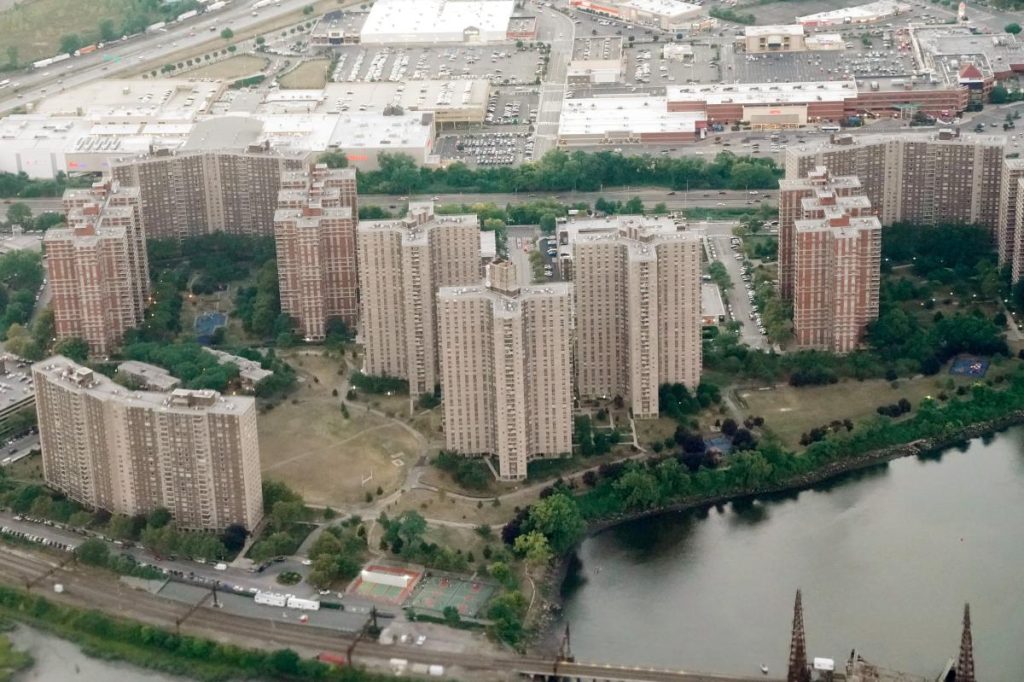
A top Co-Op City official warned that residents could pay four times more in monthly maintenance charges if New York State’s controversial green-energy laws aren’t peeled back.
Jeffrey Buss, Co-Op City’s general counsel, claimed monthly maintenance fees could skyrocket from $950 for a one-bedroom to more than $4,000 to pick up the tab for the edicts.
Some 50,000 working and middle class residents of The Bronx complex, which is America’s largest residential cooperative, could see their affordable digs become unaffordable if the co-ops are forced to dish out as much as $1 billion to rewire buildings and revamp infrastructure, he said.
“Carbon reduction is important,” buss said. “But you can’t achieve it by destroying affordable housing,”
Co-Op City, developed in the 1960s under a state affordable housing initiative, has an on-site power plant fueled by natural gas that helps supply electricity, heat, hot water and air conditioning to the development’s 15,372 residential units across 35 high-rise buildings and seven townhouse clusters through 26 miles of pipes.
That’s all included in the co-ops’ monthly maintenance fees, but if the buildings have to shift to other sources the complex may have to pay for energy costs “at a price which would exceed existing costs by nearly 500% per year,” he said.
Its power plant is so efficient that the Riverbay Corporation, Co-op City’s corporate entity, sells its surplus gas to Con Edison.
“It’s a genius system. We’re highly efficient from an energy standpoint,” Buss said.
But the state’s Climate Leadership and Community Protection Act of 2019, coupled with a city green energy law, would force Co-Op City to shut down its natural gas power plant and replace it with carbon-free clean energy sources such as wind, solar, hydropower and battery storage, he said.
The law requires New York to reduce carbon emissions by 40% by 2030.
Seventy percent of the state’s electricity must come from renewable sources by 2030 and achieve net-zero emissions by 2040.
Co-Op City, because it falls under the state’s Mitchell-Llama affordable housing program, would need to be in compliance by 2035 with city’s Local Law 97 greenhouse emissions reduction program, Buss said.
Buss said it is technologically impossible for Co-Op City to completely replace its gas-fueled plant with cleaner energy sources. He said renewable, fossil-free energy sources such as solar, wind, or geo-thermal energy aren’t capable to meet the heating, cooling and electrical demands of Co-Op City.
“Although our co-generation turbines can run on 30% hydrogen,” Buss said, “there is no hydrogen supply…I don’t know the solution.”
Co-Op City is diversifying by installing solar panels on top of its garages, which would result in the largest urban solar project in the US. But solar energy would only meet a fraction of Co-Op City’s power needs, he said.
Buss also said it’s “foolish” for an energy self-sufficient Co-Op City to rely on a less reliable off-premises power grid to deliver cleaner power to the giant housing complex.
Gov. Kathy Hochul and the state Legislature should amend the law to “exempt” or delay the mandates “until technological solutions exist to comply,” Buss said.
Follow live updates on Mayor Zohran Mamdani’s socialist agenda and the latest in NYC politics
Co-Ops and Condo United, a coalition including Co-Op City and 20 other housing complexes representing hundreds of thousands of residents, also sent a letter to Hochul and the state Legislature, urging delaying the green mandates.
Hochul’s office on Sunday agreed with Co-Op City that the law must be relaxed to avoid socking New Yorkers with higher utility costs during the transition from fossil fuels to cleaner renewable energy.
Hochul has proposed pushing back the deadlines and changing the methodology used to calculate New York’s emissions as part of state budget negotiations, which have blown past an April 1 adoption deadline.
“Reckless policies coming out of Washington D.C. are driving prices up across the board, and struggling New Yorkers cannot be expected to shoulder higher costs,” said Ken Lovett, the governor’s senior communications advisor on energy and the environment.
“That’s why Governor Hochul has adopted an all-of-the-above approach to energy and is pushing the Legislature to enact common-sense reforms to the climate law to help keep the lights on and costs down for all New Yorkers,” Lovett added.
Hochul’s plan would not require the drafting of new regulations by the end of 2030 instead of now to ensure a more reasonable time period toward climate targets.
Her proposed amendment would eliminate the 2030 targets as required under the current law and instead focus on hitting clean energy milestones in 2040 and 2050.
The affordability vs. green energy debate has become an explosive issue as Democrat Hochul seeks re-election to a second full four-year term as governor.
State regulators recently allowed Con Edison to hike electric bills by 10.4% and inflate gas bill 15.8% – costing the average Big Apple resident an eye-watering $600 more per year by 2028.
Her Republican opponent Bruce Blakeman is blaming Hochul for utility rate hikes and for the “green energy scam,: the climate change law approved in 2019 when she was lieutenant governor under her predecessor, then-Gov. Andrew Cuomo.
But environmental activists and some Democratic allies are in the legislature are resisting a major rollback, saying Hochul and critics opposed to the law are using the threat of inflated costs as a scare tactic.
Two Bronx state legislators who represents Co-Op City — Sen. Jamaal Bailey and Assemblyman Michael Benedetto — were not immediately available for comment.
Source link