
Op-Ed: Modern war: Humans not invited, and it’s a buyer’s market vs. Big Military
The old Vietnam War joke, “What if they gave a war and nobody came?” has delivered an apt punchline 60 years later. “What if they gave a war and nobody was invited?” is now pretty much the actual case.
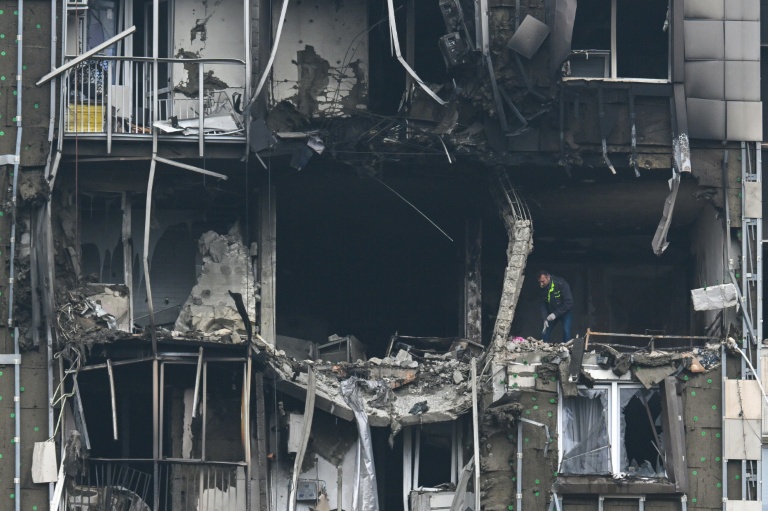
The Ukraine war is the direct antithesis of military doctrines of the 20th century. Even the hideous military travesties of World War One are struggling to match the 24/7/365 automated slaughter that is now defining modern war.
This isn’t just about drones, AI, and UAVs. It’s a whole new perspective. Conventional forces are simply not surviving, and they’re losing badly.
The past is fighting the future and losing
By way of example, the Russian army, former superpower frontline forces, are having to smuggle a few people through old gas pipes to attack obscure villages and usually lose. Combat capacity is evaporating. Getting a few hundred people into position is hard, and getting those people to achieve anything at all is much harder.
Nor are these forces agile or anything like agile. Old-style military transport is wiped out on sight. They’re having to use quad bikes, motorbikes, and everything but electric scooters to generate any sort of mobility. They’re slowly and unconvincingly evolving kinetic and APS defences against drones, but this definitely ain’t blitzkrieg anymore.
Air, missile, and sea forces are having much the same experience. The big military monsters are now just big targets. Automated forces are rapidly gaining the speed, range, and hitting power to take out almost anything. They’re also evolving in much the same way as their predecessors, dictating future research as much as future production.
Humans not invited
People don’t do well in this environment. Statistics indicate a life expectancy of 20 to 30 minutes for a Russian recruit. If that number was 20 times better, it’d still be suicidal and incredibly wasteful.
Any movement above ground is usually suicidal. The simple fact is that humans are instantly too conspicuous on just about any sort of targeting system. They’re also relatively slow and rather squishy when hit by almost anything. Survivability isn’t even a subject for discussion.
Battlefield surveillance is total. Surprise is extremely hard to achieve. Even the high losses have to be reevaluated in terms of significance. Loss of cannon fodder is now barely relevant. Casualties can now be more accurately measured in the loss of critical combat skills. Loss of those skills translates into disaster for the forces that depend on them.
Nor are these crash test dummies well supported. Time is adding lethal pressure to strategic and tactical logistics in multiple ways. Just being able to fight is tough. The time lag in adaption to the new environment is doing as much damage as the new battlefield realities.
The other side will take full advantage of any weakness. If you can’t supply and support your forces, it doesn’t matter what they do or where they go. They might as well stay home.
Reinventing the numbers game
Historically, numbers of troops have always mattered and have often been decisive. Now, it’s possible to equalize effectively with technologies and better tactics.
The Russians have proven time and again that they simply can’t follow through on their offensive actions. Big numbers are hard to support and gluttons for resources. Their numerical advantage has become a major liability, making troop movement clumsy and inept as well as much more expensive.
Training in this environment is another millstone for the Russians. It’s extremely hard to train adequate numbers of combat-effective troops at the best of times. Russian training is notoriously minimal, even for frontline pilots.
The Russians have a severe qualitative disadvantage compounding their disasters, throwing ridiculous numbers of semi-trained “meh” quality troops at veteran experts and smart automated systems. The Ukrainians are doing the exact opposite of the Russian methods, and they’re winning.
Automated weaknesses matter, too.
Technologies define wars. They also define the problems. These new technologies are adding a dimension to the incisive World War Two American military acronym, SNAFU:
Military AI is hardly infallible. Military AI failures are not exactly unknown. One failure “nearly started a war with China” last month.
The nature of the failures is the risk assessment of the future. This is where military AI and civilian AI are literally on the same page in the daily headlines. Military AI is just as vulnerable to all the weaknesses of conventional AI.
It’s a typical arms race. Every evolution of AI, robotics, and automation, real, imaginary, or speculative, will force a response. Expect shoals of red herrings and a lot of expense.
The cost base for modern warfare is undercutting the past but adding volume. The Military Industrial Complex doesn’t get a Get Out Of Jail Free Card this time. Retooling alone will be expensive and the little guys will be far more competitive against the big corporations. The old cartel system can’t even pretend to work in the face of much lower costs and much higher information values. Smaller producers can compete successfully across the board from components to basic tech and IP innovations.
Weaknesses are dangerous. Anything that can affect automated operations can and will be a gamechanger. Whole systems can be trashed by exploiting vulnerabilities in software, networks, etc. You could lose a war with a few lines of bad code.
Intelligence wars will be automated, too. If you think media disinformation is bad, this is a whole new battlefield. Just imagine how much disinformation economic and military-scale systems could produce. You may need affidavits for your weather report.
This gun is pointed straight at everyone’s head
The other risk of modern warfare needs mentioning. War can be cheap, effective, and extremely profitable. Every lunatic domestic or imported terrorist fanatic, and every “patriotic” dingbat can play. So can every parasitic arms dealer.
This new gun really is aimed at everyone.
_________________________________________________________
Disclaimer
The opinions expressed in this Op-Ed are those of the author. They do not purport to reflect the opinions or views of the Digital Journal or its members.
Op-Ed: Modern war: Humans not invited, and it’s a buyer’s market vs. Big Military
#OpEd #Modern #war #Humans #invited #buyers #market #Big #Military





