Travellers could be putting their personal data at risk by overlooking these phone safety steps
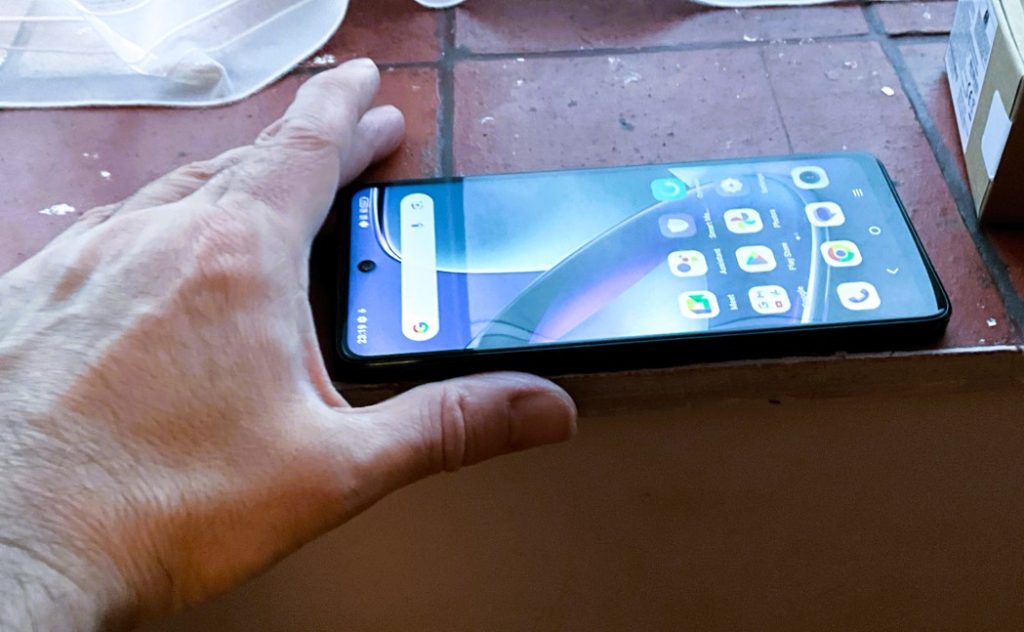
For many people, the smartphone has become the most important item to take on holiday after the passport. Boarding passes, hotel reservations, maps, payment cards, photographs and access to bank accounts can all reside on a single device. The convenience is considerable, but so is the concentration of personal data. This creates a particular security problem for travellers. A misplaced or stolen handset is no longer simply an expensive piece of hardware to replace. It can potentially provide a route into email, cloud storage, financial services and other accounts.
UK government cybersecurity guidance reflects this risk. The National Cyber Security Centre (NCSC) provides specific advice on securing mobile devices, while the NI Cyber Security Centre recommends password protection, device tracking, prompt installation of software updates and caution when using public Wi-Fi.
Arqam Zafar, Marketing Director at AstrillVPN, says preparation should begin before a traveller leaves home. “The first thing travelers should do before they even leave their house for a trip is to back up their photos and documents,” he advises. “Phones can get lost or damaged on trips, so having the peace of mind that everything is newly backed up is worth the extra preparation and time.”
Prepare the phone before travelling
Backing up data is only the first layer of protection. Travellers should also install outstanding operating-system and application updates, since these frequently incorporate security fixes. Guidance from the NI Cyber Security Centre recommends keeping both mobile operating systems and applications updated, ideally using automatic updates.
A strong PIN, password or biometric lock should also be enabled, together with the device’s location and remote-management capabilities. Tracking services can help locate a missing device and, depending on the configuration, permit it to be remotely locked or erased.
Zafar also recommends checking international mobile-data arrangements before departure and deciding whether a travel eSIM or additional roaming plan will be required. He suggests keeping an offline copy of the boarding pass and a printed copy of important hotel details, reducing dependence on continuous connectivity.
Another easily missed precaution concerns the lock screen. “Travelers should consider hiding message previews on their phone’s lock screen before heading abroad,” Zafar says. Notifications can otherwise reveal information such as personal messages, booking information and one-time banking verification codes without somebody needing to unlock the device.
Two-factor authentication adds an important second defence. The NCSC recommends two-step verification for important accounts, particularly email. This matters because control of an email account can enable a criminal to initiate password resets elsewhere. It does not make an account invulnerable, but it means a stolen password alone should not be sufficient to gain entry.
The same principle applies to physical access. CISA warns that loss or theft of a device can expose stored information and recommends locking devices when stepping away from them and not leaving equipment unattended in public places. For travellers, therefore, cybersecurity and physical security increasingly overlap.
Airports, railway stations, hotels and cafés encourage travellers to connect to public networks, sometimes without considering who operates them. The UK’s Stop! Think Fraud campaign advises that 4G or 5G is safer than public Wi-Fi. Where mobile data is unavailable, users should check that the Wi-Fi network is genuinely operated by the venue and avoid sensitive activities such as online banking.
Zafar likewise recommends avoiding applications containing sensitive information while using public Wi-Fi. A personal hotspot or trusted mobile-data connection can therefore be preferable when conducting financial transactions or accessing confidential material.
The charging point can matter too
Security considerations extend beyond wireless networks to the apparently mundane task of charging a battery. Public USB charging sockets potentially combine power and data connections. For this reason, security guidance recommends using your own mains charger and wall outlet, a power bank, or, when appropriate, a data-blocking adapter rather than trusting an unfamiliar USB socket. Cybersecurity advice from the Center for Internet Security similarly recommends using a personal power adapter rather than an untrusted USB charging station.
Taking a power bank introduces a different consideration: aviation safety. The US Federal Aviation Administration’s current guidance requires spare lithium batteries and power banks to travel in carry-on baggage rather than checked luggage. Lithium-ion batteries rated up to 100 watt-hours are generally permitted, while units between 101 and 160 Wh require airline approval; airlines can impose additional restrictions. Travellers should therefore check their airline’s rules rather than assuming that a power bank acceptable on one carrier will necessarily be treated identically by another.
Technology alone cannot resolve the problem. Phones are particularly vulnerable when they are being used for directions, photography or messages in crowded environments.
“Tourists often stand out in crowds and make easy targets,” says Zafar, who advises travellers to avoid leaving devices unattended and to think about how visibly they use them in unfamiliar surroundings. A wrist strap can provide an additional physical precaution.
Official UK anti-fraud guidance also highlights the decidedly low-tech threat of “shoulder surfing”, where criminals observe victims entering PINs, passwords or passcodes. Stop! Think Fraud recommends shielding sensitive information and suggests considering a privacy screen where appropriate.
For people travelling on business, the stakes can rise further. UK Government Security guidance advises personnel to check organisational policy before taking official IT overseas and, where possible, to leave unnecessary work equipment at home. The wider lesson is that the modern smartphone represents far more than its replacement cost. It can contain information about a person’s identity, family, finances, workplace and movements, as well as the credentials that unlock still more information online.
As Zafar puts it:
“Keeping your devices safe is not just about the monetary value they hold anymore; these devices hold all aspects of our life.”
A few minutes spent backing up data, updating software, enabling two-step verification, checking lock-screen settings and planning how to connect and charge safely can consequently provide an important additional layer of protection. The objective is not to make travelling less connected. It is to ensure that the convenience provided by the smartphone does not turn it into a travelling repository of avoidable risk.
Travellers could be putting their personal data at risk by overlooking these phone safety steps
#Travellers #putting #personal #data #risk #overlooking #phone #safety #steps