Self-driving cars in Canada: From experimental technology to the road ahead
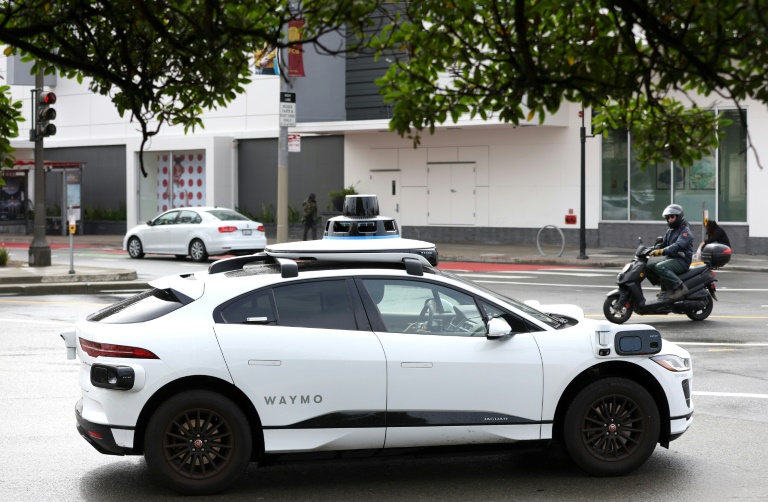
The prospect of cars navigating Canadian streets without anyone behind the wheel is moving closer to reality. After years of technological experimentation, autonomous vehicles are entering a new phase, with commercial applications expanding and international developers increasingly interested in the Canadian market.
In October 2026, Waymo announced plans to introduce its autonomous ride-hailing technology to Toronto, targeting its first public passengers in 2028. Meanwhile, Canadian artificial intelligence companies are attracting substantial investment, and autonomous trucks are already transporting goods on public roads. Yet the transition towards self-driving transportation remains uneven. Canada’s regulatory landscape, challenging weather conditions and questions surrounding safety and accountability mean widespread adoption is far from guaranteed.
One of the most significant recent developments came on 16 October 2026, when Alphabet-owned Waymo announced its expansion into Canada. The company plans to begin operations in Toronto with manually driven vehicles collecting detailed mapping information, followed by supervised testing of its autonomous driving technology.
Waymo is targeting 2028 for the introduction of its fully autonomous ride-hailing service, although that ambition remains subject to further development and regulatory requirements. The company has partnered with Toronto-headquartered Element Fleet Management to support fleet operations. It also anticipates creating hundreds of roles over time across maintenance, driving validation, customer service and related activities. The announcement represents an important development for Canada’s autonomous vehicle ambitions. However, there is a distinction between testing automated vehicles and operating a commercial robotaxi service without human drivers.
Toronto’s complicated road network will provide a demanding environment for the technology, particularly when combined with winter weather, cyclists, pedestrians and streetcars. For Waymo, success will depend on demonstrating that its technology can operate reliably across these conditions.
Canadian companies are making international progress
Canada is not simply waiting for American technology companies to introduce autonomous vehicles. Toronto-based Waabi has emerged as a significant participant in autonomous driving, particularly through its development of artificial intelligence systems for commercial trucks.
In January 2026, the company announced a US$750 million Series C funding round, alongside an additional milestone-dependent investment arrangement with Uber. The funding is intended to accelerate Waabi’s autonomous trucking operations and support its expansion into robotaxis. Unlike conventional approaches that rely heavily on extensive real-world driving experience, Waabi emphasises advanced AI models and neural simulation.
Its technology is designed to learn from simulated driving environments and apply that knowledge across different vehicle types. The company is also pursuing a common AI architecture for trucks and passenger vehicles, potentially reducing the need to develop entirely separate autonomous driving systems. Waabi’s commercial progress has been particularly visible in the United States, where it has developed partnerships involving autonomous trucking.
In October 2026, the company reported customer operations with Volvo Autonomous Solutions in Texas, demonstrating how Canadian-developed technology is contributing to the international autonomous vehicle industry. This illustrates an important distinction: Canada’s contribution to autonomous mobility may be measured as much through exported technology and intellectual property as through the number of driverless cars operating domestically.
While robotaxis attract considerable public attention, commercial freight transportation is providing some of the clearest evidence of practical progress. Autonomous trucking company Gatik has developed a substantial relationship with Canadian retailer Loblaw.
In September 2025, the companies announced a five-year expansion agreement involving an initial planned deployment of 50 autonomous trucks across the Greater Toronto Area.The agreement envisaged 20 vehicles by the end of 2025 and another 30 by the end of 2026, initially operating with safety drivers before transitioning towards driverless operations. The vehicles are intended to support deliveries across Loblaw’s regional distribution network, serving more than 300 stores. The partnership builds upon earlier operations, including what the companies described as Canada’s first driverless commercial fleet in 2022. [archive.gatik.ai]
Further progress was reported in March 2026, when Gatik confirmed that its fully driverless operations included Ontario. The company stated that its vehicles were conducting commercial deliveries without human drivers or safety observers across several North American jurisdictions.
Gatik also announced its participation in NVIDIA’s Halos AI Systems Inspection Lab ecosystem, reflecting the growing importance of safety validation for autonomous transportation. These developments suggest that freight transportation may offer a more immediate commercial opportunity than unrestricted passenger transport.
Vehicles travelling between warehouses, distribution centres and retail locations can operate within defined logistical networks, potentially simplifying some aspects of autonomous deployment. Nevertheless, commercial expansion will still require evidence of reliability, safety and economic viability.
Canada’s regulatory approach remains cautious
One of the biggest obstacles to widespread adoption is Canada’s fragmented regulatory environment. The federal government oversees vehicle manufacturing and safety standards, while provincial governments regulate road use, licensing and other operational requirements. Consequently, permission to test or operate autonomous vehicles in one province does not automatically translate into approval elsewhere.
In this context, Ontario has been particularly active. Its Automated Vehicle Pilot Program, introduced in 2016, permits approved organisations to test vehicles equipped with higher levels of automation. The programme was subsequently expanded to accommodate driverless testing under specified conditions and has been extended until October 2027. Ontario has also introduced a separate Automated Commercial Motor Vehicle Pilot Program. Running from August 2025 until August 2035, the programme allows approved testing of certain automated commercial vehicles weighing more than 4,500 kilograms. It includes both driver-supervised and driverless testing arrangements, subject to regulatory conditions.
Elsewhere, restrictions remain tighter. British Columbia prohibits the general operation of vehicles using Level 3, 4 or 5 automation on public roads, subject to applicable exceptions. The differences illustrate why a nationwide rollout of autonomous vehicles remains more complicated than launching services in individual cities.
Canada’s climate presents difficulties that cannot be ignored. Snow, ice, freezing rain and reduced visibility create demanding conditions for both human drivers and automated systems. Autonomous vehicles depend upon combinations of cameras, radar, lidar and artificial intelligence to interpret their surroundings. When snow obscures road markings or weather reduces visibility, the reliability of vehicle perception becomes particularly important.
The challenge extends beyond detecting obstacles. Autonomous systems must also make appropriate decisions about braking, vehicle positioning and whether conditions remain suitable for automated operation. Canada therefore provides an important testing environment for technologies intended to function beyond favourable urban conditions.
The University of Waterloo has previously highlighted research into automated driving in Canadian weather, including snow and sleet, demonstrating the relevance of these challenges to domestic research programmes. However, successful demonstrations in winter conditions should not automatically be interpreted as evidence that a system can safely handle every possible weather scenario.
Safety, cybersecurity and public confidence
Another central question concerns whether autonomous vehicles can deliver meaningful improvements in road safety. Waymo reports that its technology has accumulated more than 400 million kilometres of fully autonomous driving, with substantially fewer serious-injury crashes than human-driver benchmarks in the cities where it operates. However, these are company-reported comparisons from particular operating environments. They should not be treated as proof that equivalent results will necessarily occur on Canadian roads.
There are also wider questions concerning responsibility when accidents occur. If an autonomous vehicle makes an incorrect decision, determining the respective responsibilities of the manufacturer, software developer, fleet operator and other parties may prove complicated.
Cybersecurity introduces another dimension. Connected vehicles increasingly depend upon sophisticated software, communications systems and digital infrastructure, potentially creating opportunities for malicious interference. Transport Canada’s vehicle cybersecurity guidance emphasises risk management, protective safeguards, incident detection and recovery.
The government has also developed a voluntary assessment tool to help manufacturers and suppliers evaluate vehicle cybersecurity resilience. For consumers, confidence will depend not only upon technological performance but also upon transparency about safety limitations and accountability.
Hence, Canada’s autonomous vehicle sector has reached an important transitional stage. Commercial driverless freight operations demonstrate that the technology is moving beyond research laboratories. Waymo’s planned Toronto expansion indicates growing international interest, while Waabi’s investment success highlights Canada’s potential as a developer of autonomous driving technology.
Nevertheless, progress should not be confused with universal readiness. The immediate future is more likely to involve geographically restricted services, carefully managed commercial operations and continued regulatory experimentation than unrestricted self-driving vehicles operating everywhere.
Self-driving cars in Canada: From experimental technology to the road ahead
#Selfdriving #cars #Canada #experimental #technology #road #ahead