Bell’s Saskatchewan AI expansion rests on a memorandum
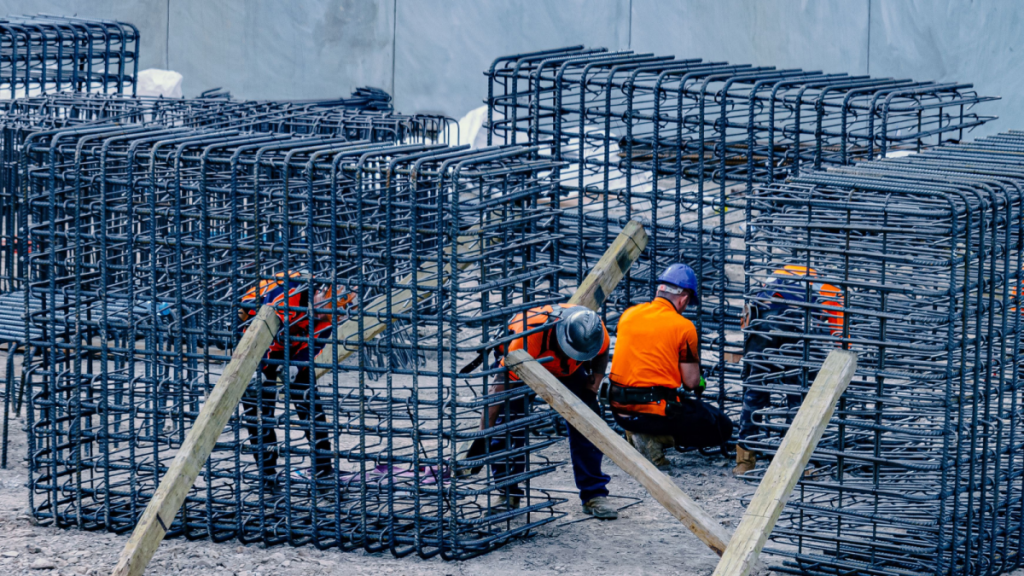
Outside Regina, Bell already has steel in the ground for its first AI data centre. The expansion it announced Monday would take that project to 1.2 GW and past $50 billion.
It runs on a non-binding memorandum.
Bell CEO Mirko Bibic made the announcement at Prime Minister Mark Carney’s Canada Investment Summit, alongside Saskatchewan Premier Scott Moe.
The province’s release called it the single largest private-sector capital investment in Canadian history. Bell kept the claim to Saskatchewan’s history, and described a “path” to a 1.2-gigawatt hub.
Bell and the province agreed to pursue up to 900 megawatts (MW) of new capacity at the campus near Regina, on top of the original 300 MW, and to put the head office of Bell AI Fabric in the province.
Bell says the buildout would support 800 to 1,200 construction jobs and up to 600 permanent roles.
Getting there needs customers, commercial agreements, permits, approvals, and any environmental assessment the province requires. Development would proceed in phases, as those commitments are secured.
That same day, Ottawa said the Canada Revenue Agency would prioritize advance income tax ruling for Canadian investments of at least $1 billion. The rulings give investors a binding answer on how tax law will apply before they commit capital. Bell’s release doesn’t say whether it has requested one.
Bell’s first data centre is already under construction near Regina.
“We’ve got structural frames up for three buildings, foundations being poured for the fourth building, the work going on for the power and cooling infrastructure,” says Bibic, president and CEO of BCE and Bell Canada.
The original project draws 300 MW from SaskPower, secured before the province required new data centres to supply their own power. A June University of Regina brief put that, once fully built, at roughly 9% to 12% of the province’s seasonal demand, which runs 2,600 to 3,500 MW.
The proposed 900 MW would skip the provincial grid, running on partner-developed natural gas generation. It would be cooled in a closed loop Bell says draws no municipal water once it’s running.
That expansion is three-quarters of the planned capacity. The release lists environmental stewardship among Bell’s commitments, without putting a number on the emissions that much gas generation would produce.
Construction began without an environmental impact assessment. The expansion would be subject to any required environmental assessments, along with permits and approvals, according to the release.
The $50 billion isn’t all Bell’s. Bell’s release says the figure covers data centre infrastructure, tenant compute, and power generation together.
The company’s investor materials show why its own share is smaller than that. Bell’s pitch casts it as the landlord. It builds and runs the site, and its two announced tenants for the original project, U.S.-based Cerebras and CoreWeave, rent the capacity, bring their own chips, and pay for their own power.
By its own account, Bell owns no chips and carries no obsolescence risk. It expects the original project to require about $1.7 billion in incremental capital spending, partly offset by approximately $400 million in tenant setup fees and prepayments.
Bell says a significant portion of that power would support sovereign Canadian compute for governments, researchers, and businesses. It made a similar data-sovereignty promise in an earlier announcement with Cohere and other Canadian partners.
“It will also strengthen Canadian data sovereignty by keeping Canadian data here at home, stored by a Canadian company and protected under Canadian rules,” says Moe. “When it comes to data storage, keeping that home ice advantage means Canadians set the rules and remain in control.”
Bell’s release doesn’t explain how its sovereignty promise applies when the companies running the compute are American. Which company signs the contract, which one runs the hardware, and who controls the data will help determine which countries’ laws apply.
There’s a live precedent for that last part. In June, Washington ordered U.S. company Anthropic to take a model offline, and it went dark for Canadian users within hours.
Bell expects the first buildings near Regina to come online in the first half of 2027. The 900 MW expansion has no timeline and would move ahead as customers commit.
Testing that promise isn’t one person’s call. Procurement, security, privacy, legal, and the business that owns the data each own a piece of it.
The questions the memorandum leaves open are Bell’s to answer, and until it does, the expansion stays a statement of intent.
Final shots
- Steel in the ground for one phase doesn’t make the next phase a done deal, so check the customers, power, permits, and timeline attached to each.
- Bell’s own spending is one part of the $50-billion figure, which also includes tenant-funded compute and partner-developed power.
- Test a sovereignty promise by asking who signs the contract, runs the hardware, and controls the data.
Bell’s Saskatchewan AI expansion rests on a memorandum
#Bells #Saskatchewan #expansion #rests #memorandum