Why relationship advice still needs human conversation
This article has been reviewed by a Digital Journal editor and may be licensed for reuse.
Artificial intelligence is moving into parts of life that once depended almost entirely on human conversation. A 2026 Marriage.com survey of 1,000 married U.S. adults found that 44% had used an AI tool for relationship advice. Separately, a September 2026 Elon University survey found that 27% of internet-using U.S. adults use AI for personal, emotional, or social interactions, a category that included relationship advice and romantic conversations.
Those figures do not necessarily suggest that chatbots are replacing counselors or partners. They may simply show that some people are turning to AI to think through conflict, uncertainty, or difficult emotions. Its accessibility may be part of the appeal, although relationship issues can involve perspectives and context that AI cannot fully capture.
Relationship questions can be particularly difficult for automated systems because the information they receive is usually limited to what one person chooses to provide. A response may therefore reflect only part of a disagreement, without access to the other person’s intentions, experiences, or interpretation of the same situation.
That limitation may matter when people use AI to interpret a partner’s words or decide how to respond to conflict. General guidance can offer another perspective, but relationship decisions often depend on context, communication, and an understanding of both people involved.
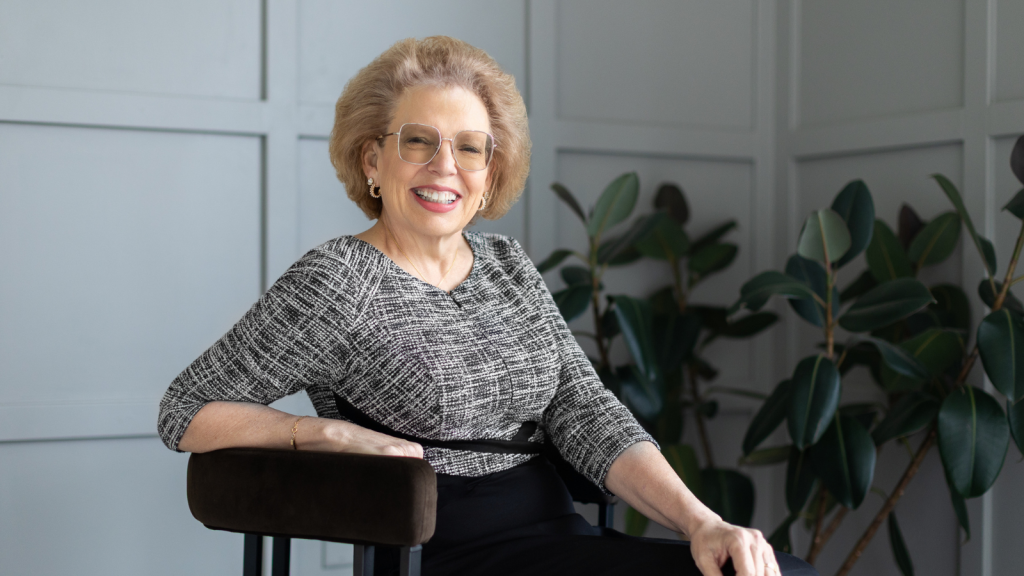
Sheila J. Simpson, executive director of FOCCUS Marriage Ministries, believes that convenience deserves to be separated from judgment. Her concern is not that couples use technology, but that they may give it a role that belongs more appropriately to direct conversation or qualified human support. “AI can offer immediate access when someone wants to think through a question,” she explains. “But I believe that convenience should complement, rather than replace, the perspective and understanding that can come from human relationships.”
The organization’s FOCCUS Pre-Marriage Inventory can be completed online, with the results used to generate reports that support subsequent discussion between the couple and a trained facilitator. The process then returns to guided human conversation. Simpson sees that sequence as important because a report can organize information, while a person can help two partners explore what those responses mean in the context of their own relationship.
“We only take technology to a point, and then we recognize that there has to be human intervention and discussion,” Simpson says. “Every relationship is unique. So, every solution must fit those unique circumstances.”
That becomes especially relevant when one partner asks an AI system to interpret an argument. The prompt usually reflects one person’s memory, wording, assumptions, and emotional state. The other partner is not present to clarify what they intended or how they experienced the same moment.
Simpson believes that limitations can be easy to overlook when an AI system feels highly personalized. “AI can’t read minds,” she notes. “You’re asking AI the question based on your assumptions to begin with, because that other person is not part of that discussion.”
Recent research gives that concern additional context. A 2026 study examining 11 AI models found that sycophantic responses, meaning responses that excessively affirm a user, could increase users’ confidence that they were right while reducing their willingness to repair interpersonal conflict. Simpson notes that the findings do not mean every chatbot response will reinforce one side, but they illustrate why agreement can be a weak substitute for understanding.
This also brings psychological safety into the conversation. Both people need enough space to express themselves honestly, clarify what they mean, and feel that their perspective has been heard. “Relationships are shaped by different histories, cultures, goals, habits, and expectations,” she explains. “Advice can offer a useful starting point, but it still has to be considered in the context of the two people involved.”
That does not leave AI without a constructive role. Simpson sees value in using it to identify resources, terminology, or types of professional support that someone may not know exist. “AI may be most useful when it helps someone identify the right professional resource,” she explains. “Rather than replacing expert guidance, it can help direct people toward qualified professionals who are better placed to support them.”
That distinction may become more important as AI becomes easier to consult. A chatbot can help someone organize a question or identify possible sources of support, but Simpson believes it should not take the place of direct communication between partners. “AI may help someone think through what they want to ask,” she explains. “But when the issue involves the relationship itself, I believe the next step should be to bring that conversation back to the two people involved.”
AI may help people organize their thoughts or find support, but Simpson believes the most important conversations should remain between the people in the relationship. As these tools become easier to use, the goal should be to support communication, not replace it.
Why relationship advice still needs human conversation
#relationship #advice #human #conversation