Ashutosh Rokade on the trap of the perfect rendering
Opinions expressed by Digital Journal contributors are their own.
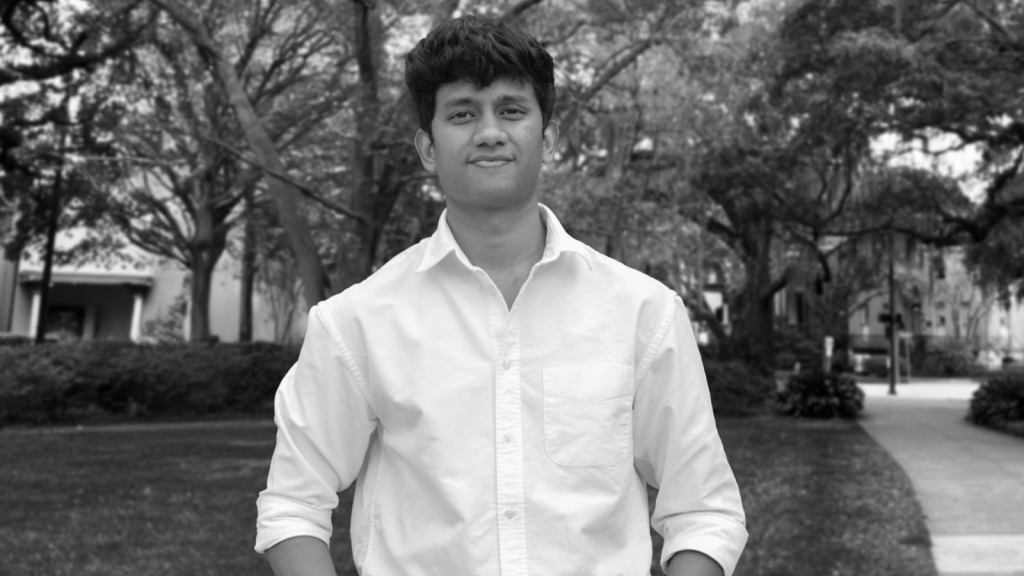
As design software has grown more capable, it has also grown better at concealing its own gaps, producing drawings of extraordinary precision and renderings that approach photo quality while the design underneath them remains genuinely unresolved. That distinction, between a project that looks finished and a project that has actually been thoughtfully analyzed, is one Ashutosh Rokade encountered early in his career, and it has shaped his relationship with technology ever since.
Rokade is a production designer at Basemint Creative, where he develops immersive attractions and guest environments for large theme park clients, and he arrived at that work through a five-year architecture degree in India followed by a master’s in production design in the United States. The precision that architectural training instilled turned out to be both his advantage and, for a period, the thing quietly slowing him down.
“You could spend hours refining geometry, materials, or a rendering before answering more fundamental questions about composition, scale, storytelling, or how someone would actually experience the space,” he says of the pattern he noticed while moving from architecture into entertainment design, a field that rewards a very different sense of when to slow down and when to commit.
The correction he settled on was to tie the level of digital resolution directly to the stage of the design, so that early models stay deliberately simple and flexible, quick sketches and rough visualizations carry the work of testing ideas, and detailed modeling waits until there is something resolved enough to justify the investment of building it properly. “The real value of a tool is whether it helps you make a better design decision at the right moment in the process,” he says.
The technology that reshaped his practice most was the arrival of real-time visualization alongside three-dimensional design tools, which changed not only how quickly he could develop an idea but how quickly a room full of people could agree on one. “Coming from architecture, I was already used to thinking spatially, but 3D modeling tools and real-time rendering software made it possible to develop and communicate ideas much faster,” he says. Rather than waiting until the end of a process to visualize a space, he can build it early, test scale and sightlines, and hand the model forward as a base for concept art, with the added benefit that collaborators can read a model without having to interpret a set of drawings.
Getting there required giving up a habit that architecture school had spent five years reinforcing. “One of the biggest things I had to unlearn was the idea that every design needs to be completely resolved before it can be communicated,” he says. Entertainment design moves fast enough that a loose sketch landing an idea today can carry more weight than a fully resolved drawing arriving on Thursday, and the process itself is rarely linear: a sketch becomes a quick model, the model gets drawn over, feedback arrives, and the model comes back out again.
Artificial intelligence has found a place in that workflow, though a narrower one than the current conversation might suggest. Rokade uses it during research, a phase that consumes a substantial share of any project because each new brief can require him to understand an unfamiliar place, period, material, or construction method within days. “It does not eliminate research, but it helps me navigate a large amount of information much faster,” he says. It has also proven useful for tracking down the kind of narrow visual reference that resists ordinary searching, often by surfacing the terminology he needed in order to look properly.
The constraint that separates his current work from his film credits is time. A set comes down when the shoot wraps, while a themed environment has to absorb thousands of guests a day across years of operation, which adds new concerns – durability, weather exposure, maintenance access, safety, and the way materials age, into the conversation during concept development rather than after it. A detail that photographs beautifully can be the wrong answer if guests touch it constantly or if reaching it for repair means closing an attraction. “You also have to think about the environment as something that will continue to operate after the design team has moved on,” he says.
His current projects remain confidential, though the work spans concept development, show set design, storyboarding, concept art, and master planning, and the technical pressure now comes from coordinating scenery, media, lighting, graphics, and interactive technology inside a single environment where each layer alters how a guest reads the others. “The technical challenge is ultimately in making all of that complexity feel effortless to the guest,” he says.
Ashutosh Rokade on the trap of the perfect rendering
#Ashutosh #Rokade #trap #perfect #rendering