Ben Lamm and George Church’s next act: Inside the $3.8B bet
Opinions expressed by Digital Journal contributors are their own.
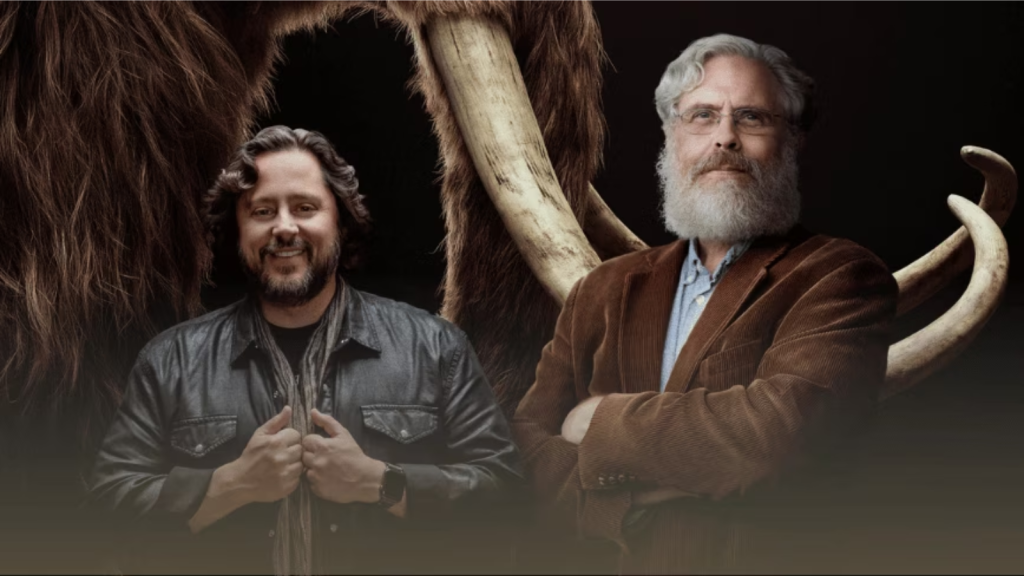
Ben Lamm and George Church have already done this once. Together they co-founded Colossal Biosciences, a company working to bring extinct species back using genomic tools, which attracted significant investor attention and put both names at the center of one of the most closely watched stories in modern biology.
Now they are doing it again. Astromech, another company they built together, just closed a $20 million funding round at a $3.8 billion valuation. Biotech investor Bob Nelsen led the round, with participation from Peak 6, NeoGenesis Capital, Builders VC, and CAZ Investments, bringing total capital raised to $60 million.
The question worth asking is what two people who have already built one high-profile biology company see clearly enough to bet on a second.
Who is Ben Lamm?
Lamm is a serial founder whose background spans consumer technology, artificial intelligence, and frontier science. He co-founded Colossal Biosciences with Church in 2021 and built it into one of the most recognized names in the de-extinction field. Before Colossal, he founded and scaled multiple companies across different sectors, developing a track record of moving technical ideas from the research stage to commercial operation.
At Astromech, Lamm brings the same thesis he applied at Colossal: that the most important science is happening at the intersection of genomics, computation, and evolutionary biology, and that the companies building infrastructure at that intersection will have disproportionate impact. His pitch for Astromech is direct. “Biology runs the world and historically, we have only reacted to it,” he said. “We can describe biology in extraordinary detail, yet we still struggle to anticipate what comes next.”
Who is George Church?
Church is a professor of genetics at Harvard Medical School and one of the most cited scientists in the history of genomics. His contributions to the Human Genome Project, the development of CRISPR applications, and the broader field of synthetic biology have made him a central figure in how modern biology is practiced and funded. He is not a typical co-founder profile: Church is a working scientist whose lab continues to publish research at a pace that would fill most researchers’ entire careers.
His motivation at Astromech reflects a core scientific frustration: that comparing genomes across living species often fails to explain what the differences actually do. “Most of the variations that matter for complex traits, for example morphology and longevity, are regulatory rather than coding,” Church said. “Reconstructing the ancestral regulatory state, not just the ancestral protein, has the crucial explanatory power. That takes functional data across many species rather than sequence alone, and AI reconstruction cheap enough to run genome-wide. Neither was true ten years ago.”
The implication is that Astromech became possible recently, not because the scientific question is new, but because the computer and the data infrastructure to address it have only recently reached the required scale.
How did Astromech come out of Colossal?
Astromech was gestated at Colossal Biosciences, which shaped the new company’s capabilities from the start. Colossal spent years assembling genomic resources that most research institutions do not have: a broad genome bank of extinct and living species, tooling built to handle massive biological datasets, ancient-DNA capability that reads degraded genetic material from extinct organisms and compares it to living genomes to identify what changed and when, and a scientific team trained across evolutionary systems and computational biology.
When Astromech was spun out, it carried access to those resources. That inheritance gave the company a significant head start on the data infrastructure its models depend on, reflecting the deliberate sequencing behind how Lamm and Church structured the two companies. Colossal built the genomic foundation. Astromech is building the predictive layer on top of it.
What problem are they trying to solve?
At its core, the problem Lamm and Church are addressing is a forecasting gap. Biology has historically been studied in the present tense: what a genome looks like today, what a cell is doing now, what a population’s disease burden currently is. That snapshot approach has produced remarkable knowledge, but it leaves researchers reactive when biological systems change.
Drug resistance is one example. Pathogens are another. Ecosystem stress under climate change is a third. In each case, the biological change arrives before the monitoring system flags it.
According to the company, Astromech is building models that draw on roughly 3.8 billion years of evolutionary history to identify patterns in how biological systems change, somewhat analogous to how historical weather data is used in forecasting models. Astromech says its platform is being designed to identify where genomes may be headed, where biological systems may be most vulnerable to disruption, and which regulatory mechanisms could be driving those trajectories.
What does the $3.8B bet reflect?
At $3.8 billion, Astromech is valued as a platform company with cross-industry potential, not as a single-application biotech. The founding team’s thesis is that the same underlying architecture can be applied to human health, biosecurity, agriculture, and conservation, adapting to different traits and species without rebuilding from scratch.
That scope is why the valuation is notable even at a pre-revenue stage. It reflects investors’ confidence in both the founders’ track record and the breadth of the problem being addressed.
Astromech’s platform and initial research pipelines are now operational. The next phase includes forecasting pilots with partners in health and biosecurity. For Lamm and Church, the goal is the same one they have been building toward since Colossal: a biology that anticipates change instead of only recording it.
Ben Lamm and George Church’s next act: Inside the $3.8B bet
#Ben #Lamm #George #Churchs #act #38B #bet