How Canada can keep investors’ trust and become more efficient
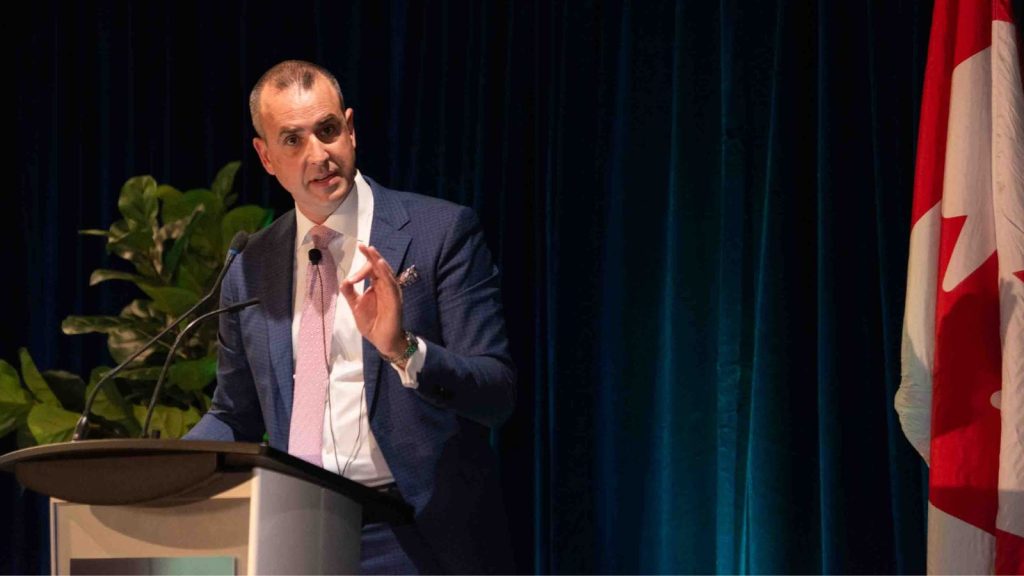
Ryan Clements leads advanced research and knowledge management at the Alberta Securities Commission and chairs the Canadian Securities Administrators’ Financial Innovation Hub. On October 27, he moderates a panel on trusted innovation at ASC Connect in Calgary. The views expressed are his personal views and do not necessarily reflect those of the Alberta Securities Commission or Digital Journal. This content was produced in partnership with the Alberta Securities Commission.
Companies that compete globally want a capital market that investors trust and that moves at the speed they do.
Canada already has the first part, because investors see our capital markets as stable and resilient, and that trust is an asset that should be put to work.
The second part is the one securities regulators get asked about, and speed today means something quite different than it did even a few years ago.
AI, tokenization and new forms of digital money are moving into capital markets, often faster than the guidance written for them, and talent and capital are mobile enough that entrepreneurs can choose where they build and scale.
I believe Canada can add speed without spending that trust, because speed without trust is not a good market.
“Speed without trust is not a good market.”
Getting there means being clear about which risks matter most, testing new ideas in more than one way, and using the same technologies the market is adopting. All three depend on hearing from the companies that live with the rules.
That’s the conversation at ASC Connect on October 27 at the Calgary TELUS Convention Centre, where this year’s theme asks: Alberta’s capital market, where do we go from here?
Answering it takes CEOs, CFOs and technology leaders in the same room as the people who regulate Alberta’s capital market.
My ask is to bring your experience. Tell us where a rule slowed you down, where guidance left you guessing, and what you would test if the path were clear.
What responsible speed looks like for securities regulators
We want the most efficient, trusted market, and that starts with clear guidance. There’s room to both speed up how we work as regulators, and slow down where it matters, like the pause we encourage investors to take before they put their money into something.
“We want the most efficient, trusted market.”
When a company pays its lawyer a lot of money to hear “I’m not quite sure what the rules are,” that’s a poor outcome for the company and for the regulator, because a rule protects investors best when companies understand how to follow it.
Testing works the same way. Imagine Company X has a new product that current rules didn’t anticipate and asks regulators for temporary relief while it’s tested, a model most people know as a regulatory sandbox.
If working out the conditions were to take months while Company Y ignored the rules and simply launched, Company X wouldn’t get the benefit from doing it properly.
Addressing that means being clear about which risks we will always guard against and where companies have room to try something new.
The sandbox has its place, but it isn’t always popular with industry, and maybe it shouldn’t be the only way to test.
Through the CSA’s Financial Innovation Hub, regulators have been testing in different ways. We have been testing ideas on tokenization and data portability, through discussion papers, surveys and public forums, including a workshop in Calgary this past April.
For a company, that’s a way to help shape the rules well before it ever needs a formal exemption.
We’re learning the technology from the inside
AI, tokenization and digital money can speed up capital raising and automate compliance. They can also open new routes for fraud, scams and cyberattacks.
Securities regulators can only weigh both well if we understand the technology from the inside, which is why we have to use AI ourselves, responsibly and within privacy rules, as well as oversee how market participants use it. Used well, the same tools can help us do our own work more efficiently.
Our thinking on new technology is never finished. Canadian securities regulators published guidance on AI in capital markets in December 2024, before agentic and frontier models looked the way they do today.
For a company putting AI to work, the questions its technology leaders are debating internally are worth bringing to regulators now. Join us at ASC Connect.
What else is on the agenda
- How Alberta competes for capital: ASC Chair and CEO Stan Magidson with TMX Group CEO John McKenzie, after Finance Minister Jason Nixon opens the day.
- What comes next for energy: Deborah Yedlin, President and CEO of the Calgary Chamber of Commerce, with RJ Johnston of the University of Calgary’s School of Public Policy, Chris Seasons of ARC Financial and Hugh Sanderson of ATB Capital Markets.
- What the outcome from the referendum means for business: Stan Magidson will talk with The Honourable Jason Kenney, PC, ECA, former federal Cabinet Minister and former Alberta Premier.
- How Canada becomes a trusted place to build and scale: my panel with Coinbase Canada CEO Eric Richmond, BLG partner Louise Lee, C.D. Howe Institute fellow Mark Zelmer and Claire Brownell of The Logic.
- How a regulator weighs its priorities: ASC senior leaders close the day.
Academic writing often treats speed and investor protection as a trade-off, and I’ve wondered whether that’s a false choice.
We’re not trading trust for speed, we’re maintaining trust but adding efficiency and creativity, and the best ideas will come from the people building companies here who engage with us.
“We’re not trading trust for speed, we’re maintaining trust but adding efficiency and creativity.”
Join us in Calgary on October 27, and bring your data and perspective.
How Canada can keep investors’ trust and become more efficient
#Canada #investors #trust #efficient