Canada’s next clean-energy challenge: Making renewables work when the wind does not blow
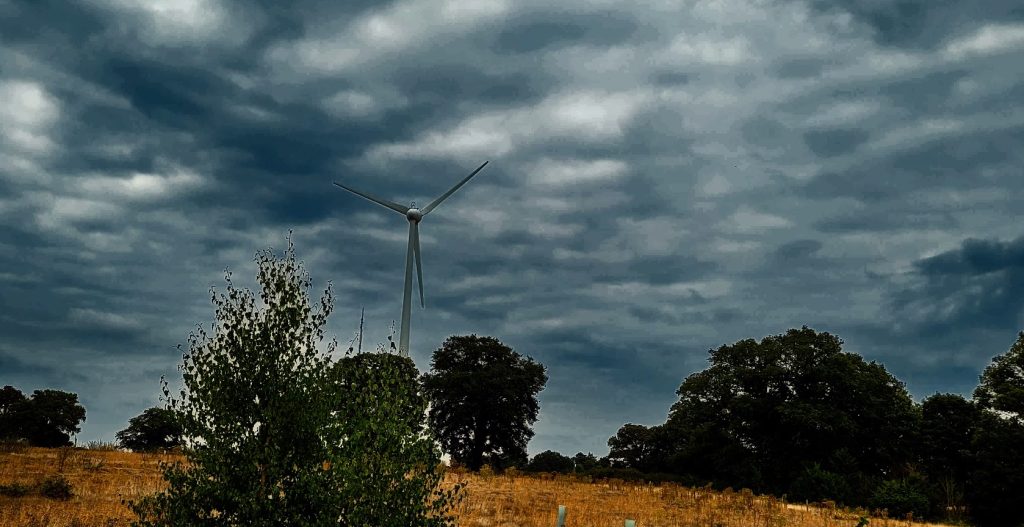
Canada’s clean-energy transition is entering a more technologically demanding phase. The focus is shifting from simply adding renewable generating capacity towards solving the problems that emerge when wind and solar become more important parts of an energy system. A series of developments announced during September and October 2026 illustrates the change. Canadian companies are advancing grid-scale batteries, more efficient hydrogen production and renewable substitutes for fossil carbon used in heavy industry. Together, the projects address three of the biggest obstacles facing renewable energy: intermittency, conversion efficiency and the difficulty of decarbonising processes that cannot simply be connected to an electricity supply.
One of the clearest signs of this direction came on 13 October when Toronto-based DCL International announced a research programme with Taiwan’s TECO Electric and Machinery aimed at developing improved green-hydrogen technology. The project is receiving advisory services and up to C$400,000 through Canada’s National Research Council Industrial Research Assistance Program. The research will focus on anion exchange membrane water electrolysis, intended to support more efficient and potentially lower-cost hydrogen production
The development forms part of a broader Canadian effort to tackle a significant question: what happens to renewable energy when the wind is not blowing, the sun is not shining, or the industrial user does not need electricity in the first place?
Storing energy for when it is needed
Battery installations provide one answer. On 29 September, Canadian power producer Northland Power announced that its Jurassic Battery Energy Storage System had achieved commercial operations in Alberta. At 80 MW/160 MWh, the company describes the facility as Alberta’s largest battery storage installation. The project also has a 15-year agreement covering its full capacity. The Jurassic project provides 160 MWh of grid-balancing capacity.
The principle underpinning battery energy storage is straightforward. Renewable electricity does not necessarily arrive at the same moment that consumers need it. Batteries provide the ability to retain electricity and release it later, adding flexibility to the system rather than requiring generation and consumption to coincide continuously. This does not remove renewable intermittency, but it changes how electricity networks can respond to it.
Wind technology is itself becoming better at exploiting higher-quality resources. Floating offshore turbines, for example, enable generation in waters too deep for conventional fixed-bottom structures. This could be significant for Canada because some of its strongest offshore resources occur in deep water. Assessments discussed in relation to Atlantic Canada have highlighted average offshore wind speeds exceeding 9 to 11 metres per second in some locations. Floating wind could therefore open renewable resources that are difficult to reach with fixed turbines. Yet expanding the renewable resource only increases the importance of storing or converting the electricity produced.
Turning renewable electricity into hydrogen
One possible route is to convert electricity into a molecule. Green hydrogen is made by using renewable electricity to split water into hydrogen and oxygen. Hydrogen can then potentially provide an energy carrier or industrial feedstock for applications including steelmaking and chemical processing.
The DCL International-TECO Electric and Machinery project is investigating anion exchange membrane electrolysis technology designed to combine efficiency and durability with more abundant and potentially cheaper materials. DCL International will develop and assess electrocatalyst formulations for membrane electrode assemblies, with TECO Electric and Machinery integrating the components into an electrolyser.
Another Canadian programme illustrates why relatively modest changes in electrolyser performance could matter commercially. Mississauga-based Next Hydrogen Solutions announced in September that it had secured up to C$2 million through the Natural Resources Canada Energy Innovation Program for further research into its commercial electrolyser technology.
The company says electricity represents between 60 and 70 per cent of hydrogen-production operating costs. Its R&D programme is targeting improvements that it expects will reduce electricity consumption per kilogram of hydrogen by approximately 8 per cent. These are targets rather than demonstrated future performance, but they demonstrate the importance manufacturers place on efficiency. The programme is targeting initial cell performance of 1.8 V/cell at 1.0 A/cm² by the first quarter of 2027.
For renewable energy, hydrogen could serve another function. Rather than curtailing excess wind or solar electricity, energy could potentially be converted into hydrogen and stored. The logic extends energy storage beyond moving electricity from one part of the day to another.
Clean energy reaches the steelworks
Canada’s emerging technologies are also beginning to address heavy industrial processes directly. On 1 October, CHAR Technologies announced substantial mechanical and electrical completion of Phase 1 at its Thorold Renewable Energy Facility in Ontario, moving the company’s first commercial-scale biocarbon production line towards operation.
Phase 1 is designed to produce up to 5,500 tonnes of biocarbon annually. ArcelorMittal Dofasco is among the identified customers and, under an existing offtake agreement, intends to use the material to replace fossil carbon in its steelmaking operations. The Thorold project is now progressing through commissioning and commercial ramp-up. This development is important because decarbonising heavy industry is not simply a matter of installing sufficient renewable generating capacity.
Processes such as steelmaking can depend upon fuels, carbon inputs or very high-temperature heat. These requirements make them substantially different from ordinary electrical loads.
Biocarbon potentially offers one pathway; renewable hydrogen another. The two illustrate how clean-energy technologies are increasingly being designed around the requirements of industrial users rather than assuming electricity itself provides a universal solution.
CHAR Technologies says its proposed second phase would include a second high-temperature pyrolysis kiln plus methanation equipment for converting synthetic gas into renewable natural gas and an onsite pipeline injection point.
Hydrogen could also extend renewable energy into transportation. In August, Next Hydrogen Solutions announced completion of a basic engineering design package for a proposed 10 MW hydrogen fuelling station in British Columbia. The planned project is intended for the transport sector, with the developer positioning hydrogen particularly towards medium- and heavy-duty vehicles. The project remained subject to a final investment decision at the time of the announcement. The proposed station illustrates how renewable electricity could be converted into hydrogen close to where transport operators use it.
This does not mean hydrogen replaces battery-electric transport. Rather, different technologies can address different operational requirements. That principle increasingly runs through the wider Canadian clean-energy sector.
The emerging picture is one of integration rather than a search for a single breakthrough technology. Floating wind can access new renewable resources. Batteries can shift electricity between periods of generation and consumption. Improved electrolysers can seek to reduce the energy cost of converting electricity into hydrogen. Hydrogen can potentially provide storage, industrial feedstocks and transport fuel, while biocarbon offers another route for replacing fossil material in industrial processes.
There remain considerable technical and commercial hurdles. Several of these developments are still R&D programmes, commissioning projects or proposals rather than technologies demonstrated at full commercial scale. Company performance targets, in particular, need to be distinguished from achieved results. Nevertheless, Canada’s recent activity indicates where the technological emphasis is moving.
Canada’s next clean-energy challenge: Making renewables work when the wind does not blow
#Canadas #cleanenergy #challenge #Making #renewables #work #wind #blow