Who really owns your AI rollout
“IT is where AI goes to die,” said Harry Zarek.
Zarek is president and founder of Compugen, a Canadian solution provider that counts about half of the country’s top 300 organizations as customers. The line got a laugh during a panel at the Council of Canadian Innovators (CCI) Innovation Governance Summit 2026, but the lifelong IT professional was only half-joking.
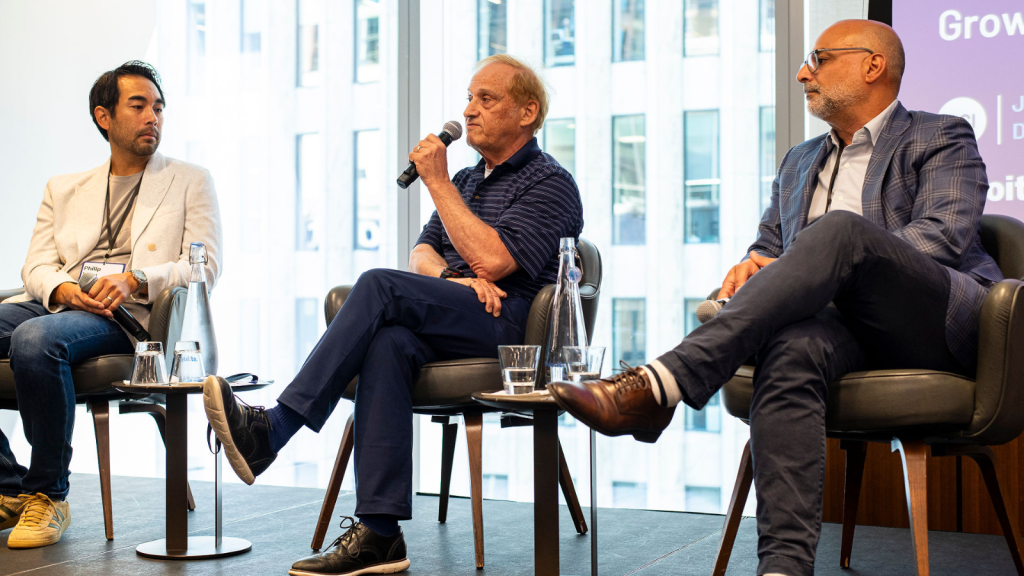
Moderated by Benoit Hardy-Vallée, a director in Deloitte Canada’s Human Capital practice, the discussion also included Philip Liew, co-founder and CEO of Tactable, and Robert Nardi, COO of Nakisa.
Hand AI to the technology department as a stack to buy, Zarek said, and it gets tested, parked, and left on the shelf.
The projects that survive need a name attached.
“It needs to be a personal interest of the CEO,” he said.
Delegate it to a middle manager and it loses the authority to change anything. The tech itself is pretty much never the hard part of the whole puzzle.
What mucks up the process is everything around it, including who owns it, what you measure, how you govern without choking it, and where you point it first.
Every one of those decisions lands on the desk of the person already answering to a board that wants AI results now.
It’s up to the CIO or CTO whether AI spreads through a company or never makes it out of the pilot.
The mandate nobody wants to hold
Zarek sees two extremes in how leaders are approaching AI.
One group is so wary of the risk that they hold back and wait, doing far less than they should. The other assumes the technology will remake the business on its own from the moment they buy in.
“There are organizations who believe they can literally transform their business by adding water and stirring,” said Zarek.
Neither side is doing the work, and according to him, the real answer is somewhere in the middle. Think of it as a long game of chess that rewards patience over enthusiasm.

Liew, whose company Tactable is a boutique data and AI firm that works with capital markets clients, has watched the top-down version collapse. Companies decide to trim budgets, telling staff to lean on AI. The next thing they know, the company rolls out a Copilot licence, only to find nobody using it.
“There has to be intentionality,” said Liew.
Nardi runs IT at Nakisa, a Montreal-based workforce-planning and decision-intelligence company, and he “wanted no part” of taking on the AI initiative.
The IT department is often the ones who most want AI owned somewhere else, because a tool stuck inside the tech department gets treated like software to install, not a fundamental change in how people work.
Then there’s the problem of knowing whether any of it is working.
Company logs and spreadsheets only tell you so much. Most of it is base-level information, like how someone got a licence, that people are logging in, and that a lot of tokens are getting burned.
All this only proves the tool is getting touched. Whether people are using them well is a whole other issue. In the beginning, Nardi was celebrating those who had high utilization numbers, which turned out to be the wrong place to look.
The curious people who used AI in smarter, more involved ways didn’t always top the charts, he said.
At one of Liew’s clients, one of the world’s largest hedge funds, staff is ranked by token consumption on a public leaderboard, with low scores treated as a black mark.
The bill for all that usage, he warned, is coming.
“There’ll be a huge reckoning in the future,” said Liew.
“They’re leveraging these KPIs in terms of how to direct change, how to drive that metric. Now, is that the right thing? I think that changes day to day how we want to optimize what KPIs are used, and I think it’s still in its infancy how we want to try and drive that.”
There is a time and place for adoption-related KPIs or objectives. But focusing on AI literacy at each person’s own pace could be the way in, according to Zarek.
“We have a strategy of crawl, walk, run, which is let people dabble, let them play in the sandbox, develop some comfort, and then slowly begin to put some structure,” he said.
“What you will find out in every organization is there are champions. They’re individuals who are keen and interested. You want to find, identify, encourage, and celebrate those people because they are very, very important influencers”

Block shadow AI, or unleash Mary in accounting
For Liew’s regulated clients, like pension or hedge funds, an unapproved tool slipping in through backdoor channels is a systemic risk.
Governance is a necessity for the sector, but it gives institutions transparency and a way to keep out shadow AI. And it needs to be a priority.
“I would argue that it’s a feature,” he said. “And what we’ve been helping guide through this strategy is how do we set up what is that process, so it’s not too burdensome, not too onerous.”
Let’s think back to the early PC era.
Zarek defended shadow IT that departments once tried to stamp out, arguing that people teaching each other builds the baseline literacy a company needs, faster than waiting on formal instruction.
“Mary in accounting and John in finance, if they can help each other learn how to use the tool, sort of side by side, you end up improving the AI literacy,” said Zarek.
The same freedom that helps people learn turns into exposure when companies build their own tools. Nardi’s enterprise clients run rigorous due diligence on his software before they buy, but some of them then build their own AI and forget to hold it to the same standard.
“Organizations build their own AI tools, but they’re not thinking about the auditability,” said Nardi. “They’re not thinking about, you know, where does this information come from, where does the governance come from.”
Ken Chan also warned about this blind spot. The next crisis is almost always visible to the people doing the work long before it reaches the boardroom.
Boards can’t govern what they don’t hear, which is an oversight failure waiting to happen.
Zarek described it as finding the right balance between bureaucracy and a free-for-all, because making it burdensome will “just stop the innovation,” he said.
Nardi’s own company took a people-first approach.
Initially, they started an AI advisory council, but hit the pause button. Instead, they got employees set up with the tools, and then caught up on the governance side.
They also built an external council, inviting customers to join and meet quarterly, which gave Nakisa a read on what clients were experiencing. In turn, they could adapt based on what they heard.

Hardy-Vallée noted that Zarek, in preparation for the discussion, had pegged change management at roughly 70% of the challenge. Nardi agreed, because there’s always something new coming up.
“It’s a huge challenge, and I think that challenge is continuing because once you think you’ve mastered everything, something else happens,” he said. “And we need to adapt again so that there’s a sort of continuous change management cycle that we need to go through.”
Start with data you already trust
For organizations wondering where to begin, Zarek said to look at your data.
“That’s the engine, that’s the fuel on AI,” he said. “Every organization has trusted data, and hopefully, in every organization, you can find a small set of high-quality data that you have vetted and you have comfort with.”
One of Compugen’s first AI projects was an HR benefits chatbot, built on about 100-150 pages of information the company had already.
“Do you want people to have to call Martha in HR to ask questions, or do you have a chatbot that will actually answer questions 24 hours a day,” he asked.
Sure, it was a small project, but it gave the company somewhere to learn. Compugen then applied the same approach to five or seven other internal data sets.
That’s a long way from buying an AI tool and hoping that your employees will figure out what to do with it.
IT can test the tools and keep them running. True adoption, though, depends on whether the business can turn them into useful work, give the right people enough authority to keep things moving, instead of leaving them to die in the IT department.
Final shots
- Lots of AI usage can still mean very little. Measure what people are getting done with AI, not just how often they open it or how many tokens they burn.
- AI tools that you own deserve the same questions you would ask a vendor. Where did the data come from, who can see it, and can you explain what the system did?
- You don’t need to solve the whole data problem before you start. Find information you already trust, put it to work on something useful, and learn from there.
Who really owns your AI rollout
#owns #rollout