Burnaby’s CIO went from putting out fires to catching them with AI
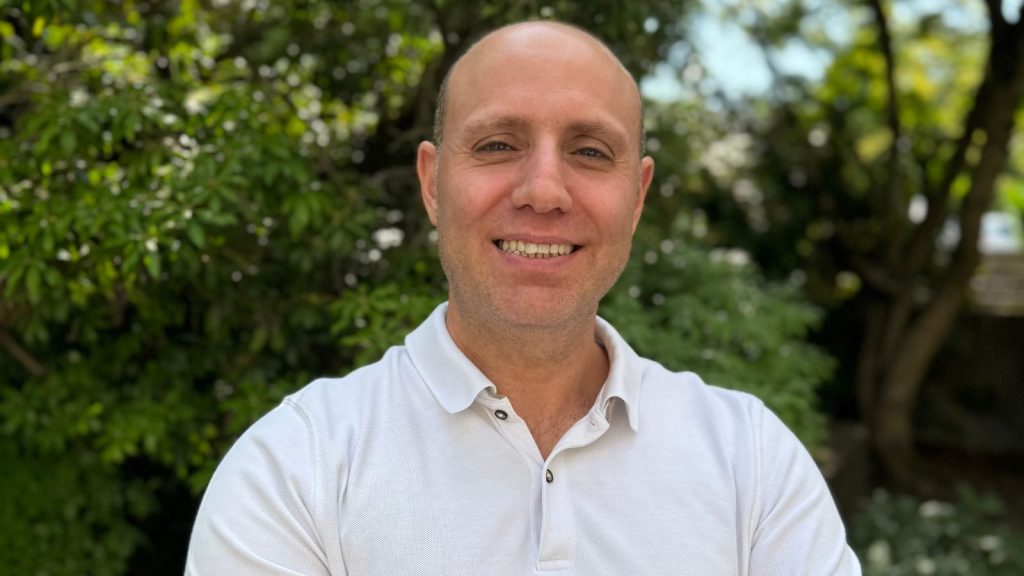
An AI camera system Bachar Khawajah’s team installed to watch over Burnaby Mountain picked up smoke from a fire in a neighbouring city and alerted Burnaby’s fire department before it had been told there was a fire at all.
That is not the story most people expect from municipal IT, and it is one small piece of what Khawajah has built as chief information officer for the City of Burnaby, British Columbia’s third-largest city.
Khawajah is a finalist for the 2026 CanadianCIO of the Year Award in the public sector category, presented by the CIO Association of Canada. Digital Journal is CIOCAN’s media partner, and we’re profiling the finalists ahead of the awards in Toronto this fall.
Khawajah came to the CIO office through project management, and by way of three countries. He studied computer science at the University of Indianapolis, finishing in 1999, then spent his early career in Dubai as a Java and later a PL/SQL developer, building content management systems and websites for the Dubai government, the police, and the exhibition centre.
He came to Canada in 2006 and kept working in projects, first at a Vancouver records-management firm whose clients included U.S. oil and gas companies, then as an IT project management office manager at HealthCare Benefit Trust, finishing an MBA along the way.
He arrived at the City of Burnaby in 2014 on a one-year contract to run a single project, and found a city with no real project management practice to speak of. He stayed to build one, standing up the city’s project management office between 2015 and 2016, running it for a few years, and becoming assistant director of IT infrastructure just before COVID. When the pandemic hit, he led the technology work that moved the city to remote work, and in September 2020 he became CIO.
What Khawajah inherited was a technology estate about seven years behind the city’s peers, and his answer was a five-year modernization program that he says came in on time and on budget.
His list of accomplishments is long.
Khawajah and his teams replaced an old Remedy system with ServiceNow, moved SAP off the city’s own servers and into the cloud, launched a 311 service and a citizen request system, retired the old file shares for managed document management, rebuilt the parks registration system residents kept complaining about, stood up an IoT program, and built a new data centre.
Of the projects that came out of that program, two show how he works, starting with permitting, where Ottawa was pushing cities to speed up approvals and Khawajah went at the process before the software.
He brought in KPMG to redesign it end to end across planning, development, and engineering, reconfigured the permitting system and a resident-facing portal, and then shipped permit types online in monthly agile sprints, beginning with a basic set and adding more each month, work the city is still extending today.
The second is SAP, and Khawajah says it was harder because the system reaches into everything the city runs and the fear of breaking it ran deep.
But the work he’s most proud of is what happened before the migration, in the close to two years he spent getting stakeholders aligned on what the city was trying to do.
He put SAP, PwC, and the city into one shared governance group that met regularly, so there was no finger-pointing between vendor and implementer when something went sideways. SAP initially estimated eight or nine months, and the city did it in six, a result he credits to the alignment rather than the technology.
Ask him what made any of it work and he points to people.
That is the through-line of his career, from the project rooms in Dubai to the council chamber in Burnaby, and it is what any tech leader in any sector can take from his story.
People before the technology
Khawajah came up through project management, and it shaped how he sees the job.
“People are central to everything,” says Khawajah. “80% of the work a project manager needs to do is actually communication.”
He has seen technically excellent projects come out the other side judged a failure because the people around them were never brought along.
“I have done projects where the technology was excellent, but because people were not aligned the project was perceived as not good,” he says.
When he works with his teams, he tells his team to skip the formal kickoff. Before a project has a meeting, he wants informal conversations, one person at a time, about how it changes their day and what they are worried about. He calls it a soft version of stakeholder analysis, and he says it reveals alignment that a formal meeting would have turned into resistance.
In government, that instinct extends to residents. Khawajah made it a rule that every project ties back to the person standing at a counter or waiting on a portal.
“I made it a clear priority that any work we do will put residents first,” says Khawajah.
It also means translating for the people who hold the budget. Council supports technology, he says, but it is not their native language.
“They don’t naturally go out and talk about technology. They go out and talk about roads, buildings, bridges,” says Khawajah.
Inside his own department, he runs what he calls a human organization.
He asks his leaders for “100% radical responsibility” and a culture with “no gossip, no blame, no drama.” He runs regular pulse checks, short surveys asking staff whether they can speak their mind and whether they can see their career path, then takes the results to a town hall with the whole IT team to work on fixes together.
The funding, ownership, and governance problem
Khawajah is candid about why municipal technology falls behind, and it is a useful window for any technology leader who thinks their own constraints are unique.
“The reason technology struggles, I attribute it to three things. One is funding, two is ownership, and three is governance,” says Khawajah.
Cities rarely have a consistent funding policy for keeping software and hardware current, he says, so modernization often waits on money from somewhere else such as a federal grant.
Ownership is murky because the technology serves other departments and residents, so it’s not always clear who should pay for it or keep it current.
Governance is the discipline of catching a system before it ages out.
Where he has control, he applies the test himself. A department proposes an initiative, and he checks whether it can be funded, whether his team can own and support it, whether it can be governed, and what value it brings, then works it through a business case and into the priority list.
For all of that structure, the hardest part of Khawajah’s job was never the technology. It was getting people who don’t report to him, council, other departments, and the residents footing the bill, to move in the same direction, and he starts that work well before any project does.
It begins with a strategy people have seen and shaped, which is why in February he ran a three-hour workshop with council and senior leadership, walked them through the digital strategy and its pillars, and asked what was missing. Once it was set he held to it, with one deliberate exception: a request with a business case strong enough to show the strategy itself missed something, which sends him back to update the plan rather than working around it.
He splits the portfolio deliberately. Roughly 60-70% goes to operations and keeping current, 20-30% to new initiatives and the platforms behind them, and about 10% to staying ahead of the market, so his team can be a reliable advisor when departments ask what is next.
The rest is trust, which he says does more to lower resistance than any argument.
“The stronger the trust is, naturally the fewer questions you will get,” says Khawajah. “You build trust by doing what you say you will do, and not doing what you say you will not do.”
Building that trust was harder for Khawajah than it should have been, because 12 years at the city meant his colleagues already knew him, but they knew him as the technical person who executed whatever project he was handed. He had run the delivery on close to every system the city operated, and stepping into the CIO role meant getting his peers and his council to see him differently, as the person who sets the technology direction and can be brought any question, not only the one who carries out the plan.
“I had to reset a lot of these relationships and rebuild my image as a CIO, not just a savvy technical person,” says Khawajah.
Khawajah credits the association now recognizing him as a finalist for the path that got him here. What first made him want to be a CIO, he says, was the CIO executive course he took through the CIO Association at Simon Fraser University.
“I really wouldn’t be here without the CIO Association of Canada,” says Khawajah. “If I was not exposed to the CIO Association of Canada at that point, I wouldn’t be here today.”

Life after the five-year modernization program
With the five-year program finished, Khawajah has moved his team to projects the city’s old systems could not have run. Burnaby started with broad AI tools like Copilot across the workforce, and from there he focused on narrower uses where the technology does a specific job.
One of those jobs sits inside the 311 contact centre, where a helping agent works alongside the staff who answer resident calls. Instead of clicking between screens to hunt for an answer while someone waits on the line, an agent can query the assistant and have the relevant information appear in front of them, which keeps the call moving and keeps the resident from listening to a keyboard.
On the permitting side, that system now has an AI layer he calls an e-check, which reads a permit application and returns a compliance report and a score before a planner picks it up. It runs on certain permit types today, and the open question in his office is how far to take it, whether the return justifies extending it across everything the city approves or whether it stays focused on the areas where it already pays off.
The newest work has moved out of the back office and onto the city’s construction sites, where Burnaby has major new buildings going up. Khawajah’s team is installing smart cameras that watch each build inside and out and feed the images into an asset management system, so the inventory for a finished building assembles itself instead of being entered by hand, though he is careful about what he calls the result.
“I wouldn’t call it a digital twin, but it is more an intelligent asset management system for our facilities,” says Khawajah.
The project Khawajah calls the most rewarding is the fire detection on Burnaby Mountain. To protect the mountain and the forest on it, his team mounted AI cameras on high points across the city and set sensors among the trees, all of it watching for the first sign of fire or smoke, and the system has already proven itself, reading smoke from a fire in a neighbouring city and alerting Burnaby’s fire department before the call came in.
A city that began seven years behind its peers now learns about a fire before the fire department does, which is a long way to travel in five years, and a fair measure of what the modernization was for.
Final shots
- The technology is rarely what sinks a project. Khawajah’s career says the harder work is getting the people who have to use a new system to accept it, and a leader who solves that before writing code gets further than one who buys the best tool and hopes.
- Public-sector technology falls behind for reasons that are structural, not technical, no reliable budget to keep systems current, and no clear owner responsible for replacing them before they fail. Any leader fighting the same fight in a company will recognize it.
- Trust is built the boring way, by doing what you said you would do enough times that people stop checking. It is slow, and there is no shortcut that replaces it.
This article is part of a series profiling the finalists for the 2026 CanadianCIO of the Year Awards, public sector category, presented by the CIO Association of Canada. The winner will be announced Oct. 1 in Toronto. Digital Journal is the national media partner for the CIO Association of Canada.
Burnaby’s CIO went from putting out fires to catching them with AI
#Burnabys #CIO #putting #fires #catching