Calgary’s quantum defence bub signals secure communications in Canada
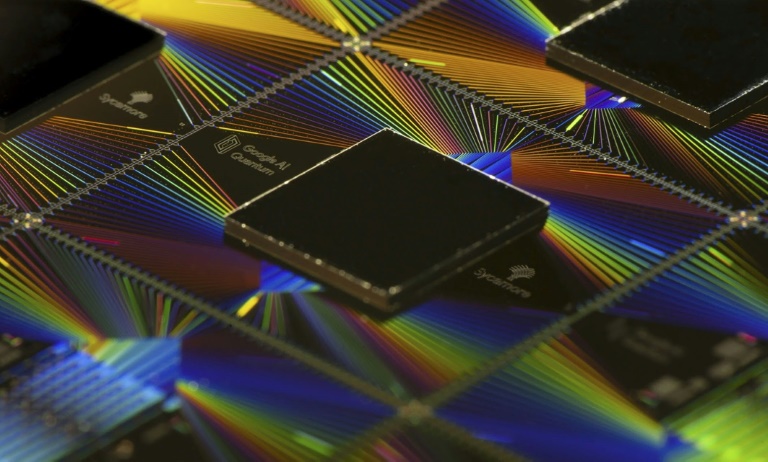
Canada has taken a significant step toward securing its technological future with the launch of the Quantum Defence Innovation Secure Hub (DISH) in Calgary. Backed by $20.3 million in federal funding over two years, the initiative is designed to accelerate the transition of cutting-edge quantum research into practical defence and security applications, with a particular focus on quantum-secure communications.
The announcement places Calgary at the centre of Canada’s growing quantum ecosystem and highlights a broader global race to develop technologies capable of protecting governments, military organizations, and critical infrastructure from emerging cyber threats.
Why quantum security matters
For decades, modern digital communications have relied on public-key cryptography. These encryption systems protect everything from online banking transactions to government communications. However, the emergence of powerful quantum computers threatens to undermine many of the encryption methods currently in use.
While large-scale fault-tolerant quantum computers do not yet exist, cybersecurity experts increasingly warn of a “harvest now, decrypt later” scenario, where adversaries collect encrypted information today in anticipation of future quantum systems capable of breaking that encryption. This concern has driven governments worldwide to invest in post-quantum cryptography and quantum-secure communication technologies. Canada has already begun preparing for the transition. The Canadian Centre for Cyber Security published a post-quantum cryptography roadmap, while federal departments are being directed to develop migration plans and adopt quantum-resistant cryptographic standards. Against this backdrop, the creation of the Quantum DISH represents more than a research investment. It is part of a national strategy to ensure Canadian defence and government communications remain secure in the quantum era.
The Quantum Defence Innovation Secure Hub is being established under BOREALIS (Bureau of Research, Engineering and Advanced Leadership in Innovation and Science), a federal defence innovation framework. Calgary’s hub is the third DISH facility launched in Canada, following initiatives focused on maritime technologies and uncrewed systems.
Led by a University of Calgary consortium, the facility will bring together researchers, industry partners, innovators, defence organizations, and government agencies. The objective is to create a secure environment where emerging quantum technologies can be developed, tested, validated, and transitioned into operational capabilities for the Canadian Armed Forces. According to National Defence Minister David McGuinty, quantum technologies will fundamentally reshape defence by transforming navigation, communications, sensing, and computing capabilities.
The focus on quantum-secure communications
Among the hub’s priorities, quantum-secure communications stand out as one of the most strategically important. Military communications networks face a growing range of threats, including cyber espionage, interception, and signal disruption. Existing encryption systems may not provide adequate protection against future quantum-enabled attacks. The Calgary hub will therefore support research into communication systems that remain secure even when adversaries possess advanced quantum computing capabilities.
These efforts are expected to include quantum-resistant cryptographic techniques, secure timing and synchronization technologies, and security validation and testing frameworks. Such technologies could eventually protect military command systems, intelligence networks, critical infrastructure, and potentially civilian communications platforms.
The Calgary initiative is not solely focused on communications. The hub will also explore four major quantum technology areas:
- Quantum sensing
- Quantum communications
- Quantum algorithms
- Hardware assurance
Quantum sensing is particularly interesting from a defence perspective. These systems could enable highly precise navigation without relying on GPS signals, which can be degraded, jammed, or spoofed during military operations. The ability to operate independently of satellite navigation has become increasingly important as geopolitical tensions drive concerns about electronic warfare. Hardware assurance activities will seek to validate and test quantum devices and systems before operational deployment, helping ensure reliability and resilience in challenging environments.
Calgary’s selection reflects years of investment in quantum research and innovation. The University of Calgary has emerged as a leading Canadian centre for quantum science through its Quantum City initiative, developed in partnership with government and industry stakeholders. Quantum City has been building infrastructure, commercial partnerships, talent pipelines, and research capabilities designed to accelerate the adoption of quantum technologies. The new defence hub strengthens this ecosystem by creating a direct pathway between academic research and practical national security applications.
University of Calgary President Ed McCauley described the federal investment as “transformational”, highlighting the institution’s established strengths in quantum computing, sensing, and communications. For Calgary, the initiative also reinforces the city’s growing reputation as a technology centre increasingly recognized for innovation in artificial intelligence, clean technology, digital infrastructure, and now quantum technologies.
Economic and strategic implications
The benefits of the Quantum DISH are likely to extend beyond defence. Historically, technologies developed for military applications have often generated significant civilian benefits. Advances in GPS, the internet, and satellite communications all have defence origins. Quantum technologies may follow a similar path. Secure communication techniques, sensing capabilities, and resilient computing platforms could find applications across finance, healthcare, transportation, energy, and telecommunications. The hub may also help strengthen Canada’s domestic technology sector by providing opportunities for startups, researchers, and established firms to collaborate on commercially valuable intellectual property.
Strategically, the initiative supports Canada’s broader goal of technological sovereignty. As countries increasingly compete for leadership in quantum technologies, developing domestic expertise is becoming an important component of both economic competitiveness and national security.
The launch of the Quantum Defence Innovation Secure Hub represents an acknowledgment that the quantum era is approaching faster than many expected. Although practical quantum computing remains an emerging technology, governments can no longer afford to wait until cryptographic vulnerabilities become reality. Nations that invest early in secure communications, resilient navigation systems, and quantum-enabled defence technologies are positioning themselves to maintain strategic advantages in an increasingly digital and contested world.
Calgary’s quantum defence bub signals secure communications in Canada
#Calgarys #quantum #defence #bub #signals #secure #communications #Canada