AI data centres face growing backlash: Are promised community benefits enough to offset environmental costs?
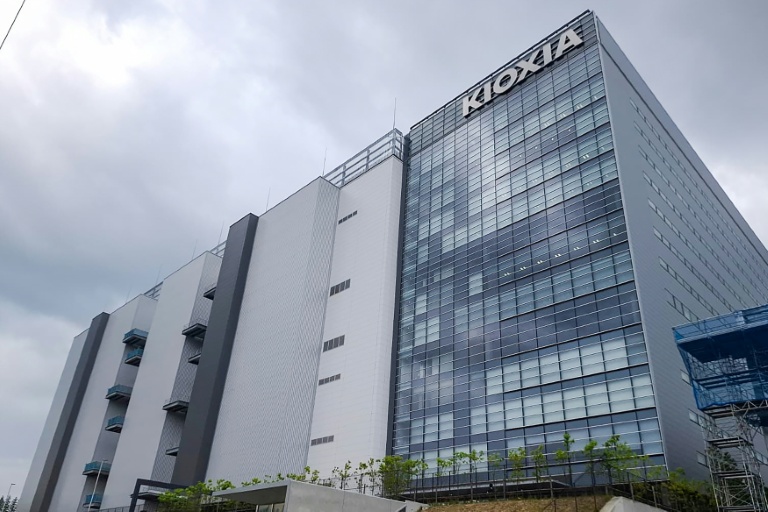
The growth of artificial intelligence has created an unexpected political flashpoint: the data centres that power it. Many communities are increasingly challenging proposals for new AI facilities, citing concerns over electricity consumption, water use, environmental impact and pressure on local infrastructure. What was once seen as a largely invisible part of the digital economy has become a source of public debate, with residents, environmental groups and policymakers questioning whether the benefits justify the costs.
Against this backdrop, some industry executives are urging a more nuanced discussion. Among them is Deven Soni, chief executive of AI infrastructure company Vertical Data, who argues that public concern about “mega data centres” is warranted but that not all projects should be judged by the same standards.
“There’s a lot of merit to the pushback on mega data centres,” Soni said. “When a project drains a county’s grid and water and gives nothing back, that criticism is fair.”
His comments reflect a wider tension facing governments and local authorities. Artificial intelligence is increasingly viewed as critical infrastructure and a driver of future economic growth. At the same time, the facilities needed to support AI are becoming larger, more numerous and more resource-intensive.
The environmental challenge facing AI infrastructure
The concerns surrounding AI data centres are not hypothetical. According to the International Energy Agency (IEA), AI is expected to become a significant driver of global electricity demand over the coming years as machine learning models grow more complex and computationally intensive. Modern AI systems require large numbers of specialised graphics processing units (GPUs), which consume substantial amounts of power during both model training and operation.
This demand is already influencing energy planning. In several regions of the United States, utilities are re-evaluating forecasts for future electricity consumption due in part to anticipated growth in data-centre activity. Similar concerns are emerging in Europe, where policymakers are attempting to balance digital competitiveness with climate commitments.
Water usage has become another source of controversy. Many facilities rely on water-based cooling systems to maintain operating temperatures, prompting questions about whether large data centres should be located in areas facing water stress. Research from institutions including the University of California Riverside has highlighted the potential scale of water consumption associated with AI technologies. Critics argue that communities often bear these environmental burdens while receiving relatively limited local benefits.
A question of economic value
Yet opponents and advocates rarely agree on the economic equation. Data-centre developers frequently emphasise construction spending, tax revenues and employment. However, some researchers note that once facilities become operational, staffing requirements can be relatively modest compared with other forms of industrial development.
Soni acknowledges the criticism but argues that debates often focus on the largest hyperscale facilities operated by major technology firms rather than the broader spectrum of data-centre projects.
“The backlash is throwing the baby out with the bathwater,” he said. “Every project gets treated like the Goliath.”
His argument centres on a distinction between greenfield developments and projects that reuse existing commercial or industrial assets. A growing number of operators are exploring whether abandoned factories, former office complexes and vacant retail properties can be repurposed as AI infrastructure. Such sites may already possess substantial electrical capacity and transport connections, potentially reducing some of the disruption associated with entirely new developments.
Supporters suggest that this approach could help communities bring underutilised properties back into productive use while generating business rates, investment and specialised technical jobs. However, whether these benefits materialise depends heavily on the specific project, local labour markets and long-term operational commitments. Not all redevelopment schemes succeed, and critics remain wary of broad claims about economic revitalisation.
Can data centres strengthen local infrastructure?
One of the industry’s more contentious claims is that data-centre growth can help fund improvements to ageing electricity infrastructure. “The revenue from these centres is also funding upgrades to the grid,” Soni said. There is some logic behind this argument. New facilities frequently require utilities to expand substations, transmission lines and supporting infrastructure. In some cases, those improvements can bring wider benefits to surrounding communities.
Yet energy economists caution that infrastructure costs are rarely distributed evenly. Whether residents ultimately benefit depends on regulatory arrangements, utility pricing structures and the extent to which upgrade costs are passed to consumers. As a result, the mere presence of a data centre does not automatically translate into improved infrastructure or lower costs for local residents.
Perhaps the strongest point emerging from the debate is that data centres vary enormously in scale, design and impact. A hyperscale campus requiring hundreds of megawatts of electricity is fundamentally different from a smaller facility integrated into an existing industrial property. Likewise, facilities serving local businesses or healthcare networks may have different economic and societal implications compared with infrastructure dedicated primarily to global cloud workloads. This distinction may become increasingly important as AI deployment expands.
Emerging technologies are improving hardware efficiency, while operators are experimenting with advanced cooling systems, renewable energy sourcing and alternative facility designs. Although these innovations are unlikely to eliminate environmental concerns, they could alter the long-term balance between costs and benefits. At the same time, many environmental groups argue that efficiency gains alone will not solve the problem if AI adoption continues to accelerate. Historically, improvements in computing efficiency have often been accompanied by increases in overall demand, a phenomenon known as the rebound effect.
For policymakers, the challenge is becoming less about whether AI infrastructure should exist and more about identifying what constitutes responsible development. Communities are increasingly demanding evidence that projects will deliver tangible local benefits rather than simply supporting corporate growth. Developers, meanwhile, face growing pressure to demonstrate transparency around energy consumption, water use and economic impact. The result is a debate that is unlikely to disappear as AI investment accelerates.
Soni’s central argument is that projects should be evaluated on their individual merits rather than grouped together under a single narrative. Critics, meanwhile, contend that the industry’s rapid expansion warrants greater scrutiny and stronger safeguards.
AI data centres face growing backlash: Are promised community benefits enough to offset environmental costs?
#data #centres #face #growing #backlash #promised #community #benefits #offset #environmental #costs