The case for new tech starts with the cost of the old
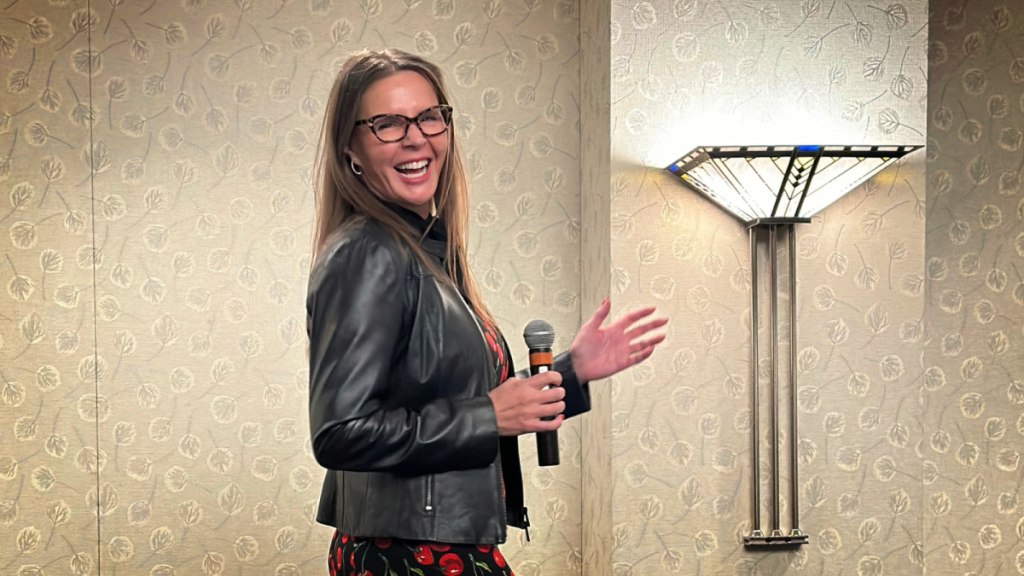
Five months into a new job at the Calgary Drop-In Centre in 2016, Helen Knight stood barefoot in a flooded server room with a mop, trying to save the servers and at real risk of electrocuting herself.
She’d taken the IT director job a few months earlier and made an intentional call to hold off on moving the data into cloud storage while she shored up the physical problems first, protecting the one-time board money she’d need for a proper rebuild.
The flood came before the rebuild did. The servers survived, and so did she.
“Maybe don’t die at work,” laughs Knight, which is a solid piece of business advice.
Knight has spent close to three decades in technology, including the past decade working with nonprofits, where the technology problem is often much larger than the budget.
She’s a finalist for the CanadianCIO Fawn Annan Memorial Award, an annual award for women in IT leadership, part of the CanadianCIO of the Year Awards presented by the CIO Association of Canada.
Knight runs her own firm, Helen Knight Nonprofit Technology Consulting, and has led technology at the Drop-In Centre, the Salvation Army in Canada, and Legal Aid Alberta. She was the first woman to serve as president of the CIO Association of Canada’s Calgary chapter.
She spent more than a decade in well-funded private-sector tech first, the kind of place with a specialist for every problem, and she says that’s what she leaned on in a sector that tends to hire its own.
She got into the sector by luck, she says. She volunteered at the Drop-In once a month, served lunch, felt good about herself, and moved on with her day. When the shelter posted its top technology job, her time as a volunteer got her the interview.
The technical challenge waiting for her called on everything she’d learned in the private sector, and she found herself wishing she’d arrived years earlier instead of only spending them serving lunch once a month.
“I wish I hadn’t been serving sandwiches for three years,” says Knight.
The person who’d run the shelter’s technology before her had built it on a budget of maybe $500 a year, with all donated hardware and free software wired into a setup she says “could crack an egg and make you toast.”
VCR and cassette tape included.
When Knight arrived, she found Windows 98 in 2016, a dozen access databases, an unstable hand-coded CRM, and one computer carrying 1,024 viruses.
“My plan for the first couple years was just to cry if we got a cyber attack,” says Knight.
The old system is the expensive one
Before Knight pitches anything new, she puts a number on what the old system already costs.
She talks to people in each role and adds up the hours the current tools burn. The case manager fighting a fax machine for 40% of the day, or the caseworker keying the same data into two systems because nothing connects, all of it multiplied across the staff, the weeks in a year, and a living wage.
She’s run those numbers at nonprofits across North America, enough times to know what she’ll find.
“I have never found a calculation of lower than $2 million being squandered unintentionally by utilizing inefficient software,” says Knight.
With that cost on paper, she has something concrete to take to grant funders, giving the organization a shot at modernizing without pulling money from services.
The reason it has to come from outside, Knight says, is the way charities are judged.
Funders and rating systems can factor overhead into how they assess a charity, and Knight says a one-time technology project can make those numbers look worse.
Knight says an organization that’s run on a $500 technology budget for decades can spend the couple of million it takes to modernize and watch its numbers move the wrong way in the same year it starts helping more people and closing its security holes.
She says there are organizations she could not find the money to modernize and still worries about.
“Those nonprofits are still lying out there bleeding and at risk,” says Knight.
Finding expertise outside a job posting
Knight looked for places where the organization had a real problem to solve and someone else had a reason to help solve it.
At the Drop-In, she brought in eight practicum students from a technical school and got the network switches donated. She worked with a professor to build a course exam around the shelter’s own infrastructure, so the students competed on how to modernize the network. The selected design got built, and students came back to install it.
The students got hands-on experience and the shelter got a modern network it couldn’t have paid a firm to build.
The students had an effect on the room, too. Knight watched their excitement about the work reach the long-tenured staff who’d stopped noticing it, and pull them back toward the part of the job they used to like.
She also brought in women from her corporate network who’d been out on maternity or parental leave and were weighing how to step back into technology.
They worked with her for a stretch, she wrote each of them what she calls a “raving letter of recommendation,” and the shelter got expertise it had no budget for. She’s done the same with people she’d known in the industry who were out of work through a downturn, glad of a place to refresh a resume.
“There’s so many more creative ways out there to solve your problems than just with money, and they’re better quality solutions,” says Knight.
Her private-sector years gave Knight examples from the other end of the budget spectrum.
Knight says she has seen billion-dollar organizations replace working ERP systems after problems with planning, communication, and decisions that had not been worked through before the build began.
Spend enough money without sorting that out first, and you can end up replacing the system that was doing its job.
Fix the foundation before you chase AI
The enthusiasm for AI doesn’t worry Knight. Where it goes wrong, she says, is the organizations reaching for it while the systems underneath are still failing.
“If your infrastructure is still crumbling, it’s not the time,” says Knight.
Knight is working with IBM and its Watson AI on 211 Ontario, the free service people call to find community, social, health, and government supports near them, from help caring for an aging parent to food security to a way out of an unsafe home.
Its directory runs to more than 60,000 programs and services, and the navigators answering the phones have long been slowed by an old classification system while a caller is in crisis.
Knight says IBM used 211 resources, including academic reports and historical information, to build the Watson-based tool. It can suggest related needs a navigator might otherwise miss, so someone phoning about housing gets asked about intimate partner violence, or childcare, or whether there’s food in the house.
“Maybe you’re phoning about a symptom and not the source,” says Knight.
The system won’t listen in on calls on its own, at least not to start. Navigators reach for it when they want it, and Knight says the team is checking for hallucinations as it rolls out the tool, because some of these calls involve life-and-death problems.
Knight says the 211 Ontario project is scheduled to go live this month.
And just a few weeks later, she’ll be in Toronto for the CanadianCIO Awards, where she is a finalist for an award named after someone she looked up to.
Knight met Fawn Annan over lunch in 2018 and happened to sit directly across from her. She remembers watching Annan deal with a man at the table who kept interrupting her. Annan did not ignore it, and she did not turn it into a confrontation. She kept bringing the conversation back to one between peers.
“I wanted to pull out a notepad and stop eating lunch,” says Knight.
Knight later began writing for IT World Canada, where Annan was president, and in 2019 Annan presented her with a Transformation Leader of the Year award. But Knight says the lesson she carried forward was how Annan led.
During the pandemic, when Knight saw women with young children trying to pretend those children did not exist during work calls, she started arranging for her own daughter to interrupt some of her presentations.
She wanted other women to see that a technology leader could stop, deal with what was happening at home, and then come back to the meeting.
That is the part of Annan’s example Knight is still trying to pass on.
“I’d rather have her than the award any day,” says Knight.
Final shots
- Put a price on the old system before making the case for the new one. Lost staff time, duplicate entry, and workarounds are already costing the organization money.
- A small hiring budget pushed Knight beyond the usual job posting. Partnerships with schools and people returning to tech brought in expertise and fresh experience on both sides.
- For AI, start with a tool people can choose when to use. Knight’s 211 rollout keeps navigators in control while the team checks the system’s output before expanding its role.
This article is part of a series profiling the finalists for the 2026 CanadianCIO of the Year Awards, presented by the CIO Association of Canada. The winner will be announced Oct. 1 in Toronto. Digital Journal is the national media partner for the CIO Association of Canada.
The case for new tech starts with the cost of the old
#case #tech #starts #cost