Review: Has AI been chasing the wrong dream since Alan Turing?
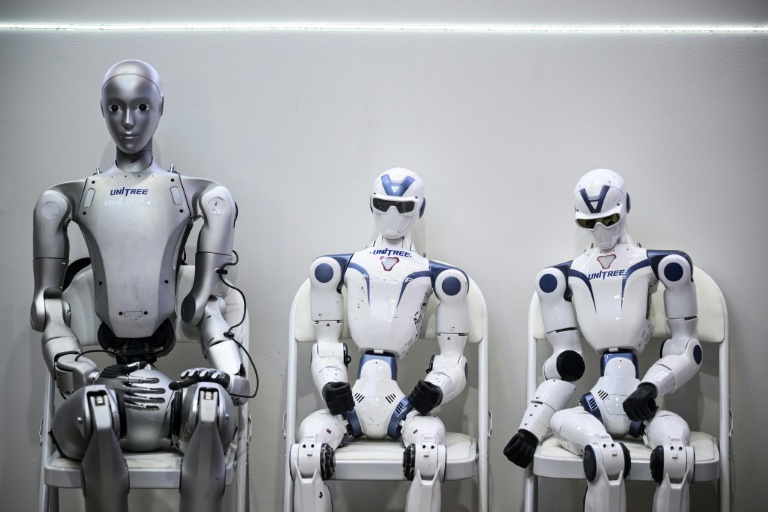
Artificial intelligence has advanced at a remarkable pace, from large language models that can generate essays and computer code to agentic systems capable of coordinating tasks across digital environments. Yet a new argument from computer scientist Peter J. Denning suggests that AI may be pursuing an impossible objective: machines that appear increasingly capable but never truly understand the human world.
In his new book, Turing’s Mistake: Escaping the Yoke of Unintelligent Machines, Denning argues that modern AI has inherited two flawed assumptions from Alan Turing’s influential 1950 paper, “Computing Machinery and Intelligence.” Turing proposed replacing the difficult question “Can machines think?” with the more operational “imitation game,” now widely known as the Turing test.
Denning’s challenge is that the test blurred a crucial distinction: the difference between imitating intelligence and possessing understanding. According to Denning, Turing’s ideas encouraged the belief that intelligence could be separated from the human body and recreated in software, and that a machine’s ability to imitate human conversation could be treated as evidence of intelligence.
This, Denning argues, has shaped three-quarters of a century of AI research. His central claim is stark: artificial general intelligence, or AGI, may not be achievable because the most important parts of human intelligence cannot be encoded into machines.
The tacit knowledge problem
At the centre of Denning’s critique is the concept of tacit knowledge. This is the vast domain of human understanding that is difficult, and perhaps impossible, to formalise. It includes common sense, practical know-how, intuition, emotional recognition, cultural awareness, and the subtle contextual judgements people make every day. Humans know how to interpret a raised eyebrow, a sarcastic remark, an awkward silence, or the difference between a joke and an insult. Much of this knowledge is not stored as explicit rules. It is embodied, social, historical, and learned through participation in human life.
Denning argues that machine learning systems cannot capture five major categories of tacit knowledge: common sense, everyday interactions with people and environments, feelings and perception, performance skills, and the social and historical knowledge embedded in culture. This matters because the current AI boom relies heavily on systems that process patterns in language and data. Large language models can generate fluent and convincing text, but Denning argues that they manipulate symbols rather than grasp meanings. In his view, words are not the same as the human experiences and assumptions that give words significance.
Why common sense resists computation
The history of AI contains repeated attempts to encode common sense into machines. One of the most ambitious was Douglas Lenat’s Cyc project, which began in the 1980s and sought to build a large database of everyday knowledge. Denning notes that after decades of effort, even millions of formal entries could not amount to the background understanding needed to make expert systems truly expert. This is not simply a question of scale. Adding more rules or training data may not solve the problem if the missing ingredient is not information but lived experience.
Denning gives the example of skill. A virtuoso musician may perform beautifully but cannot fully explain, in propositional form, how to create that performance. Descriptions of outcomes can be written down, but embodied know-how cannot easily be converted into machine-readable instructions. This creates what Denning calls a representation problem. Computers operate on data that has been encoded into formal structures. Human intelligence, by contrast, depends heavily on capacities that do not naturally present themselves as code.
Denning’s argument also places strong emphasis on context. Human conversation is never purely literal. Meaning depends on setting, prior experience, relationship, tone, shared assumptions and cultural background. A statement that is humorous in one context may be rude in another. A technically correct answer may be inappropriate if it ignores the social situation. A machine may generate a plausible sentence while failing to understand the human context in which the sentence will be received.
Culture deepens the problem. Denning describes culture as involving values, norms, history, communities, power, care, and judgement. These are not easily reducible to training datasets. Scaling up large language models with larger neural networks may improve performance, but Denning argues that scale alone will not provide machines with embodied cultural understanding.
The concern is not only that AGI may be impossible. Denning warns that AI systems may become powerful and socially disruptive without becoming genuinely human-like. This is an important distinction. Many debates about AI safety focus on hypothetical superintelligence. Denning’s concern is more immediate: networks of automated systems may develop forms of machine intelligence that are alien to human concerns, difficult to interpret, and capable of imposing rigid machine logic on society.
In other words, the danger may not be that machines become too much like humans. The danger may be that machines become influential while remaining profoundly unlike humans. If AI systems cannot understand tacit human meanings, then aligning them reliably with human goals becomes difficult. Instructions may be followed literally but inappropriately. Automated systems may optimize measurable targets while ignoring unspoken values. Institutions may increasingly shape human activity around what machines can process, rather than what people actually need.
Reasserting the human difference
Denning’s book is not an argument against computing or against useful AI tools. Rather, it is a challenge to the assumption that human beings are merely information-processing machines waiting to be replicated.
The practical message is that society should be cautious about surrendering judgement to systems that simulate intelligence but lack care, understanding, responsibility and embodied human experience. AI can classify, predict, summarize, generate and automate. These are powerful capabilities. But Denning’s argument is that such capabilities should not be confused with wisdom, common sense or human understanding.
Review: Has AI been chasing the wrong dream since Alan Turing?
#Review #chasing #wrong #dream #Alan #Turing