Drones take flight across Canadian agriculture to raise the productivity bar
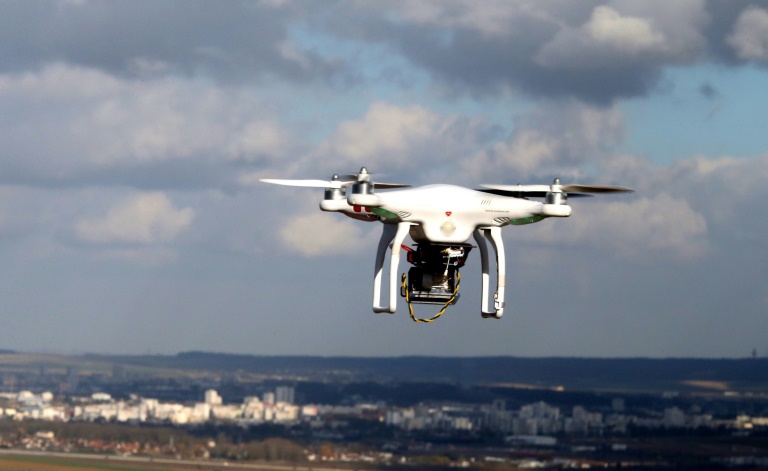
The increasing use of drones in agriculture represents one of the most visible examples of precision farming in action. Once seen as niche technology, unmanned aerial vehicles (UAVs) are now becoming central to modern agricultural operations, particularly in large-scale farming regions such as Canada’s Prairie provinces.
Drones offer farmers the ability to collect high-resolution data, act quickly on emerging risks, and optimise resources in ways not previously possible. Yet alongside these benefits are economic, technical, and regulatory complexities that must be carefully managed if their promise is to be fully realised.
A new perspective: Crop monitoring and data-driven farming
One of the most widely adopted applications of drones is crop monitoring and health assessment. Equipped with multispectral or thermal sensors, drones can capture detailed imagery that reveals plant stress, disease, or nutrient deficiencies long before they are visible to the human eye.
In the Canadian context, this capability is particularly valuable given the scale of agricultural land. A drone operator can survey hundreds of acres in a single day, generating actionable data that supports rapid intervention. This form of monitoring underpins a broader shift toward data-driven decision-making. Instead of applying fertilisers or pesticides uniformly, farmers can use drone-generated maps to target specific areas of need. The result is not only improved crop outcomes but also reduced input waste.
Economically, the benefits are tangible. By identifying problems early and limiting treatment to affected zones, farmers can significantly reduce costs while protecting yields. In some scenarios, input use can be cut by up to 30–50% compared with traditional broadcast methods.
Precision application: Smarter spraying and input optimisation
A second major application is precision spraying, where drones are used to apply fertilisers, herbicides, or pesticides with high accuracy. Unlike conventional ground-based or aerial spraying, drones can operate close to the crop canopy and avoid obstacles such as uneven terrain or infrastructure. This enables more uniform and targeted application, improving efficacy while reducing environmental impact.
From an economic standpoint, precision spraying addresses two major challenges facing agriculture: rising input costs and labour shortages. Drones can cover large areas quickly with minimal manpower, reducing reliance on seasonal labour while improving productivity. Research suggests that drone-assisted farming can reduce labour and input costs by approximately 20–30% per hectare, depending on crop type and operating conditions.

There is also a resilience benefit in that drones can be deployed in conditions where traditional equipment cannot operate, such as waterlogged fields. This flexibility can prevent delays in treatment that might otherwise lead to significant yield losses.
Mapping, surveying, and yield optimisation
A third key application lies in field mapping and land analysis. Using GPS-guided flight paths and high-resolution sensors, drones can generate detailed orthomosaic maps and 3D terrain models. These maps provide insights into soil variation, drainage patterns, and irrigation performance, allowing farmers to optimise field management strategies.
In Canada, where farms often span thousands of acres, this level of spatial detail is particularly valuable. Traditional surveying methods can be expensive and time-consuming, whereas drones provide a cost-effective and repeatable solution. The integration of drone data with farm management software further enhances its value. Farmers can create variable-rate application plans, adjusting seeding, fertilisation, or irrigation according to local conditions within a field. The outcome is improved yield consistency and more efficient resource use, supporting both economic and environmental goals.
Beyond crops, drones are also being used to monitor livestock and agricultural infrastructure. In large or remote pastures, drones enable farmers to check on animals, inspect fencing, or assess damage after extreme weather events. This reduces the need for manual inspection and enhances safety. Similarly, drones can be used to evaluate drainage systems, irrigation networks, and field conditions following heavy rainfall, contributing to faster recovery and reduced downtime.
Such drones offer a cost-effective alternative to traditional aerial scouting, which often involves significant operational expenses. However, the economic benefits are not uniform. The return on investment depends heavily on scale. Larger farms are better positioned to absorb the initial cost and maximise utilisation, while smaller operations may struggle to justify the expenditure.
The downsides: Cost, complexity, and regulation
Despite their advantages, drones are not without limitations.
- High upfront cost: Professional agricultural drones equipped with advanced sensors can cost anywhere from several thousand to tens of thousands of dollars, with additional expenses for maintenance and software.
- Technical and data challenges: Drones generate vast amounts of data, requiring specialist tools and skills for analysis. For some farmers, this creates a barrier to effective use.
- Regulatory complexity: Drone operations are subject to aviation regulations, which can limit how and where they are flown. Licensing, flight restrictions, and compliance requirements add complexity, particularly for spraying applications.
- Operational limitations: Battery life, weather sensitivity, and limited payload capacity constrain drone performance. Flights are typically short, and adverse weather conditions can ground operations.
- Equity concerns: There is also a risk that drone adoption could widen the gap between large and small farms, with larger operations benefiting disproportionately from the technology.
In Canada, where large-scale farming and favourable operating conditions align well with drone capabilities, the technology is particularly well suited to widespread adoption. Yet its success will depend on overcoming practical barriers, notably cost, skills, and regulation.
Drones take flight across Canadian agriculture to raise the productivity bar
#Drones #flight #Canadian #agriculture #raise #productivity #bar