
Op-Ed: China vs US: Espionage, Guesspionage, Nvidia, and very different perspectives
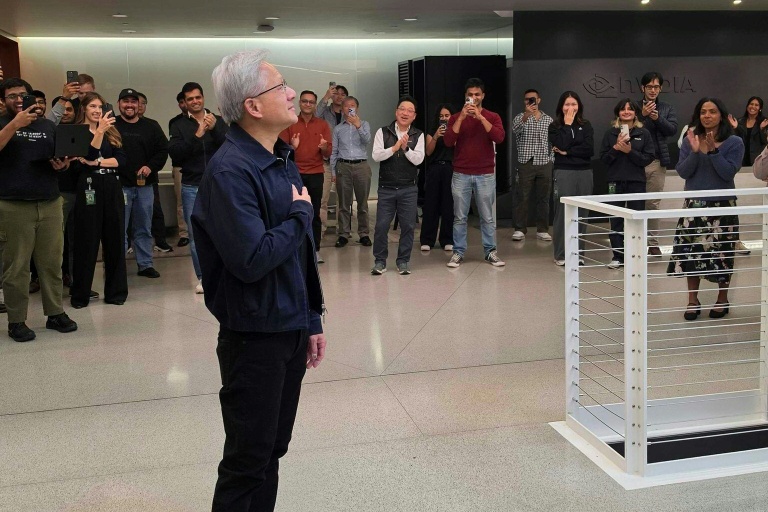
The melodrama about Jensen Huang wasn’t exactly productive. The noisy intervention of Trump and Musk to reinstate him polarized opinions and generally soured the image of the US. Not a single issue raised was solved.
One thing the Huang affair definitely did not do, or affect in the slightest degree, was change the reality of the China vs US technological Cold War. Huang’s return has in fact opened up a new can of worms as people wonder whether China will get access to Nvidia chips anyway.
Guesspionage
Whether or not there was actual espionage has also not been settled. That whole issue has been buried rather conspicuously. The guessing game is back in full swing. The guessing game also is ignoring quite a few blatantly obvious things, too.
In purely espionage terms, such a fuss is hardly best practice.
Why bother to do a complete and very public soap opera at top-tier management level at all?
What’s wrong with achieving exactly the same thing with a few discreet phone calls?
What makes anyone think Huang is the sole source of chips?
Did China actually obtain Nvidia chips or any other benefit as a result of the Huang affair? Nobody seems to know. What is known is that a third entity in Southeast Asia called Megaspeed, related to Alice Huang was able to position itself to source computing resources and perhaps chips. In terms of US restrictions against China, the legalities are murky at best, and China denies involvement.
This third-party scenario is almost routine in global trade and is a simple way of evading sanctions. In this case it’s also the most obvious way of doing it.
The much bigger picture
Strategically, the China vs US tech saga should be ringing all available alarm bells in the US. There are much bigger issues than Nvidia also getting ignored.
Against the backdrop of US amateur theatricals, China’s gigantic trade surplus has soared, despite reduced exports to the US. US sanctions and tariffs have simply caused China to expand into other markets. These markets can also spread Chinese tech market penetration globally simply by using that tech for ordinary trade.
By contrast, US trade has risen modestly this year, but only about 1 or 2 per dent overall on a net basis. These are lousy numbers. That percentile equates to stagnation. This is hardly a stellar performance, and in terms of direct competition with China, US trade performance is far beyond abysmal.
While the US is chasing moths in the headlines, China is winning the trade war. This is what will ultimately decide the US vs China technological Cold War.
A very different Chinese perspective
China simply doesn’t believe that US trade measures will work. China doesn’t need to argue every point as the US seems to feel it must.
They’re not openly contemptuous of the various US political attempts to ramp up restrictions against China, but there are hints.
This excerpt from the Global Times says a lot:
He Weiwen (senior fellow at the Center for China and Globalization) noted that Washington needs to wake up from the outdated Cold War mindset of the 1950s, break free from its obsession with zero-sum games, stop arbitrarily wielding the “national security” stick to stigmatize and contain China’s tech industry, and return to the path of mutually beneficial cooperation in the semiconductor and AI sectors between China and the US. “Political maneuvering that insists on fabricating imaginary enemies is a dead end,” he said.
This is a very polite way of saying, “It doesn’t work, you know it doesn’t work, let’s talk business”. These political measures, by the way, are pretty much the same as “ban China from accessing tech” as the administration’s efforts.
The point here is that it’s really not working, and it can’t. Future tech and even some current tech will obliterate the whole rickety and progressively ineffectual idea of containment of China. This is the same policy as the 1990s, and it failed miserably. The Chinese are right. The world must move on from this constant state of useless conflict that achieves nothing.
Unless the US is worried that it can’t compete? That makes more sense than constantly and hypocritically butting heads over every possible subject with its own major trading partner. If so, it’s an admission of weakness that could bite hard in future.
Let’s try a little realism, if only for the sake of novelty:
The world interfaces with Chinese technology directly or indirectly at whatever level of remove at just about all levels of commerce. That’s not going to change. It will expand.
New generations of commercial tech will distil these interactions, excuse the pun, into more efficient transactional operations. See any security issues? See any practical issues? How can you not have the tech to do the jobs? Game over, sanctions.
Can you safeguard every single line of code and every piece of hardware against routine commercial theft by anyone on Earth? No, you can’t, and you never have.
AI and trade are the open barn doors for these new broods of techno-chickens to come and go as they please. The total failure by the US to control or even pretend to control AI has made things far more insecure. The Nvidia affair has simply proven how ineffectual these restrictions really are.
You don’t even need espionage to acquire new tech. Can AI agents be compromised, coerced, or simply turned into agents for the other side? What’s going to stop one rogue agent anywhere on Earth from simply bypassing restrictions whenever they want? Can you do anything about that?
How much information is lying around in Open Source Land to infer chip composition and capabilities?
It’s that absurd. 5 years from now, a company CEO having an affair and pretending that reinstating him solves anything will look like a pretty flimsy reason for ignoring the obvious.
US technological supremacy is not a given
Foreigners, particularly US allies, often despair at the sheer insularity of US policies. It’s usually impossible to tell whose side the US is on. All you can be sure of is that it’s not on its own side.
The current US “administration” has failed utterly to see the deeper long-term strategic issues with China. Ironically, US insularity is very similar to Chinese Imperial insularity, seeing the rest of the world as inferior. Imperial China banned foreign technologies and trade, which resulted in the infamous and aptly named Century of Humiliation that destroyed the Qing Dynasty and created modern China.
The parallels go further. The antiquated US revenue system, massive corruption, regressive workplace and social policies, and general poverty look very similar to the last gasp of Imperial China. The Chinese know that. The Americans don’t.
In this environment, how secure is US technological supremacy? Not very. The truly hideous US brain drain, driven by bizarre education, science, and funding has done nothing to ensure the current generation of expertise, let alone future generations.
How do you maintain “supremacy” with no people? You don’t. A strategic policy that has some relationship with reality may be required.
Op-Ed: China vs US: Espionage, Guesspionage, Nvidia, and very different perspectives
#OpEd #China #Espionage #Guesspionage #Nvidia #perspectives





