Whale ‘snot’ provides a new route to whole-genome sequencing
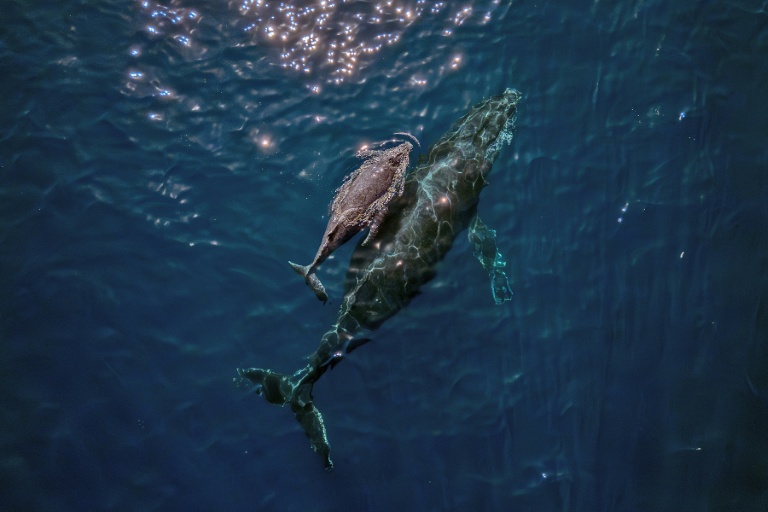
For a genetic sample, “whale snot” sounds distinctly unpromising. Yet the plume of moist air expelled when a whale surfaces contains something scientifically valuable: enough of the animal’s cells and DNA to reconstruct its genome. Researchers led by scientists associated with the University of St Andrews have demonstrated that DNA gathered from the exhaled “blow” of humpback whales can be used for whole-genome sequencing. Their study, “Breath to genome: Whole Genome Sequencing of Large Whales from Blow Sampling,”published in Molecular Ecology Resources, points towards a less invasive way of obtaining genetic information from some of the world’s largest animals.
The development matters because genetic and genomic information can contribute to understanding and conserving whale populations. This includes determining genetic diversity, investigating relationships between populations and individuals, estimating population characteristics and detecting inbreeding.
Until now, obtaining genome-scale information from living whales has generally depended upon securing a tissue sample, normally through biopsy. The new work suggests that, in some circumstances, the animal simply breathing may provide what researchers need. The researchers fitted sterile Petri dishes to small commercially available drones and flew them through the visible plume produced as individual humpback whales exhaled at the surface. A typical sampling encounter involved passing through between one and six breaths during a surfacing. The resulting material coating the collection dishes might colloquially be described as whale snot. More technically, the aerosol contains biological material originating from the respiratory tract, including cellular DNA.
Across the project, the scientists obtained 58 blow samples from 26 individual humpback whales in the North Pacific. Despite the unconventional sampling medium, around 84 per cent of the DNA recovered from the blow belonged to the whale itself. This concentration proved sufficient to obtain low-coverage nuclear genomes as well as high-coverage mitochondrial genomes.
Nuclear DNA contains genetic information inherited from both parents, whereas mitochondrial DNA is inherited through the maternal line. Examining the two consequently provides complementary information about populations and ancestry. Most importantly, the researchers tested whether their unconventional samples told the genetic truth.
Repeated blow samples obtained from the same whales, including encounters separated by different occasions and two different years, produced matching genomic results. Where researchers also possessed biopsy material from the same animal, the genome obtained from its breath matched that derived from its tissue. The method also correctly identified the sex of each animal tested and revealed three previously undescribed mitochondrial DNA variants.
Conservation without the dart
Traditionally, collecting DNA from a free-ranging whale can involve approaching the animal by boat and using a dart to remove a small quantity of skin and blubber. Although biopsy is an established scientific technique, it cannot always be used. Practical difficulties, animal disturbance, permitting considerations and the characteristics of the species being investigated can limit sampling opportunities.
Collecting blow offers a potentially valuable alternative because the genetic material leaves the animal naturally. The St Andrews-led research also demonstrates that a boat is not necessarily required. More than a third of the samples were obtained by launching drones directly from land.
The scientists incorporated animal-welfare precautions into the sampling procedure. Resting whales were not targeted and a drone flight was stopped if an animal exhibited a reaction. When whales were travelling together, the researchers targeted the most upwind individual in an effort to reduce the chance of collecting DNA blown from neighbouring animals. That precaution appears to have worked. Samples taken from animals swimming in groups showed no indication of cross-contamination from the other whales.
The research was conducted in Gitga’at First Nation territory in the Kitimat Fjord System of northern British Columbia, Canada, under research agreements between the Gitga’at First Nation and the North Coast Cetacean Society. Drone operations were conducted under a Fisheries and Oceans Canada research permit, with the work undergoing animal-welfare and ethical review at the University of St Andrews.
Reading population history from breath
Obtaining DNA is one thing; demonstrating that it can answer meaningful questions about a population is another. Here the blow-derived material performed well. Estimates of genetic diversity calculated from the samples were similar to those generated using conventional biopsy material. The investigated population showed little evidence of recent inbreeding. Where researchers detected long stretches of genetically identical material, these were considered more consistent with distant common ancestry or historical population bottlenecks.
The work is also significant for the genomic representation of North Pacific humpback whales. Before this research, according to the researchers, just one whole genome from a North Pacific humpback whale was publicly available. The blow samples therefore provide an opportunity to move from isolated genomic information towards population-level analysis. The results also separated North Pacific humpbacks genetically from North Atlantic animals, as would be expected from conventional genomic studies. This provides another useful test of whether breath-derived DNA behaves as researchers would expect biologically.
Lead researcher Dr Éadin O’Mahony, who was based at the Scottish Oceans Institute at the University of St Andrews during the work, says the genomes can now be applied to questions extending beyond basic population description. “We will use these blow-derived genomes to not only assess population structure and health, but also assess kinship and family ties among humpback whales foraging in northern British Columbia,” O’Mahony said.
“The aim is to understand how their social bonds form: are the whales that forage together family, or long-term friends?”
One sample, two biological worlds
There is another intriguing aspect to the research. Not all DNA captured in a whale’s exhalation belongs to the whale. Approximately 16 per cent came largely from microorganisms inhabiting its airways. Consequently, a single drone flight could potentially recover information about both the host genome and the animal’s respiratory microbiome.
This adds another dimension to blow sampling. Microbiomes are complex communities, and analysing them increasingly involves sequencing and bioinformatics capable of discriminating between numerous microbial sequences and their host background. Genomic and metagenomic approaches are becoming important tools for interpreting such complicated biological communities.
If respiratory microbial communities can eventually be associated reliably with health or disease, whale blow could offer researchers a non-invasive biological monitoring system rather than simply a convenient source of DNA. That possibility, however, requires further research before microbiome patterns can be interpreted as indicators of an individual whale’s health.
There are practical limitations. A drone still needs to intercept the plume successfully; weather, animal behaviour and operating restrictions can affect sampling. Low-coverage nuclear genomes also do not replace every application of deeply sequenced tissue DNA.
Nevertheless, the achievement represents a change in how researchers can think about biological sampling. A few seconds above a surfacing animal can potentially yield information about sex, ancestry, genetic diversity, relatedness, population history and microbial passengers, without removing tissue.
For whale conservation, the important innovation may therefore be less about the drone itself than about recognising an overlooked biological specimen. Every time a whale surfaces and exhales, it temporarily releases part of its biological identity into the air. Genomics has now become sensitive enough to catch it.
Whale ‘snot’ provides a new route to whole-genome sequencing
#Whale #snot #route #wholegenome #sequencing