
Human movement emerges as key predictor of Bundibugyo Ebola spread
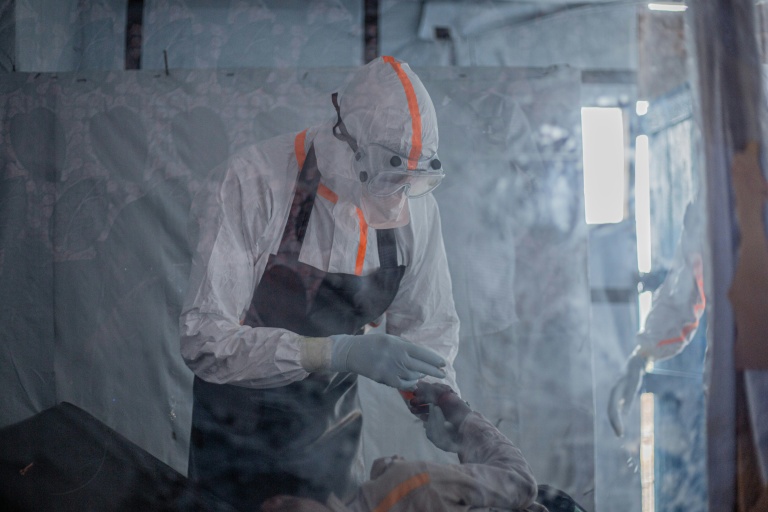
How people move may be as important as how a virus behaves when scientists attempt to forecast the early trajectory of an epidemic. New research into the 2026 Bundibugyo virus disease (BVD) outbreak in the Democratic Republic of the Congo (DRC) indicates that patterns of human mobility were the strongest predictor of its rapid initial geographical expansion. According to the research team, anonymised mobility information was able to predict which health zones would subsequently report infections with 96 percent accuracy.
The finding points towards a potentially important addition to the epidemic-response toolkit: rather than waiting for cases to appear before deploying diagnostic capacity and treatment resources, public-health agencies could use aggregated information about how populations move to anticipate where infections are likely to emerge next. The work, “Early epidemiological and spatial assessment of the Bundibugyo virus outbreak 2026”, was led by the DRC’s Institut National de Recherche Biomédicale (INRB) and Institut National de Santé Publique (INSP), involving more than 50 researchers across over 25 organisations on four continents.
The researchers reconstructed the critical opening weeks of the outbreak using detailed case and testing information alongside mobility data derived from mobile phones. Their analysis estimates that BVD cases approximately doubled every 10 days between early May and 1 June 2026. During just three weeks, confirmed infections expanded into an additional 12 health zones and 49 health areas.
Yet physical distance or the size of the population did not provide the best explanation for where the infection appeared. Instead, mobility flows originating around Mongbwalu, Bunia and Rwampara proved especially informative. Analysing how people travelled from these locations enabled researchers to predict subsequent affected health zones far more effectively than models based principally on population size.
This is significant because infectious disease does not spread across maps at a uniform rate. A geographically distant town connected to an outbreak epicentre by frequent journeys can, in epidemiological terms, be considerably closer than a nearby community with relatively little movement between the two. The innovation is therefore not simply mapping confirmed cases. It involves mapping the networks through which an epidemic can propagate.
Turning mobile phones into an early-warning system
Mobile networks continuously generate information associated with movement between telecommunications infrastructure. When suitably aggregated and anonymised, such information can provide population-level estimates of journeys without researchers needing to know the identity of individual subscribers. The emphasis on privacy is important. The approach is not about tracking infected individuals through their phones. Instead, aggregated mobility flows can reveal connections between locations and help epidemiologists estimate potential pathways along which infection might spread.
The research benefited from an established collaboration between Flowminder and mobile operators in the DRC. Linus Bengtsson, chair of the Flowminder Foundation and a study co-author, said the organisation’s partnerships with operators enabled it to provide privacy-preserving mobility information from the beginning of the outbreak response.
That distinction potentially makes mobility intelligence operationally useful. If usable information becomes available within days rather than months, health authorities can employ it while decisions about laboratory capacity, surveillance and healthcare resources still matter. The implication is a move from reactive outbreak mapping towards predictive outbreak management. Instead of asking only, “Where are the cases?”, responders can begin asking, “Given how people are moving, where are cases most likely to appear next?”
Putting laboratories ahead of the virus
One practical application is deciding where diagnostic facilities should be positioned. Dav Ebengo of INRB and associated Congolese institutions highlighted this issue, explaining that future work will examine earlier detection through decentralised laboratory systems positioned along important human-movement corridors.
This could prove particularly valuable in regions where laboratory access is constrained. Deploying every capability everywhere is neither realistic nor affordable. A sufficiently reliable mobility model could instead help determine which locations should receive diagnostic equipment, surveillance resources, trained personnel, protective equipment or additional treatment capacity first. The same information could support financial planning. The study itself developed from practical questions posed by outbreak-response teams, including where resources should be distributed and how much funding would be required to deal with patients reaching hospitals and care centres.
The approach therefore illustrates how data science can connect directly with outbreak logistics. The finding is especially pertinent because the medical countermeasures for Bundibugyo virus remain limited. Bundibugyo virus is an orthoebolavirus capable of producing severe Ebola disease. Unlike Zaire ebolavirus, for which vaccines are available, there is currently no approved vaccine specifically indicated for Bundibugyo virus disease. Recent development efforts have consequently accelerated. Digital Journal has previously reported on both the first Phase I study in Uganda and the progression of Oxford’s experimental ChAdOx1 BDBV vaccine towards Phase 2/3 evaluation in the DRC.

CEPI’s response has also involved several technologies. Its initial programme supported vaccine candidates from IAVI, Moderna and Oxford, the latter manufactured with the Serum Institute of India. That reinforces the value of predictive epidemiology. Vaccines and therapeutics remain essential technologies, but surveillance, diagnostics, infection control and intelligently targeted resources may be decisive during the period before suitable medical countermeasures become widely available.
Another important aspect of the study is where much of the science was performed. Pierre Akilimali, a co-first author, emphasises that Congolese teams collected and analysed individual-level information during the outbreak itself. He describes the research as evidence of what national public-health institutions can achieve when sustained investment is made in local capability.
Senior author Placide Mbala-Kingebeni makes a similar point. Whereas historically biological samples might have left the DRC before scientific answers returned considerably later, sequencing, diagnostics and epidemiological analysis for this outbreak were led from Kinshasa and Bunia as events were unfolding. This represents more than a shift in research geography. Locally embedded analytical capacity can shorten the distance between collecting evidence and acting upon it.
The consortium’s work, initially supported by the Gates Foundation, is continuing through the CEPI-funded B-REACT network led by INRB. The larger lesson reaches beyond Bundibugyo virus. Emerging infections exploit human networks: journeys to work, markets, healthcare facilities and family homes, as well as longer-distance transport links. Conventional maps describe where communities are located. Mobility data add another dimension by indicating how those communities interact.
The 96 percent predictive performance reported by the researchers is specific to this analysis and should not be treated as a guarantee that mobility models will perform equally well in every outbreak. Nevertheless, the result demonstrates how powerful appropriately governed mobility information can become when combined with good epidemiological surveillance.
The technology’s most important contribution may consequently be time. If public-health teams can identify the locations most at risk several days earlier, laboratories can be activated, healthcare workers prepared and surveillance intensified before cases accelerate. For epidemic control, knowing where a pathogen has been is important. Knowing where it is likely to go next could be considerably more valuable.
Human movement emerges as key predictor of Bundibugyo Ebola spread
#Human #movement #emerges #key #predictor #Bundibugyo #Ebola #spread





