
COP31 turns spotlight on the hidden climate cost of the AI boom
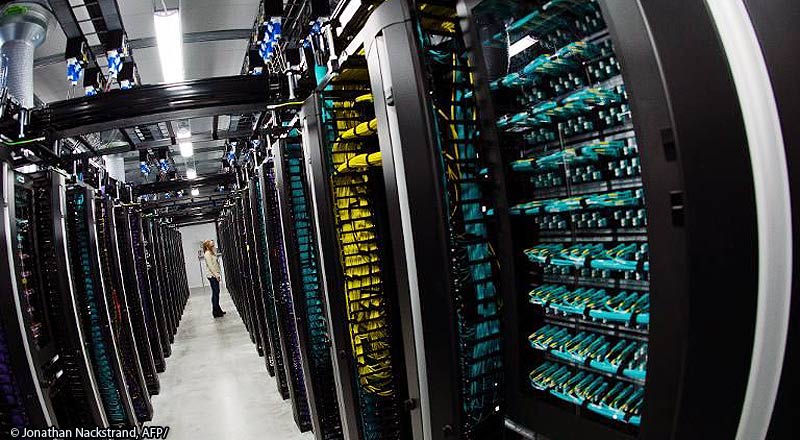
Artificial intelligence may exist in the digital world, but the infrastructure supporting it has a considerable physical footprint. This contradiction has moved towards the centre of discussions around COP31 in Türkiye. As governments wrestle with the much larger questions of fossil fuels, climate finance and decarbonisation, another problem is emerging: how can the world accommodate rapidly growing AI infrastructure without simultaneously driving up electricity demand and carbon emissions?
The issue is particularly significant for data centres. These facilities require enormous quantities of electricity to run servers and cooling equipment, along with physical land, grid capacity and, in many cases, substantial amounts of water.
The International Energy Agency has previously warned that expanding AI workloads are becoming an increasingly important driver of electricity demand. The problem is not simply how much energy AI consumes. Where that electricity comes from is equally important.
A highly efficient data centre connected to a carbon-intensive electricity system can still carry a significant environmental footprint. Conversely, AI infrastructure increasingly supplied by renewable and other low-carbon energy could allow computing capacity to expand without producing a corresponding rise in emissions. This makes the AI revolution as much an energy and infrastructure challenge as a technological one.
A climate pledge for AI
One response emerging from COP31 is the Antalya Artificial Intelligence Pledge, described by summit participants as being supported by around 80 organisations, including major technology and telecommunications businesses. Its underlying principle is important: AI companies need to become considerably more transparent about the environmental consequences of the infrastructure supporting their products.
That encompasses not only carbon emissions but electricity sources, water consumption and the efficiency of data-centre operations. These questions are becoming difficult for technology businesses to avoid. In September, Digital Journal reported on growing opposition to new data centres as communities questioned their electricity and water use and whether promised economic benefits adequately offset local environmental costs
Other countries are beginning to translate similar concerns into policy. Canada, for example, published responsible data-centre principles in September requiring projects to minimise freshwater use, protect grid reliability and provide verifiable information about their local impacts. Twenty-three companies, including Amazon Web Services, Google, Microsoft, Meta and OpenAI, signed up to the principles.
AI providers may increasingly be expected to account for the environmental cost of computation in much the same way manufacturers are expected to understand the environmental impact of a physical supply chain.
The electricity bottleneck
There is another dimension to the problem: obtaining enough electricity in the first place. One of the more interesting technology developments highlighted around COP31 comes from clean-energy company Ceres and its work with Centrica examining the UK’s so-called “time-to-power” problem. The concept describes the widening gap between a business deciding that it needs substantial additional electrical capacity and actually obtaining a grid connection capable of supplying it.
This matters for AI because building a data centre quickly is of limited value if there is insufficient electricity available to operate it. Grid constraints therefore risk becoming a brake on the AI investment boom. The proposed solution is not necessarily waiting for the grid to catch up. Instead, businesses can potentially generate low-carbon power on-site.
One technology receiving renewed attention is the solid oxide fuel cell (SOFC). Unlike conventional combustion-based generation, a fuel cell produces electricity electrochemically. Solid oxide systems operate at high temperatures and can convert fuels into electricity efficiently, while potentially offering considerable flexibility over fuel sources.
For data centres, their most interesting characteristic may be their ability to provide distributed electricity close to where the power is consumed. Rather than depending entirely upon a new high-capacity grid connection, a data-centre operator could install an on-site generation system and use it to provide some or all of the required electricity.
For the AI sector, speed matters. The COP31 material points to the possibility of deploying this form of on-site generation in less than 12 months, potentially creating a bridge between commissioning a facility and completion of longer-term grid reinforcement. Yet the carbon credentials depend critically upon the fuel used. A fuel cell is not automatically “green”. Systems using fossil-derived natural gas still produce carbon dioxide. Their longer-term attraction becomes substantially greater where they can use low-carbon fuels such as renewable hydrogen or where they form part of a broader low-carbon energy architecture.
This distinction is important because relieving the grid bottleneck without addressing carbon emissions simply shifts the problem.
AI cannot outrun the electricity system
There is a deeper lesson in the COP31 discussion. The AI race has generally been presented in terms of processors, models and computing performance. Yet physical infrastructure is increasingly becoming the limiting factor.
Digital Journal has previously examined more radical responses, including proposals to place data centres in orbit to exploit solar power and reduce competition for terrestrial land and water. That analysis illustrates just how seriously the industry is beginning to regard the infrastructure constraint. The electricity requirements are accompanied by another concern. Greater efficiency does not necessarily translate into lower total energy consumption. If faster processors and efficient cooling make AI cheaper, companies may simply deploy considerably more AI. Overall electricity consumption can therefore continue to rise.
This is why transparency is likely to matter increasingly alongside technical efficiency. Companies may need to disclose not simply how efficient their newest data centres are, but their absolute electricity consumption, carbon intensity, water demand and the extent to which additional renewable generation has been brought onto the system. COP31 consequently signals something of a change in the AI debate. Artificial intelligence has predominantly been treated by governments as an issue of innovation policy, competition, cybersecurity, regulation and ethics. Its rapid expansion means it increasingly also belongs within energy and industrial policy.
Data centres must compete for grid connections with factories, homes, transport electrification and other industries seeking to decarbonise. Governments therefore face uncomfortable decisions about which developments receive scarce electrical capacity and who should finance the infrastructure needed to supply them. This also means technology companies cannot assume that expanding computing capacity will remain chiefly a matter of purchasing GPUs and constructing server halls.
The next phase of the AI revolution will depend increasingly on power generation, transmission networks, energy storage, water availability and cooling technologies.
COP31’s focus on AI’s environmental footprint is therefore timely. The challenge is not to slow useful technological development, but to ensure that the infrastructure behind it can expand without undermining the climate goals governments are simultaneously trying to achieve.
COP31 turns spotlight on the hidden climate cost of the AI boom
#COP31 #turns #spotlight #hidden #climate #cost #boom




