
Op-Ed: China’s Moon landing will rewrite space geopolitics. The US is facing a serious strategic risk
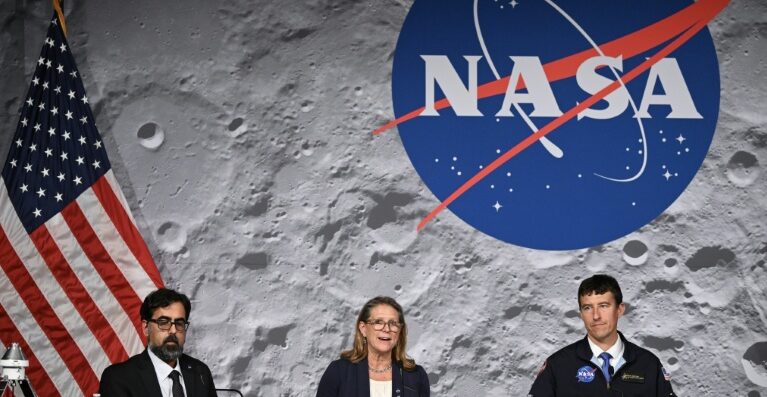
The headlines about the Chinese Moon landing have been piling up consistently for several years. NASA’s Moon landing has been comparatively low key in the headlines.
Apart from putting Moon landing deniers out of work, the two space programs are in serious strategic competition with each other. The Moon landings and moonbases will permanently rescript space exploration and dominance.
The comparison between missions includes similarities and significant differences in methodologies. China will send a robot mission first, followed by a crewed mission, in 2029 and “before 2030,” respectively. NASA is said to intend a landing in 2028.
Both missions will rendezvous with their landers in orbit. NASA has two contenders for their lander, SpaceX version 3 Starship and Blue Origin’s Blue Moon lander. China is using a Long March 10 rocket, the Mengzhou crewed spaceship, and the Lanyue lunar lander.
China’s strategy vs US strategy
During the Cold War, the Moon landing was a decisive win for the US over the USSR. It was a clear display of technical superiority and industrial dominance. The US strategic position has been allowed to erode steadily to its current belated jumpstart situation with the multinational Artemis missions.
China will land on the Moon by 2030, and they’re clearly taking a long-term strategic approach to the whole process of lunar landings and future development of moonbases and exploration.
NASA plans a permanent moonbase at the lunar south pole by 2030, according to a White House executive order. This order meshes nicely with NASA’s budget cuts and many years of effective starvation of agency funding.
This miserly myopia goes well with the baffling multi-generational scattergun lack of systematic US space programs, too. The combination of constant excruciating budget issues and total lack of government vision has done NASA, science, and the world no favours.
Instead of steady progress, the US has been routinely botching and sabotaging its space exploration with a nitpicking approach to every dollar spent.
China’s Moon program simply doesn’t have any of those problems. The Chinese space program is very much a focused part of national strategy. They’re backing it up with current technologies and massive industrial production capacity.
They’re also being slightly coy in public about specifics, which may indicate a well-developed follow-up program for future developments. This is the start of an area where a serious strategic defeat is quite possible, even likely, for the US.
China can flood space with its products just as easily as it can flood global markets. The US, as usual, is way behind in all these practical areas.
The “multinational” aspect of the US program may be an offset to the more usual unilateral program issues. Perhaps the ESA and other agencies can take up the slack caused by the years of inertia. Perhaps US experts can get a word in for a change. None of this is clear.
The two perspectives are so very different. According to Xinhua, this landing is a first developmental step. It includes “the separate development of the spaceship and lunar lander can help standardize production and support the formation of a long-term family of vehicles.”
Note the use of the expression “standardize”. Standardization is a prerequisite for mass production. In a command economy, that means a lot. In America’s absolutely nauseating capricious contractual wastelands, standardization barely gets a mention. Subsidizing boorish, boring, babbling billionaires is not the same thing as a systemic planned move into a permanent space presence.
Coexisting on the Moon?
According to Scientific American, the two moonbases are likely to be direct permanent competitors. This fact alone upgrades the Moon landings to major strategic initiatives.
Consider this scenario:
Chinese moon landings and moonbases proceed as planned. Exploration and resource development are set up with a continuous feed of materials and equipment.
The US feeds its moonbase at the lunar south pole over time with permanent facilities.
Volumes of Chinese materials start to tell almost immediately. China can feed its bases with its huge, largely automated industrial infrastructure.
The “boutique” US space program, and that’s not a compliment, dawdles along as usual, hamstrung by political, budgetary, and, let’s say, politely, philosophical anachronisms.
Coexistence could be nominal. Mutual support could be non-existent. A well-supplied Chinese moonbase or bases may simply outperform whatever the US can deliver.
Does this look like a healthy situation to you?
What is the US vision for its lunar presence?
Exactly how much thought has gone into this sudden enthusiasm for the Moon? Is it all mapped out, conjectural, or just more work for needy publicists?
A purely reactive lunar program, going to the Moon simply because the Chinese are going there, could be fatal and fail badly. Like the USSR’s unrealistic attempts to keep up with the superior US economy, the US could be writing a blank cheque for a future economic and geopolitical reality it doesn’t understand and can’t pay for.
The point is this:
American hubris based on the great achievements of 60 years ago doesn’t automatically translate into instant success.
The US is now facing a genuine peer rival with proven capacity to deliver, not the clumsy USSR of the 1960s. If this Moon program fails to deliver, it’s a major strategic defeat for the US. It could cripple future US space investment and derail new programs while China sails serenely ahead.
Good move?
Prove it.
Maybe it’s time to stop playing Liar’s Poker with the US space program?
___________________________________________________________________
Disclaimer
The opinions expressed in this Op-Ed are those of the author. They do not purport to reflect the opinions or views of the Digital Journal or its members.
Op-Ed: China’s Moon landing will rewrite space geopolitics. The US is facing a serious strategic risk
#OpEd #Chinas #Moon #landing #rewrite #space #geopolitics #facing #strategic #risk





