Vijayent Kohli and the 2020 patent that named a problem in production AI
Opinions expressed by Digital Journal contributors are their own.
Seven engineers at PayPal filed it. It was never built. Then the citations started.
Vijayent Kohli spent three years as an engineer at PayPal, building systems that processed hundreds of millions of transactions a day. The infrastructure worked. The fraud detection models were applied. What nobody had fully planned for was what would happen if one of those models stopped working mid-operation, not in a test environment, but in production, while real financial decisions hung in the balance. That question became the subject of a patent filing in 2020. The patent has since been cited as prior art in filings by IBM, Mastercard, and other large technology companies.
Kohli argues there is a question the industry has been slow to answer, and it is not a question about capability. When a live AI system fails mid-operation while real decisions hang in the balance, what happens next?
For many organizations, Kohli contends, the honest answer is that nobody has decided.
The problem hidden inside every AI deployment
To understand why the question went unaddressed for so long, it helps to understand how AI systems get built.
Engineering teams pour months into training models. They measure accuracy obsessively. They tune, test, red-team, and validate until the numbers look right. Then they deploy, and the conversation about that model largely ends. What replaces it is monitoring dashboards and on-call rotations, built on the assumption that if something breaks badly enough, a human will notice and fix it.
That assumption strains at scale, Kohli argues. At a payments platform, the window between an AI system going dark and genuine financial harm is not measured in hours. Fraud detection models that go offline do not pause the fraudsters. Anti-money-laundering screens that fail do not pause the transactions. The money keeps moving. The risk keeps accumulating. The AI simply stops watching.
The scale involved is not abstract. PayPal reported 305 million active accounts at the end of 2019, the year before the application described here was filed.
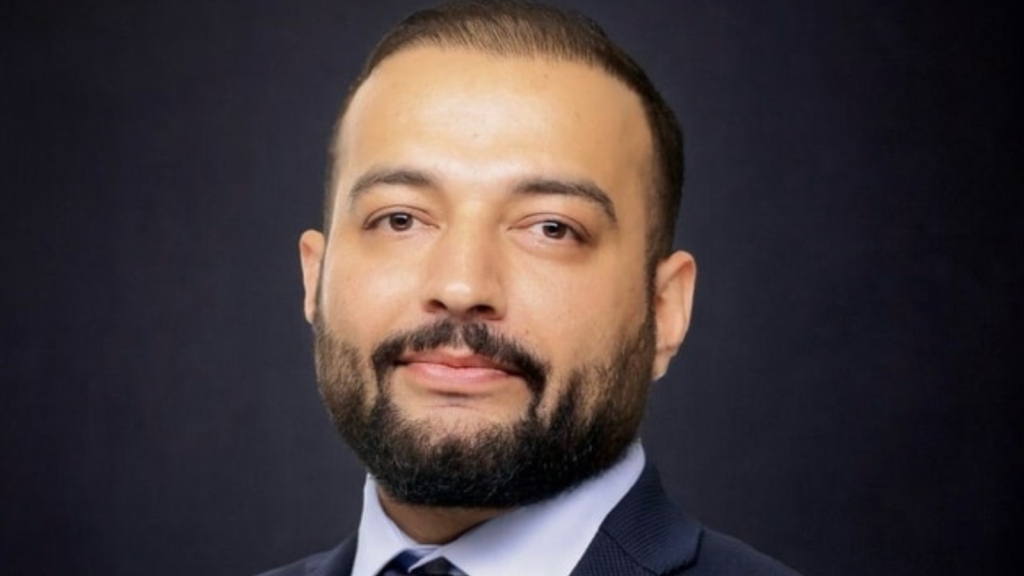
Vijayent Kohli was an engineer at PayPal from 2017 to 2020, and one of seven who took the failure question seriously enough to file on it.
“The industry talks endlessly about AI accuracy. Almost nobody talks about AI availability. When a fraud model goes dark, the fraud does not pause,” Kohli said.
What the patent describes
US Patent 11,568,253 B2, Fallback Artificial Intelligence System for Redundancy During System Failover, was filed on 11 August 2020, assigned to PayPal, Inc., and granted by the United States Patent and Trademark Office on 31 January 2023.
The mechanism is straightforward once described. A continual-learning neural network runs alongside the primary production AI. The backup model does not sit idle waiting for disaster. It continuously and autonomously observes, monitoring the live system’s inputs and outputs and learning to replicate its decision-making behavior without human annotation or manual retraining. When the primary system fails, the backup activates, using the same API contract as the original, making the switch invisible to the applications depending on it.
What distinguishes the approach from earlier failover thinking is the word “autonomous.” Conventional backup systems relied on static rules and predetermined fallback logic that could not adapt as the primary model evolved. If the live AI was retrained on new data or updated to reflect changing fraud patterns, the static backup fell further and further behind, a spare tire quietly deflating in the trunk.
Because the backup here learns in real time from the primary system’s behavior, it stays current without manual updates and without a team of annotators producing fresh training data. The patent also describes a testing gate: the fallback must meet an accuracy threshold relative to the production system’s own decisions before it is permitted to go live, and a policy layer that limits what it may approve while operating.
Seven names, one declaration
Kohli is one of seven named inventors on the patent. Inventors are listed with the lead inventor first and the remainder alphabetically.
According to Kohli, the architecture was filed, prosecuted, and granted, but was not deployed in production. The more unusual fact, he says, is what came afterward. The patent has since been cited as prior art in subsequent patent filings by IBM and Mastercard, among other large technology companies — a signal, in Kohli’s view, that the problem the patent named had reached the industry’s working agenda, even if the specific architecture remained on paper.
The argument the patent makes
A granted patent is a legal document. Read carefully, it is also an argument, a claim about how a problem should be understood.
Kohli’s argument is that the industry has been slower to absorb than to state that availability is a security property. When a fraud detection system goes dark, the harm that follows is not merely operational. Transactions that should have been flagged get cleared. Accounts that should have been frozen stay open. The downstream consequences, including financial loss, regulatory exposure, and consumer harm, are difficult to distinguish from the consequences of a successful attack.
“The next generation of AI systems will be agentic. They will take actions, make decisions, and operate with increasing autonomy. If we have not solved availability and identity for today’s AI, we are not ready for what comes next,” Kohli said.
The arc
The thinking was accumulated rather than arrived at. Kohli’s career spans Nokia Siemens Networks, Oracle, PayPal, and Microsoft, where he worked on enterprise identity for Viva, the employee-experience platform that Microsoft has publicly reported surpassed 20 million monthly active users, before arriving at Ford Motor Company, where he is a Principal Cybersecurity Engineer.
He was elevated to IEEE Senior Member in April 2026, a grade held by roughly ten percent of IEEE’s membership. In 2025, he moderated the AI data governance roundtable at the Lone Star Cyber Summit, working through enterprise AI governance questions with CISOs and policy leaders.
Kohli’s published research parallels the patent’s concerns. His paper, “Confident but Incorrect: Mitigating Hallucination and Overconfidence in Agentic AI Coders”, presented at the IEEE 2025 International Conference on Image Information Processing, addresses reliability failures in AI systems from a different angle, behavioral rather than architectural. A December 2025 TechRxiv paper, on which he is the first author, proposes a post-quantum cryptographic integration framework for Zero Trust architecture in enterprise cloud environments. A third paper, published at IEEE IC3ECSBHI in February 2026, examines self-evolving AI frameworks for adaptive threat detection in cloud-integrated environments. All three are indexed on Google Scholar.
The 2020 filing named one version of the problem. The broader question of how to make AI systems trustworthy enough to stake critical infrastructure on is still open. Kohli is among the engineers working on it.
The views expressed are Kohli’s own and do not represent Ford Motor Company or any current or former employer.
Vijayent Kohli and the 2020 patent that named a problem in production AI
#Vijayent #Kohli #patent #named #problem #production