Exercise keeps astronauts’ hearts mission-ready, strengthening the case for Mars
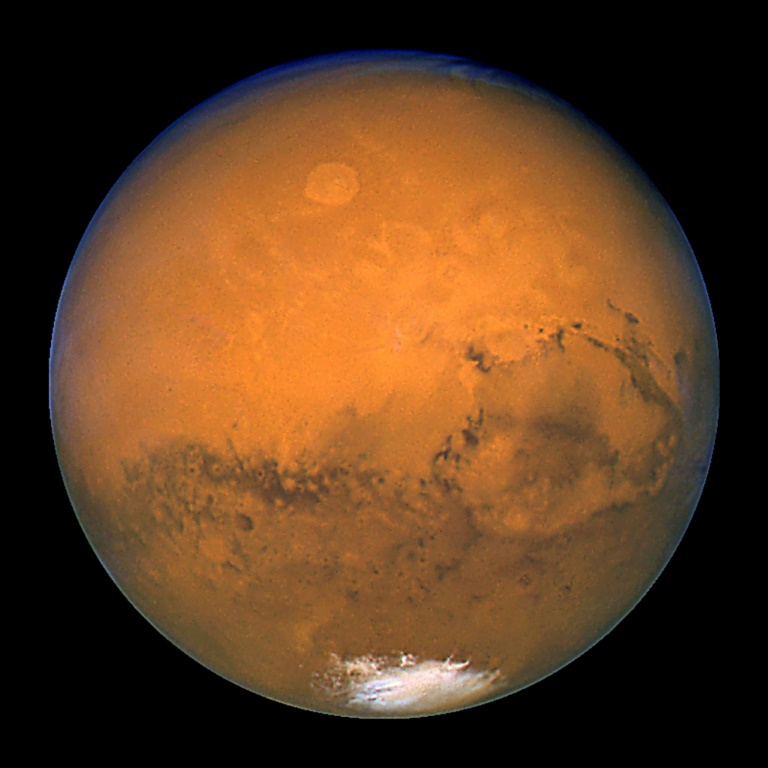
Sending humans to Mars presents an engineering challenge of extraordinary proportions. Yet there is another, more biological problem to solve: after spending months almost weightless, will astronauts remain physically capable of working when they arrive? New research led by Northwestern Medicine offers encouraging evidence. Scientists tracking the hearts of 13 astronauts found that although cardiovascular performance declined during the early stages of spaceflight, several important measures subsequently moved back towards preflight levels.
The astronauts had spent roughly six months aboard the International Space Station (ISS) while undertaking an intensive exercise programme lasting up to two hours each day. After returning to Earth, researchers also tested how their cardiovascular systems responded to conditions designed to simulate the gravitational effect of Mars. The findings indicate that exercise could be one of the technologies that makes long-duration human exploration practical.
On Earth, the cardiovascular system is continuously working against gravity. In microgravity, these demands alter dramatically. The study’s senior author, Dr James Thomas, professor of medicine in the division of cardiology at Northwestern University Feinberg School of Medicine and a Northwestern Medicine cardiologist, explains that both muscle and cardiac mass can be lost in a weightless environment as the body has less work to perform.
This creates an important challenge when astronauts return to a gravitational environment. Previous space travellers have experienced dizziness and lightheadedness when standing after returning home. A sudden fall in blood pressure associated with standing is known as orthostatic hypotension.
The new research, entitled Impact of Prolonged Spaceflight on Cardiac Structure and Function: An Exploratory Longitudinal Observational Study, examined how cardiac structure and performance changed over an extended period in space. The work included echocardiograms taken before, during and after the missions. Echocardiography uses ultrasound to assess the structure and function of the heart. During the ISS missions, astronauts were trained to scan one another every few weeks, allowing the research team on Earth to follow changes over time. Thomas monitored recordings live and coached the astronauts to improve the quality of the images.
The heart learns to adapt
The first phase of the mission highlighted the effects of entering a radically different gravitational environment. During the initial two weeks, researchers detected reductions in cardiac filling, stroke volume and other measures of cardiac performance. Stroke volume refers to the amount of blood expelled by the heart during each contraction. The results therefore showed that, initially, the astronauts’ hearts were both filling with less blood and pumping less blood with each beat. Importantly, the effect did not continue on the same trajectory.
As the missions progressed, cardiac filling and stroke volume gradually shifted back towards the astronauts’ preflight levels. This is where exercise appears especially important. The astronauts followed NASA’s guidance, undertaking as much as two hours of physical activity per day. According to the study material, this comprised around 30 to 45 minutes of endurance exercise together with 60 to 75 minutes of resistance training. In this sense, exercise equipment in space is more than a means of preserving general fitness. Physical training performs the role of a physiological countermeasure to an environment for which the human body did not evolve. As Thomas puts it: “To counter that, exercise is crucial when you’re in space.”
Recreating Mars gravity on Earth
The particularly significant aspect of the research concerned what might happen at the other end of a long interplanetary journey. Mars does possess gravity, although it is substantially weaker than Earth’s. Researchers therefore needed a way of investigating how cardiovascular systems conditioned by prolonged microgravity might respond to the shift.
After the astronauts returned to Earth, the researchers tilted them upwards by 22 degrees from a lying position. This caused blood to shift towards the lower body, creating conditions intended to mimic an important cardiovascular effect of Martian gravity. The outcome was encouraging. The astronauts’ hearts handled the simulated Martian environment as well as they had handled standing upright under terrestrial gravity before launch. This matters because reaching Mars is only part of the challenge. Astronauts would need to become operational after arrival rather than merely survive the journey.
“With our findings, there is now reason to think that we would be able to traverse to Mars, get there and actually work on the surface of Mars,” Thomas says.
The findings should nevertheless be viewed in proportion to the study. This was an exploratory longitudinal observational investigation involving 13 astronauts rather than a direct experiment involving people travelling to Mars. The Mars component also used a terrestrial simulation of the gravitational environment rather than observing astronauts after exposure to real Martian gravity.
Those distinctions are important. The research provides evidence about cardiovascular adaptation during approximately six-month missions on the ISS and about the astronauts’ response to a particular postflight simulation. It does not demonstrate that every physiological challenge associated with a crewed Mars mission has been resolved. Even so, longitudinal astronaut studies have a notable advantage. Instead of taking a snapshot after a mission, researchers were able to follow cardiac changes as they developed in space. This revealed an early deterioration followed by movement back towards preflight cardiac performance, a pattern that would have been difficult to understand from pre- and post-mission measurements alone.
Building a human pathway to Mars
The research ultimately highlights an important feature of human spaceflight technology: not every essential technology is part of the spacecraft. Rocket engines, life-support systems and spacecraft understandably dominate discussions about reaching Mars. Yet keeping the crew capable of functioning is equally fundamental. Exercise countermeasures represent an interface between hardware, human behaviour and physiology. The study provides evidence that structured endurance and resistance training can accompany cardiovascular adaptation during prolonged microgravity exposure, while the postflight tilt tests offer an encouraging indication of how those conditioned hearts could respond to simulated Martian gravity.
Exercise keeps astronauts’ hearts mission-ready, strengthening the case for Mars
#Exercise #astronauts #hearts #missionready #strengthening #case #Mars