AI-designed antiviral compounds pass first laboratory test and aid patient safety
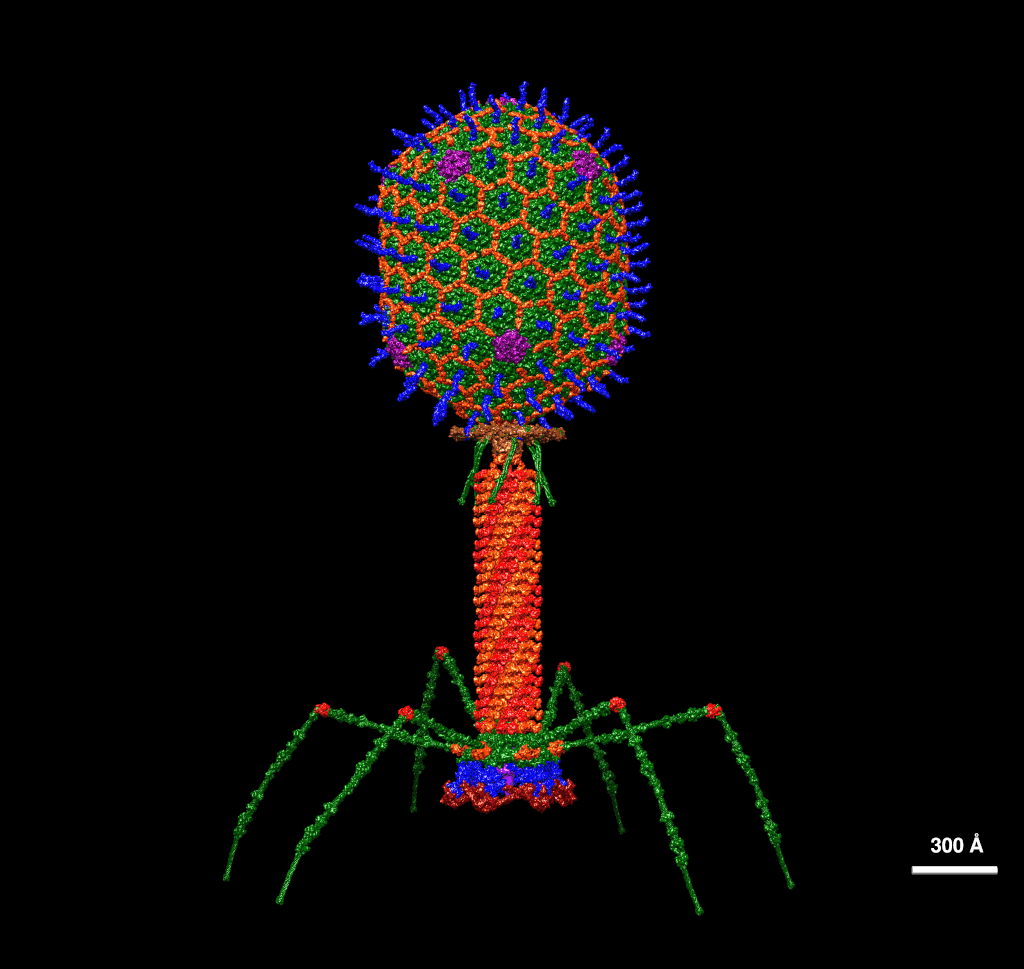
Viruses present drug developers with an enduring problem. Evolution can alter viral proteins, potentially reducing the effectiveness of medicines designed to attack them directly. One alternative is to target something more stable: the human cellular machinery that viruses hijack in order to reproduce.
Researchers led by Korea University have combined this host-targeted strategy with artificial intelligence (AI), using computational models to design compounds against the human enzyme deoxyhypusine synthase (DHPS). Importantly, the proposed molecules did not remain purely digital predictions. The researchers synthesised selected candidates and tested them experimentally.
The peer-reviewed research, AI-guided De Novo design of DHPS inhibitors, was published in the Journal of Cheminformatics on 5 August 2026 and is available as an open-access study. The development is significant because it brings together two potentially powerful ideas: generative AI for creating new drug candidates and host-directed antiviral therapy.
Computational methods have long played a role in pharmaceutical research. Molecular modelling and virtual screening can help researchers sift through possible compounds before committing the considerable resources needed for laboratory investigation. Generative AI pushes this idea further. Instead of simply assessing molecules scientists already know about, generative models can propose new molecular structures according to specified biological and chemical objectives.
For the DHPS project, the researchers took a comparative approach rather than relying upon a single favoured algorithm. According to information released about the study, the team assessed 13 predictive models and 10 molecular-generation methods to establish a suitable AI strategy for the enzyme.
This matters because an AI-generated molecule is not a drug merely because a computer predicts that it should work. Computational prediction needs to survive successive encounters with real chemistry and biology.
The Korea University research crossed an important first experimental barrier: all three of the compounds selected for testing inhibited DHPS. Two demonstrated measurable inhibitory potency, while X-ray structural analysis showed one of the compounds bound to the enzyme.
These are early-stage results, rather than evidence of a new antiviral medicine. Nevertheless, they demonstrate that the computational exercise was capable of generating molecules with experimentally detectable activity against its intended target.
Why target a human enzyme?
DHPS is a human enzyme involved in the unusual cellular process that activates the protein eIF5A through a modification known as hypusination. This biological pathway has attracted antiviral interest because different viruses can depend upon host-cell processes to support their replication. This shifts the drug-development target away from a component belonging to the virus and towards a cellular dependency that the pathogen requires.
In principle, such an approach has an attraction. A treatment aimed at a relevant host factor may be less directly exposed to viral genetic change than a medicine aimed at a rapidly changing viral target. Host-directed therapies can therefore provide a different line of attack from conventional direct-acting antivirals. However, targeting human biology creates a corresponding challenge: selectivity and safety become especially important. An enzyme that performs a normal cellular function cannot simply be blocked indiscriminately without understanding the consequences.
Associate Professor Hong-Rae Kim states: “Further studies will be needed to establish their inhibition mechanisms, selectivity, cellular activity, toxicity and performance in animal models.” This sets out some of the scientific distance separating enzyme inhibition in a laboratory experiment from an effective medicine. Researchers must establish not only that a compound interacts with the intended target, but that it can produce a useful antiviral effect in cells without unacceptable toxicity. Promising candidates would then face further preclinical assessment before clinical development could even become a consideration.
AI meets experimental reality
The study also highlights a wider development in AI-assisted drug research. The useful test of generative chemistry is not the sophistication of the algorithm alone but whether its predictions can make the transition into experimentally useful molecules.
This is one of the practical hurdles confronting the field. A molecule can appear impressive computationally while proving difficult to make, unstable, insufficiently potent or unsuitable once tested in a biological system.
For comparison, the writer’s existing research notes on AI and pharmaceutical development describe how generative approaches are being applied to virtual screening, prediction of molecular interactions and identification of antimicrobial candidates. Research has also noted applications combining AI with multi-omics data and protein-structure prediction.
The DHPS work provides a useful example of closing some of the gap between digital design and wet-laboratory validation. Rather than presenting a catalogue of theoretically interesting molecules, the study proceeds to synthesis, biochemical assessment and structural investigation. The research is nonetheless best viewed as an early proof of concept. Demonstrating inhibition of an isolated enzyme does not establish antiviral effectiveness in a person, or even necessarily in infected cells.
Lowering the computational barrier
There is another potentially important aspect to the project: accessibility. According to Korea University’s research announcement, the AI approach has been made freely available and is designed to operate without excessive computing requirements. The university’s research page provides the institutional account of the development.
If such approaches can function on relatively modest computational infrastructure, advanced generative drug design could become more accessible to smaller academic laboratories rather than remaining concentrated among pharmaceutical companies and exceptionally well-funded research centres.
That could widen the range of biological targets being investigated. Rare diseases, emerging pathogens and scientifically interesting targets without an obvious large commercial market could potentially benefit when researchers face a lower computational barrier to exploring chemical space. The broader direction is already visible across AI-driven drug discovery. Previous work covered by the author has examined computational approaches intended to address another problem: generating candidate molecules that can realistically be synthesised.
The Korea University study should therefore be interpreted for what it demonstrates, rather than what might eventually emerge from it. It does not establish that the newly generated DHPS inhibitors are antiviral drugs ready for medical use. The compounds need much more investigation, including the selectivity, cellular activity, toxicity and animal work highlighted by Kim.
What the research does provide is experimental evidence for an increasingly important proposition: AI can do more than rank existing chemicals. It can help researchers design new molecules around a biological target and produce candidates capable of surviving an initial laboratory test. For antiviral research, combining that capability with host-directed strategies opens an intriguing avenue. The computer has proposed the molecules and the laboratory has supplied the first reality check. What happens in the far more complicated environment of living cells and organisms will determine whether this particular line of research can progress further.
AI-designed antiviral compounds pass first laboratory test and aid patient safety
#AIdesigned #antiviral #compounds #pass #laboratory #test #aid #patient #safety