What if the company running your AI gets sold?
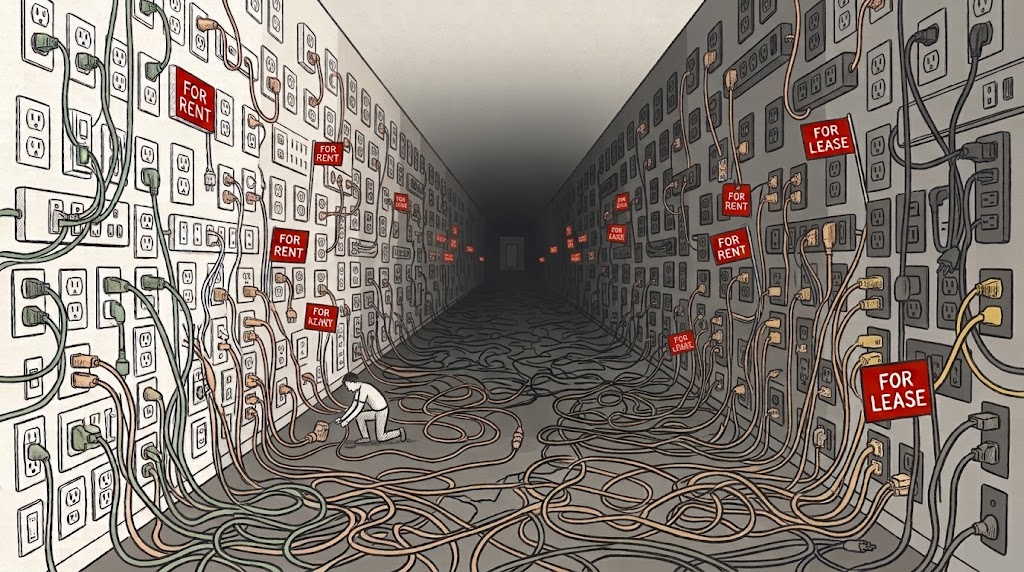
If you’re about to sign a multi-year AI deal, here’s a question worth asking first: Will the company on the other end still be the same company, under the same owner, when the contract runs out?
AI runs on specialized chips in data centres, and most companies rent that computing. Some suppliers, like Amazon, Microsoft and Google, sell it alongside many other cloud services. Others do little else.
New analysis from Gartner says many of those suppliers won’t make back what they’re spending on chips and data centres before those chips are outdated. The most exposed are the specialists.
Gartner expects more than 80% of those specialists to stop operating on their own by 2030. Some will shut down while others will be bought or folded into bigger companies.
The reason, as usual, is money.
Spending on rented AI computing climbs from $66 billion USD in 2027 to $174 billion USD in 2030, Gartner says. That’s too slow for most providers to recover what they’ve spent. To pay it off, AI data centre owners, big and small, would need to bring in $8.5 trillion USD by 2030, and it expects them to earn less than half of that.
Gartner expects AI providers to spend nearly $1 trillion USD on AI infrastructure this year and another $6 trillion USD from 2027 to 2030. If spending stays on that pace, it says more than $3.5 trillion USD of it could be written down by the end of 2030. It doesn’t expect data centre owners to reach the 12% return it assumes investors need until the end of 2032 at the earliest.
“Our research indicates that enterprise and consumer AI revenue will be insufficient to support profitable returns on all planned AI capital expenditures during this period,” says Will Sommer, a senior director analyst at Gartner.
Even the AI revenue that does arrive may skip the companies that own the hardware. Gartner predicts less than half of it will go to providers that own significant AI infrastructure, because most AI-native companies run asset-light businesses.
Here’s why that matters to anyone buying AI.
If the company you signed with gets bought or shuts down, your price, your service, and the way you get at your own data don’t automatically carry over. Those things live in your contract, and a new owner can read a contract differently.
Planning for a supplier’s sale is old ground. Outsourcing and cloud contracts have long used assignment and change-of-control clauses to spell out what happens when a vendor is bought.
AI adds two wrinkles. The company selling you AI often rents its computing from someone else, and Gartner expects most of those specialist suppliers to change hands or close within a few years.
That first wrinkle is the one most tech leaders will feel. Many never sign with a specialist directly.
They buy from a cloud giant or an AI software vendor, and that vendor may run on a specialist’s chips. If that specialist is sold or shuts down, the contract you signed stays the same, but the service behind it can change. Vendor-risk teams call this fourth-party risk, the risk that sits with your vendors’ vendors.
The industry calls these specialists neoclouds. The giants, like Amazon and Microsoft, sell hundreds of other things and could likely keep funding AI for years. A neocloud mostly sells one thing, on chips that go out of date fast, so it has far less to fall back on. Gartner also says most neoclouds lack a business model that sets them apart from rivals.
So before you sign a long AI deal, it’s worth nailing down what happens if your supplier, or your supplier’s supplier, changes hands.
Who runs the computing behind the service, and will you be told if that changes? Does your price hold, or can a new owner raise it? Is your service guaranteed, and for how long? Can you get your data out quickly, and what does that cost? And do the protections you were promised still apply if the new owner answers to another country’s laws?
You could be signing a years-long deal with a company that won’t look the same by the end of it. What you pin down now is what you’ll have to stand on later.
Final shots
- If your AI supplier is bought or merges, your price, your service, and the cost of leaving can all change. Your contract decides which of those carry over.
- The company selling you AI is often a different company from the one running the computers behind it. It’s worth knowing who does what, and who answers for each part.
What if the company running your AI gets sold?
#company #running #sold