Canada’s yttrium opportunity: The rare earth element with strategic economic potential
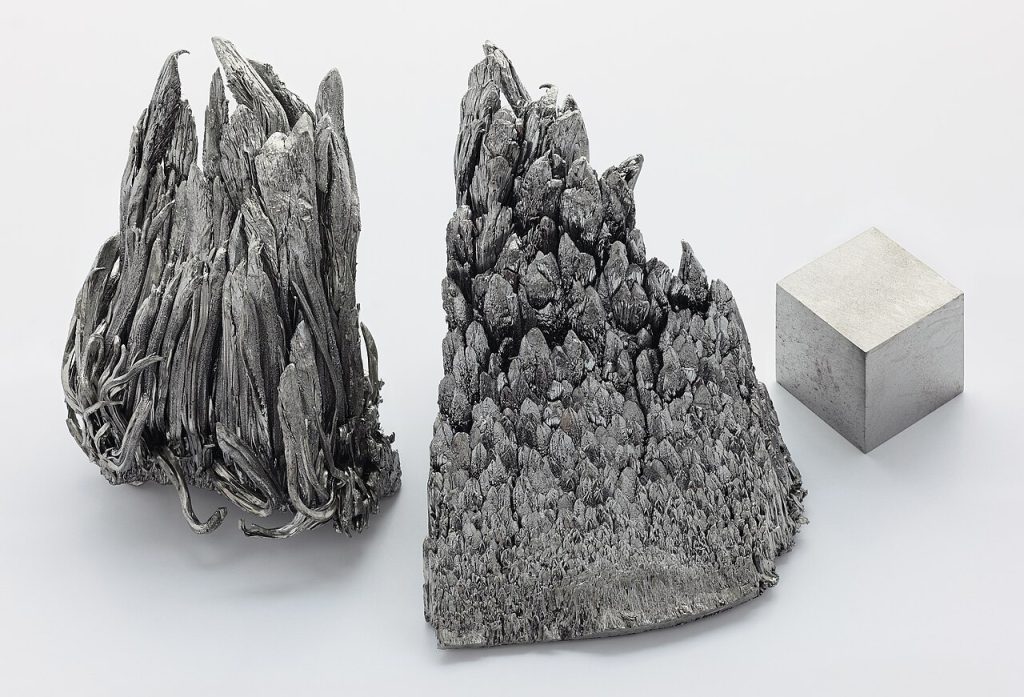
Yttrium supports technologies ranging from lasers and medical devices to heat-resistant ceramics. Canada’s mineral resources and critical-minerals strategy could create opportunities around the element, but converting geological potential into economic value will require commercially viable deposits, specialised processing and responsible project development.
Critical minerals are moving from the margins of industrial policy to the centre of economic and geopolitical planning. For Canada, the shift presents an opportunity to develop resources that support advanced manufacturing, clean technologies and more resilient international supply chains.
Among these materials is yttrium, a metallic element that receives considerably less public attention than lithium, cobalt or the magnet rare earths. Its comparatively low profile, however, is not a measure of its technological importance.
Yttrium is used in high-performance ceramics, lasers, lighting phosphors and specialist electronic materials. It also appears on Canada’s current critical-minerals list, alongside the other rare earth elements.
Canada’s opportunity is not as simple as discovering a deposit and opening a mine. Yttrium is generally recovered as part of a wider rare earth operation, while separating individual rare earth elements requires technically demanding chemical processes. The economic question is therefore whether Canada can build viable value chains extending beyond extraction into separation, refining and advanced materials.
Yttrium is sometimes incorrectly described as a transition metal. Under the periodic table’s standard classification, it sits in Group 3 and is commonly treated as a rare earth element because of its chemical behaviour and association with rare earth deposits. The US Geological Survey groups yttrium with scandium and the lanthanides to form the 17 rare earth elements. It also notes that these elements are relatively abundant as a group, although finding deposits that can be developed economically is more difficult. The description “rare earth” can therefore be misleading. The central challenge is not necessarily geological scarcity. It is locating suitable concentrations, extracting the minerals economically and separating elements with closely related chemical properties.
Yttrium does not usually occur as a discrete, mineable commodity. It is found in minerals containing several rare earths and is generally recovered as a co-product or by-product of a broader processing operation. Its prospects are consequently linked to the economics of the entire deposit rather than to the market value of yttrium alone.
A small element with specialised uses
Yttrium’s value comes from the properties it gives to other materials. One established application is yttria-stabilised zirconia, in which yttrium oxide helps stabilise the crystal structure of zirconium dioxide. The resulting ceramic combines strength, thermal resistance and resistance to wear. Applications include thermal-barrier coatings, oxygen sensors, industrial components and dental ceramics. Yttrium is also used in yttrium aluminium garnet, better known as YAG, which can serve as a host material in solid-state lasers.
Other yttrium compounds have applications in phosphors, optical materials and electronics. These uses make the element relevant to several specialised industries, although it should not be portrayed as a universal ingredient in every electric vehicle, wind turbine or renewable-energy installation. This distinction matters, since are earth elements are frequently discussed as if they were interchangeable, but their applications and markets differ considerably. Neodymium, praseodymium, dysprosium and terbium are particularly associated with high-performance permanent magnets. Yttrium occupies a different market, centred principally on ceramics, phosphors, lasers and other specialist materials.
Canada’s geological position
Canada has identified rare earth elements as one of six groups initially prioritised under the federal Canadian Critical Minerals Strategy. The other priority minerals are lithium, graphite, nickel, cobalt and copper. The strategy covers a much broader ambition than mineral extraction. It identifies five stages in a critical-minerals value chain: geoscience and exploration, extraction, intermediate processing, advanced manufacturing and recycling. Its objectives include economic growth and job creation, environmental protection, reconciliation with Indigenous peoples and stronger cooperation with international partners.
Rare earth prospects have been investigated in several parts of Canada, including Quebec, the Northwest Territories, Labrador and British Columbia. The presence of yttrium in a geological resource, however, should not be confused with the existence of an economically recoverable reserve. Before a deposit can support a commercial mine, developers must establish its scale and grade, complete metallurgical testing, assess infrastructure requirements and obtain financing and regulatory approvals. Projects must also address waste management, water use, mine closure and potential effects on local and Indigenous communities. Canada consequently has rare earth potential, but it should not yet be described as a major yttrium producer. Its opportunity remains primarily developmental.
Separating rare earth elements is one of the most difficult parts of creating a viable supply chain. Their chemical similarities mean that an ore concentrate may have to pass through multiple separation stages before individual products of the required purity can be obtained. This has important economic consequences. A mine that produces mixed rare earth material does not automatically provide manufacturers with usable yttrium oxide, metals or advanced ceramic powders. Separation technology, chemical expertise, reliable power, waste controls and relationships with customers are all required.
For Canada, investment in intermediate processing could create more domestic value than exporting untreated or partially processed mineral products. Processing facilities can support scientific, engineering and technical employment, while producing materials that can feed into ceramics, electronics, aerospace and medical-technology supply chains. This does not mean processing is always more profitable than mining. Returns depend on capital costs, operating performance, market prices and the composition of each deposit. It does mean that mine output alone is an incomplete measure of economic opportunity. The federal strategy explicitly seeks to build capacity across the value chain rather than treating extraction as an end in itself. It describes integrated value chains as a way to retain more processing and manufacturing activity within Canada and its network of trading partners.
A commercially successful rare earth development can generate direct employment in geology, mining, engineering, processing and environmental science. It may also create demand for construction, transportation, equipment maintenance, laboratory analysis and local services. These benefits cannot be assumed in advance. Their scale depends on the project, its location, the degree of domestic processing and the arrangements reached with affected communities.
Partnerships with Indigenous communities are especially important because many prospective mineral regions overlap with Indigenous territories. Canada’s strategy calls for ongoing engagement, environmental stewardship, community safety and economic opportunities, while recognising Indigenous peoples as rights holders and, in some cases, title holders. Meaningful participation may include equity ownership, employment, training, procurement opportunities and shared environmental oversight. Each arrangement must nevertheless be negotiated in accordance with the circumstances and rights associated with the individual project.
A strategic, but qualified, opportunity
The wider case for developing new sources of rare earths is reinforced by the concentration of global production and processing. The International Energy Agency identifies geographical concentration, geopolitical exposure and environmental performance among the risks affecting critical-mineral supply chains. Its outlook covers rare earth elements alongside copper, lithium, nickel, cobalt and graphite. Canada offers geological resources, mining expertise, research capabilities and a stated policy commitment to developing more complete critical-mineral value chains. Yet none of these advantages removes the need for sound project economics or responsible environmental management.
Yttrium should therefore be viewed as a specialised component of Canada’s wider rare earth opportunity, not as a standalone mining boom. The strongest economic proposition would combine recoverable deposits with efficient separation, reliable infrastructure, responsible partnerships and customers for high-purity products. If Canada can bring those pieces together, yttrium could contribute to regional investment, skilled employment and more diversified supplies for advanced industries. The opportunity is real, but its value will be determined by what happens after exploration: whether promising geology can be converted into competitive, responsibly produced materials that manufacturers are prepared to buy.
Canada’s yttrium opportunity: The rare earth element with strategic economic potential
#Canadas #yttrium #opportunity #rare #earth #element #strategic #economic #potential