AI edge tech reshapes how retailers manage physical store shelves
This article has been reviewed by a Digital Journal editor and may be licensed for reuse.
Retail execution is undergoing a rapid technological transformation, with enterprise investments increasingly targeted at store-level operations. According to Deloitte’s 2026 Global Retail Industry Outlook, based on a survey of 330 retail executives, most respondents expect their organizations to deploy AI for core operational capabilities within the next 12 months. Furthermore, 68% anticipate adopting agentic AI for key operational activities within 12 to 24 months, underscoring an industry-wide push toward autonomous, action-oriented systems.
However, translating these high investment expectations into measurable financial returns remains a significant operational challenge. The EY State of Consumer Products 2026 report notes that growth is increasingly shifting toward fragmented, faster-moving demand pools where supply chain complexity can either create value or destroy margin. The report seems to emphasize that traditional scale and static data collection are no longer sufficient; success depends on whether organizations can respond in real time and connect localized supply capabilities directly to store-level demand.
Bridging this operational gap requires overcoming significant infrastructure bottlenecks across store networks. According to McKinsey’s Technology Trends Outlook 2026 report, while sectors like technology are rapidly scaling advanced AI workflows, traditional industries such as retail are progressing more cautiously, largely due to fragmented digital environments and legacy infrastructure.
This architectural shift aligns with a broader trend in enterprise software: the transition from passive analytical dashboards to agentic, workflow-driven AI. Modern AI models are increasingly designed to evaluate variable store conditions and recommend immediate, optimized tasks.
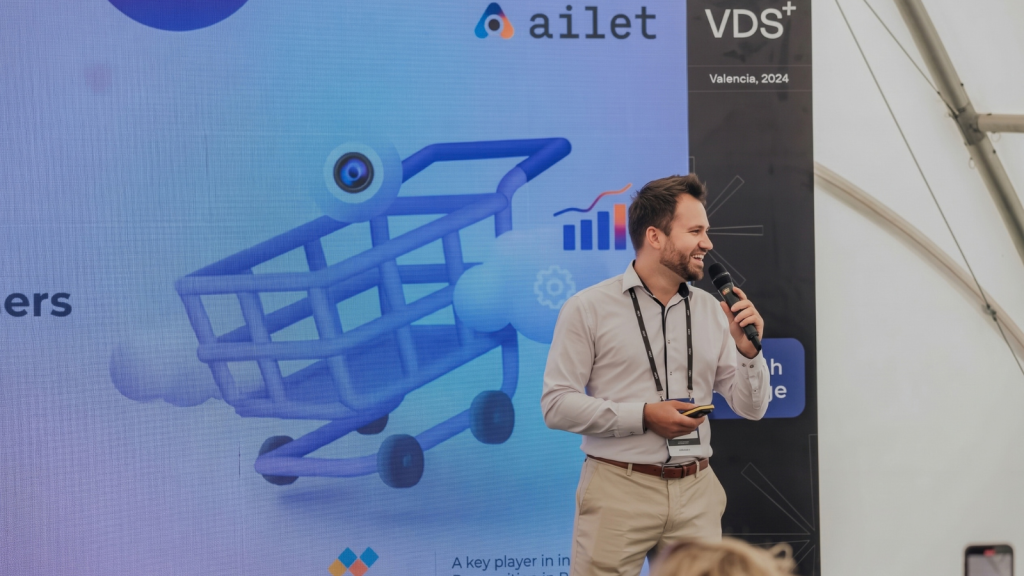
This dynamic landscape provides crucial context for retail execution, where the value of visual technology depends on its capacity to translate raw observation into immediate practical action. Evgeny Mataev, chief commercial officer of Ailet Solutions, a retail technology company specializing in image recognition and analytics for CPG, retail, and pharma, believes the next distinct advantage may lie in seamlessly connecting real-time visual information with automated, point-of-sale decision-making.
“The shelf is becoming an active decision-making environment,” Mataev suggests. “The real opportunity emerges when technology can assist in understanding what is happening there, help determine which action carries the highest commercial value, and support the field representative in executing it immediately.”
In Mataev’s observation, the evolution toward this model has unfolded through several technological eras. Before AI became commercially established, retailers and CPG companies relied largely on manual audits, field reporting, and limited trade-audit samples. These methods could provide useful execution checks, while the cost of visiting and reviewing large store networks encouraged selective coverage and introduced variability associated with human reporting.
Image recognition began expanding retail execution capabilities during the following era. Based on Mataev’s experience, between roughly 2015 and 2018, field teams could capture images that were subsequently processed through human-in-the-loop systems. Coverage could expand across more points of sale, and the same imagery could support early shelf analytics. Reporting cycles, however, could extend across days or weeks, leaving opportunities for correction after the store visit had already ended.
In Mataev’s view of market maturity, the period between roughly 2018 and 2022 introduced online image recognition and a more interactive operating model. Instant recognition allowed field users to identify execution gaps during a route call and compare actual performance against predefined KPIs while still in the store. A system could flag missing products, pricing discrepancies or insufficient share of shelf, but the next step still largely depended on the person using it. “We could see the difference between how it should be and how it is in reality,” Mataev explains. “The system could show you the gap, but you still had to understand what to do about it.”
In industry terms, this was closer to a “call to action.” The technology could identify what needed attention, but the field user still had to determine what was feasible and what to address. Cloud computing supported this responsiveness, although connectivity requirements and image-processing economics could influence how frequently imagery was captured.
The next transition brought AI processing onto mobile devices. Mataev notes that from 2022 onward, on-device recognition could extend real-time functionality into locations with limited connectivity. “This approach also reduces reliance on cloud processing for every image. It opens possibilities such as ‘before-and-after’ analysis, where imagery captured at the start and end of a visit helps evaluate execution changes and improve service allocation,” Mataev states. “The more significant evolution is what newer AI can do with the information it captures.”
Rather than simply identifying gaps against predefined targets, modern systems can consider a wider set of factors, including shelf space, store capacity, competitor activity, pricing, and promotions, to determine which actions are both feasible and valuable. “The next best action is when the system decides for you,” he says. “Today’s AI analyzes all the factors and parameters, then comes up with a solution in simple steps.”
The shift, in other words, is from telling a field user what is wrong to helping them determine what should happen next. Ailet’s role in this evolution reflects that broader progression. Its technology combines mobile applications, an image recognition engine, and AI analytics for use cases including digital merchandising, on-shelf availability, price and promotion monitoring, and retail audits. The company’s mission is to transform technological innovations into practical tools for daily business processes.
LLMs may contribute to this transition by helping reconcile fragmented datasets. Shelf observations, prices, store identifiers, SKU codes, sell-out information, and other commercial datasets often originate in different systems. LLM-enabled normalization and semantic layers may make these datasets easier to connect, creating a foundation for AI systems that can consider multiple variables simultaneously.
New operating models may emerge from this connectivity. AI-generated alerts for on-shelf availability or planogram compliance could potentially be routed to external task networks, enabling simple store activities to be fulfilled through crowdsourced workers. Similar logic could eventually support increasingly automated auditing environments.
Enterprise deployment still requires careful technology design. More sophisticated AI decisions require highly reliable visual inputs, making image recognition an important component of the broader architecture. Mobile hardware also creates practical constraints, particularly when advanced recognition tasks need to operate across diverse devices. For enterprise deployments, a hybrid architecture can balance the need for immediate response in the field with the deeper analytical capabilities that may require cloud processing.
Economic considerations matter as well. Cloud processing, device capabilities, data volumes, and LLM token consumption each contribute to the operating model. As AI economics continue to develop, CPGs and retailers may benefit from evaluating technology according to commercial outcomes, including shelf-level revenue opportunities, execution quality, and the productivity of field activity.
“The future of retail execution may belong to systems that connect observation, reasoning, and action,” Mataev remarks. “The closer those three capabilities move together, the more useful AI can become at the exact moment a commercial decision needs to happen.”
AI edge tech reshapes how retailers manage physical store shelves
#edge #tech #reshapes #retailers #manage #physical #store #shelves