Canada’s AI sovereignty question is a supply chain question
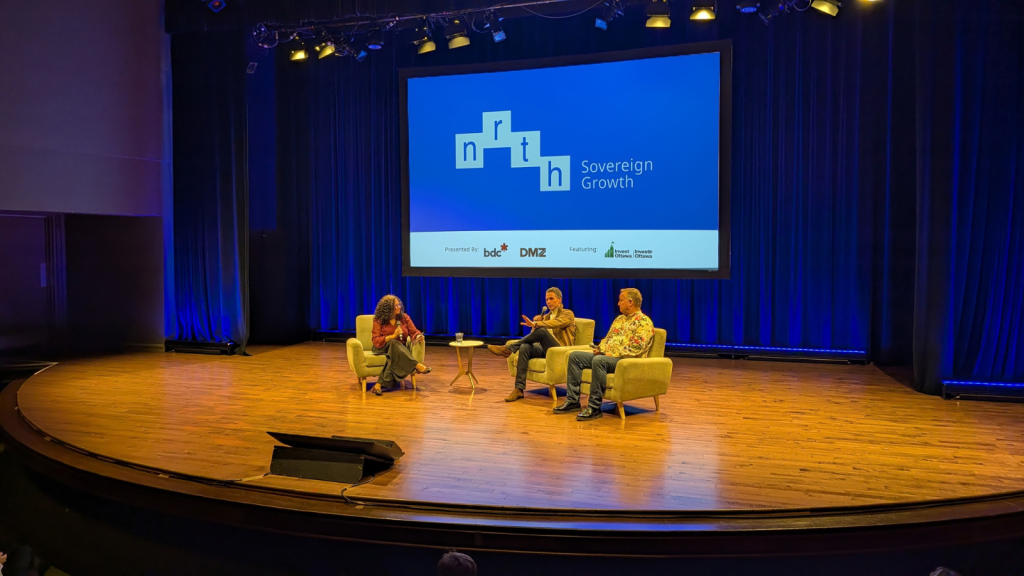
Building a sovereign AI industry doesn’t mean building all of it in Canada, said John Weigelt. It means knowing exactly which pieces you can’t afford to lose control of.
Weigelt, national technology officer at Microsoft Canada, pointed to two examples from the international supply chain behind a single AI response.
Helium, used to cool wafers during chip manufacturing, is drilled in Alberta and Saskatchewan and refined in Texas. The chips themselves are built on machines from the Netherlands using German and French technology, said Weigelt.
“The concept is not that this all needs to be Canadian,” Weigelt said. “The concept is let’s pick those spots where we need those elements.”
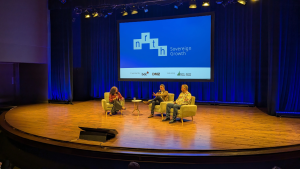
Rushmi Hasham, director of mission programs and partnerships at the SANS Institute, moderated the conversation at Nrth, the innovation event previously known as Elevate. The panel featured Weigelt and Michael Pelosi, Cohere’s country manager for Canada.
Ownership and control are not the same fight
Hasham asked Weigelt and Pelosi to bring the audience into rooms most people never get into, the boardrooms, policy tables, and infrastructure pitches where sovereignty is being defined.
Pelosi pointed to one, the Canada Investment Summit, where he said more than $1 trillion in investment was on the table that week.
“Sovereignty in that room was very hyper-focused on Canadian ownership,” he said, describing conversations tied to national pride and the fear of another country cutting off access.
He draws a different line for what he thinks really matters.
“It’s the control and the independence,” Pelosi said, pointing to hospitals and national defence as systems that need infrastructure that’s local or otherwise under Canadian control.
Adoption is already outrunning the debate
Weigelt cited Statistics Canada’s Canadian Survey on Business Conditions, which measured organizational AI use at around 12% when he spoke. The most recent wave of the same survey puts the figure at 19.2%.
Asked about the pace of Canadian AI adoption, Pelosi pushed back on the idea that Canada is simply too slow.
“This country is built on a lot of regulated industry,” he said. “Our core industry is heavily regulated, complicated. It’s banking, it’s oil and gas, it’s natural resources. There’s a cost of going too quickly, and it’s complicated to do this stuff well.”
Canada is still in the early innings of AI adoption, said Pelosi, but once it’s woven into everything, there won’t be room for error.
The cost of waiting for perfect sovereignty
“Don’t let the pursuit of perfection prevent progress,” Pelosi said.
He said that any company waiting for its AI systems to be fully sovereign, hosted on Canadian soil, and built from Canadian-made components will be waiting a while.
Cohere uses both its own LLMs and models from other companies, and Pelosi said holding out for a made-in-Canada version of everything means waiting “a long, long time.”
Pelosi pointed to Cohere CEO Aidan Gomez’s role in the Transformer paper behind the “T” in GPT, and to Canadians among the founding researchers at OpenAI and Anthropic.
“Canada doesn’t just have the right to be a global leader in maple syrup and hockey,” he said. “They have an absolute right to be a global leader in AI.”
Final shots
- The real sovereignty question is which parts of an AI system Canada can’t afford to lose control over.
- Organizations are adopting AI across global infrastructure while that line is still being drawn.
- A fully Canadian AI system would mean a long wait. The practical question is which dependencies Canada decides it cannot accept.
Canada’s AI sovereignty question is a supply chain question
#Canadas #sovereignty #question #supply #chain #question