Op-Ed: Space weaponization could be an incredibly stupid, massive own goal for humanity
The not-totally-unexpected revelation that the US has deployed weapons in space is generating some genuine and realistic unease worldwide. Unlike all the other US unilateral DIY disasters, there’s some substance and actual facts involved.
There are also massive costs, a swarm of military issues, and many very wary foreign responses, notably China, built into this blasé announcement. On the positive side, you could easily argue that the future doesn’t have enough threats to manage, and that an orbiting Armageddon might be fun.
The idea of weaponizing space was considered a bad idea back when the space race began. Now, with vast numbers of new weapons and orbital platforms, it’s still considered a bad idea. The US is so far the only nation to admit to space weapon deployment.
These systems are extremely costly and require constant monitoring and maintenance. Predictable technological redundancies could also lower the shelf life of space systems dramatically.
The basics of space weaponization
Orbital communications networks are legitimate military targets. They are also the top priority primary targets for any weapon with the range to hit them.
Satellites in static, known Earth orbits are sitting ducks. Some satellites may be able to shift orbits, but they’re still in the shooting gallery for ground-based and naval weapons.
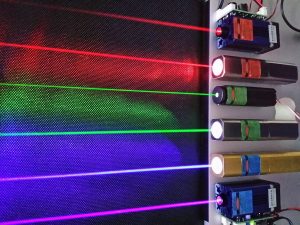
Possible weapons deployed in space include “kinetic” projectile weapons and “non-kinetic” beam weapons like lasers, electromagnetic pulse weapons, and particle beams. The beam weapons are definitely not theoretical, but there’s no indication of related platforms or deployment.
The classes of space weapons platforms include:
- Existing or new satellites.
- Autonomous or guided drones, a very probable scenario.
- Robot spacecraft like the US MRV or the older but proven X37B, adapted for military purposes,
The truly incredibly stupid, extremely destructive bit
Disruption or destruction of satellite systems or other artefacts in Earth orbit will cause huge collateral damage with severe future ramifications for all forms of space development.
The collateral damage spectrum is equally huge regardless of the nature or geopolitical context of a war in space:
Prime target networks like Starlink could be obliterated or rendered largely dysfunctional with ease using known technologies.
Destruction of satellites would increase the orbiting snowstorm of space junk exponentially.
Damaged or destabilized satellites would probably rain down on Earth in numbers over time as orbits fail or decay, and that could go on for years. Some will burn up, some won’t.
Viability of other orbital systems would be compromised directly or indirectly by creating a virtual obstacle course of unknown debris.
Global communications related to space comms would have to find workarounds in the form of “ad hoc communications networks”, a messy stopgap option with reliability as its main issues.
Neutrality is irrelevant in such an uncontrollable environment. Neutral satellites could be hit by debris or simply in the wrong place at the wrong time. Neutral countries are just as much at risk of falling debris.
The advent of AI also means the almost certainty of immediate escalation if AI space platforms go haywire. Even if this truly appalling situation is otherwise well-managed, the trust level for AI platforms can’t be taken for granted. In this case, oversight needs to be absolutely reliable.
In short, just about every current or future asset anyone has in space can be compromised more or less instantly in any space warfare environment. 70 years of achievement can be turned into instant garbage.
The future would have to be able to clean up this unholy mess just to reestablish the current level of space communications and other operations. That would take years.
A military impasse in the making?
For the world’s militaries, space is a key theatre of operations. The Ukraine war has raised the profile of satellites in military terms to essential status.
The much-cited GPS is a relatively small problem. The bigger issue is military intelligence. Visual and other critical data gathered from space generate very high-value intelligence information.
In one classic case, Ukraine was able to locate Russian forces simply by tracking and mapping their phones from space. Large blobs of signals equated to troop concentrations. The same sort of information can be gathered from just about any military force, from the simplest basic comms to heat signatures and other collateral information.
The object of warfare in space is above all to blind or destroy these sources of information. The other issue is that these systems can’t defend themselves. They’re not designed for combat. They’re fragile, and damage can be as effective as a kill. Anything from the equivalent of a bullet upwards can do the job.
“Cheap kill” is again the story. If you can destroy millions of dollars’ worth of extremely high-value enemy assets for a few cents by whatever means, are you going to do that? A single orbiting equivalent of a .50 calibre MG could easily do that with a few thousand rounds.
So there’s no lack of incentive for the military to develop weapons to destroy opposing space assets. If you shoot first, you have an advantage. It’s not looking too rosy on the other side of this argument. You don’t give away tactical and strategic advantages.
The trouble is that opposing militaries have to think the same way.
Op-Ed: Space weaponization could be an incredibly stupid, massive own goal for humanity
#OpEd #Space #weaponization #incredibly #stupid #massive #goal #humanity