N44 Superbubble, Hubble’s Monthly Image of a Star-Carved Void
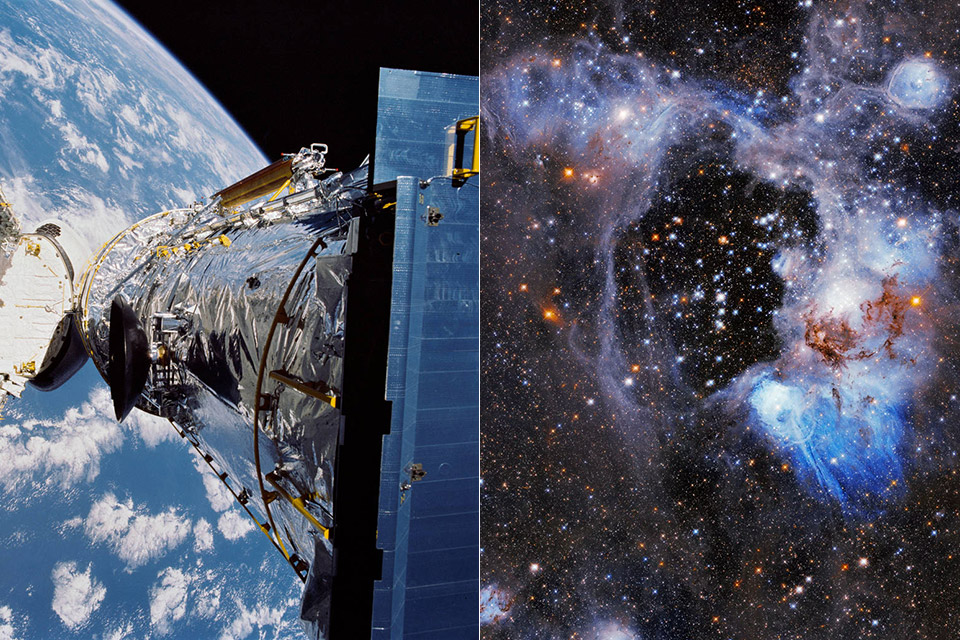
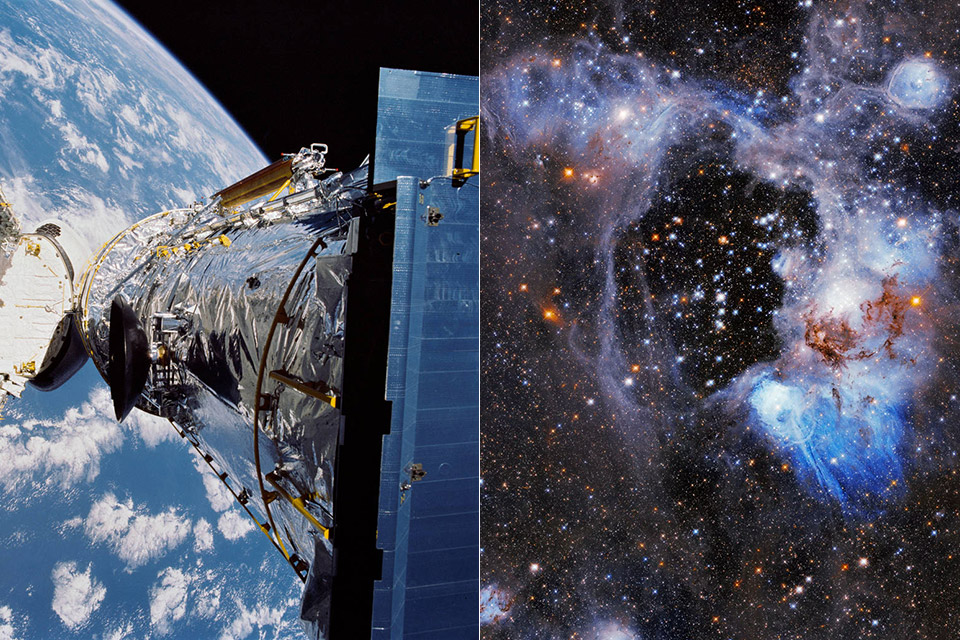
Hubble’s latest monthly image, posted by ESA and NASA last week, frames N44, also listed as LHA 120-N44, a nebula in the Large Magellanic Cloud. Sitting 160,000 light-years away in Dorado, this companion galaxy to the Milky Way gives researchers a nearby laboratory for busy star birth, close enough that dust and distance do not hide the action the way they often do inside our own spiral.
A wide empty vacuum dominates the picture out here, a superbubble measuring 210 by 140 light-years. The reason it is so hollow? Massive stars in its core blasted away the gas from which they evolved, creating a hollow at the center with their powerful winds and eventual supernova explosions, leaving behind a thick, dusty shell around the perimeter.

LEGO Icons Hubble Space Telescope 11382
- EXPLORE THE HUBBLE SPACE TELESCOPE – Celebrate one of humanity’s greatest scientific feats while enjoying a relaxing building experience with the…
- REPLICA SPACE MODEL – Recreate the legendary space-based telescope with posable solar arrays and antennas, an opening aperture door and a detailed…
- AUTHENTIC DETAILS – Remove the exterior panels to reveal a detailed instrument bay, which features gyroscopes alongside primary and secondary…
As the compressed gas in that shell collapses into new stars, it’s easy to see why teams keep returning to observe. One of the most recent missions was led by Dimitrios Gouliermis and his colleagues, who used the Hubble program 14689 to map out nearly half a million stars in the area, including 30,000 that have yet to fuse hydrogen and thus are classified as pre-main-sequence objects. Astronomers were able to determine how long it takes for a star to transition from a cold cloud to a burning one by observing those feeble stars, as well as the kind of masses you’d expect to see in a galaxy with few heavy elements.
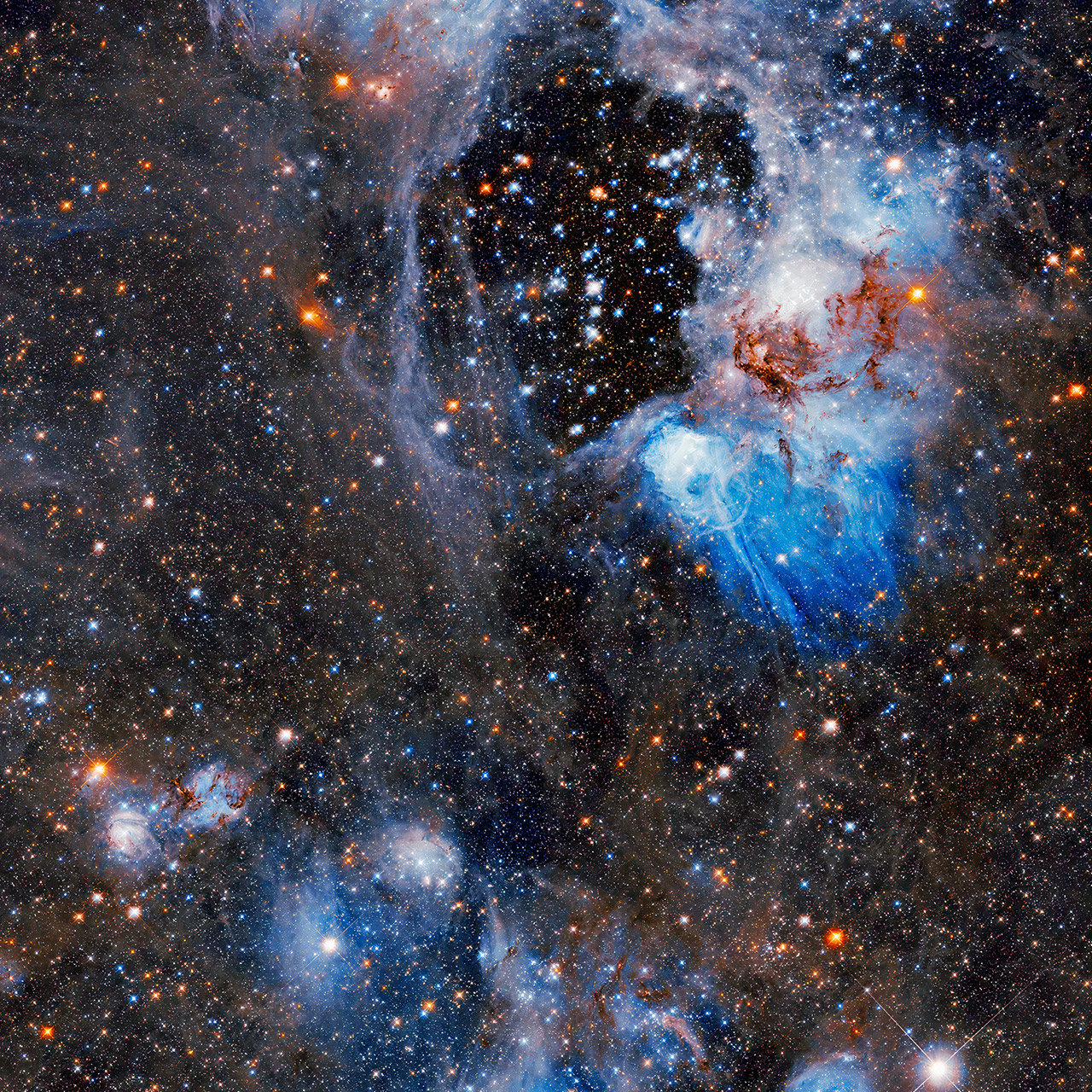
The ultraviolet light emitted by the blazing stars has caused the shell to shine a faint blue and gray, with wisps of darker dust visible at the lower right. Bright cluster members shine in a variety of colors, including blue, white, and orange. N44F, a smaller bubble produced by a blazing, huge star, appears in the upper right corner. Hubble images of the area previously showed the dusty pillars being carved out by the same radiation, and Karl Henize cataloged the individual knots of the N44 complex all the way back in the 1950s, but this latest mosaic brings the entire neighborhood together in a single 9.63 by 7.66 arcminute WFC3 frame taken through V & I filters.
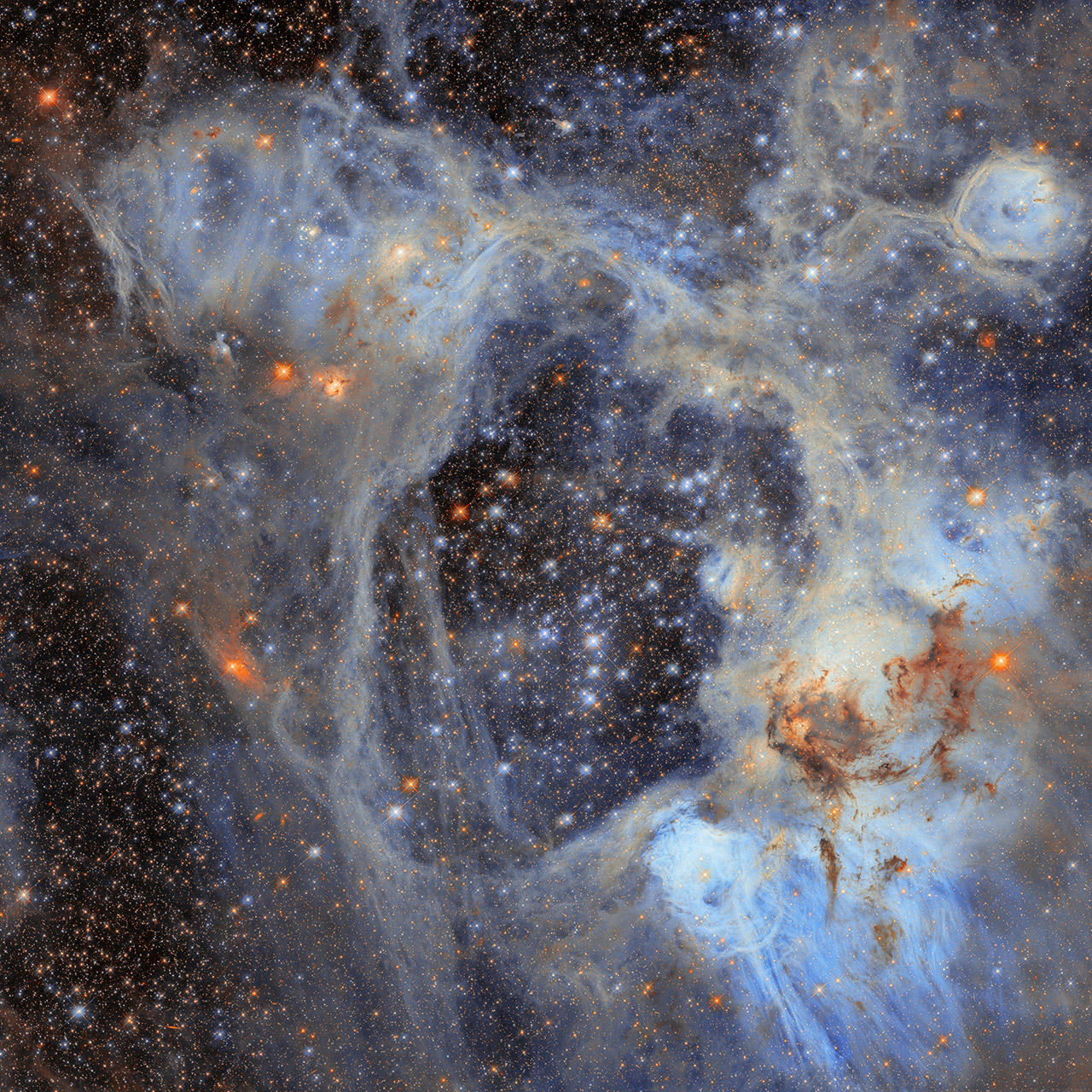
Astronomers now have a true map of a still-operational star factory. The old stars that formerly ruled the center of this superbubble have blown themselves out, but a new generation of stars is emerging in the wall they left behind.
N44 Superbubble, Hubble’s Monthly Image of a Star-Carved Void
#N44 #Superbubble #Hubbles #Monthly #Image #StarCarved #Void