Op-Ed: Is America restricting itself out of the robotics market? It’s looking pretty weird.
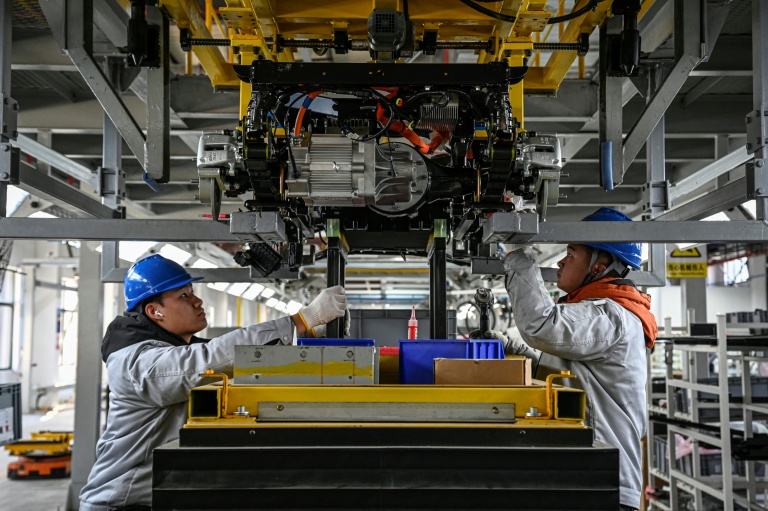
The US ban on new foreign robots and, for some unfathomable reason, power inverters has met with deep skepticism. Chinese robots and power inverters aren’t specifically mentioned, but there are few, if any, others worth mentioning. China is, as usual, forging ahead with global exports as America dawdles behind whining.
The stated reason for the ban is for national security and “supply chain vulnerabilities.” National security is a sort of all-purpose mantra for this administration, although they apparently mean networked systems and data collection and/or espionage.
Power inverters are apparently the same thing, and about a third of US power inverters are made in China. According to the FCC, remote connectivity of power inverters allows “foreign firms to turn off the inverters or use them to collect and exfiltrate data, facilitate remote access and surveillance by foreign government actors, or be otherwise exploited through a cyberattack.”
Well, does it? Are there any known instances of power inverters being used in a cyberattack or surveillance? Yes there are, but the wider risks are subject to interpretation. The risks are either half empty or half full depending on your point of view.
There were 800 hijacked commercial monitoring systems at solar power facilities in Japan in 2024. There are multiple software vulnerabilities identified by Forescout that could “theoretically” build botnets. So could just about anything from 10 years ago, but meh…?
Meanwhile, what are you supposed to convert DC to AC with? Press releases? On that basis, you could and should ban the Internet of Things.
Supply chain vulnerabilities aren’t defined. Why tell the world? For that matter, what supply chain? Which ones? What suppliers? It’s not like America is producing robots or power inverters on anything dimly resembling the Chinese scale of production.
Meanwhile, back in the trade quagmire
Either there are national security risks and supply chain vulnerabilities, or there aren’t. There’s a general impression that America’s endlessly weird obsession with trade has scored a major own goal with this response.
This move can also be seen as protectionism in a race in which America is lagging badly behind. One of the major issues is humanoid robots, the Next Big Very Conspicuous Thing in robotics.
Is America trying to defend the domestic robot market for US producers? If so, why not say so? Particularly when some people seem to think that’s the big plus of the ban, and even they can’t find anything else good to say about it?
That cosmetic level of protection might be the case, but there’s an unavoidable, unforgiving cutoff point. Competing worldwide might be too much for US production and distribution. Chinese robots are now in their third generation and are considered pretty good. Comparisons with US products are likely to be brutal and costly. The Chinese robots are cheaper, too. How will the US compete? When?
This is not a market anyone would want to miss out. It’s easily the size of the auto market, and it’s just starting. At all levels, the Chinese have the full supply chain covered, with parts and support. The business opportunities are limitless. Turnover of robots is also likely to be high, another cash cow.
Karma strikes hard
One of Imperial China’s downfalls was its refusal to allow “foreign manufactures” into China. A mix of profitable ignorance and bone-marrow deep corruption prevented China from defending itself.
This level of insularity and self-deception was utterly disastrous, both in terms of trade and the complete inability of China to compete with Western weapons. China was condemned to what it rightly calls a “century of humiliation”. America came along for the ride during the Opium Wars.
The wheel may have come full circle with a vengeance. The world now does business with China. It rarely knows if it can do business with America, with the constant tariff wars and other annoyances.
When is one bad trade move too many? We may be about to find out. This version of America can be bypassed. It can be ignored. As a market, it’s looking decidedly sick. As a geopolitical entity, it’s looking senile and badly out of touch. There are 8 billion people who’ve seen more than enough and had quite enough.
America isn’t dead. Yet. It could walk off one of the many cliffs it’s created for itself, though. The risk here is that missing the robotics wave might also mean missing the rest of the 21st century. In the same way that the 1950s American lifestyle defined the lifestyle of the world, robots will do the same thing on many more levels.
This is the archetype of the real competition with China. America’s coming tenth in a two-horse race. The Chinese produce the full spectrum of goods. They do the distribution. They’re able to be coherent when doing business. It’s American talk vs Chinese hard products, and there’s no doubt who’s winning.
How does America dig itself out from under itself?
The current American situation is extremely bad. Economically, the US has long since lost the plot, ignoring realities and above all its own serious mistakes, bad calls, and lack of realism. Socially, it looks like it doesn’t even know who it is or was anymore.
The world couldn’t care less. Nobody’s here to psychoanalyse 340 million people who should and do know better. The new ban is just the latest absurdity of far too many absurdities.
Does anyone really think the world will stop using Chinese technology? That’s the world you’ll be doing business with. The world knows the risks, too, but isn’t quite so infantile in its responses.
Op-Ed: Is America restricting itself out of the robotics market? It’s looking pretty weird.
#OpEd #America #restricting #robotics #market #pretty #weird