Faster charging, safer batteries? New research could help overcome an electric vehicle bottleneck
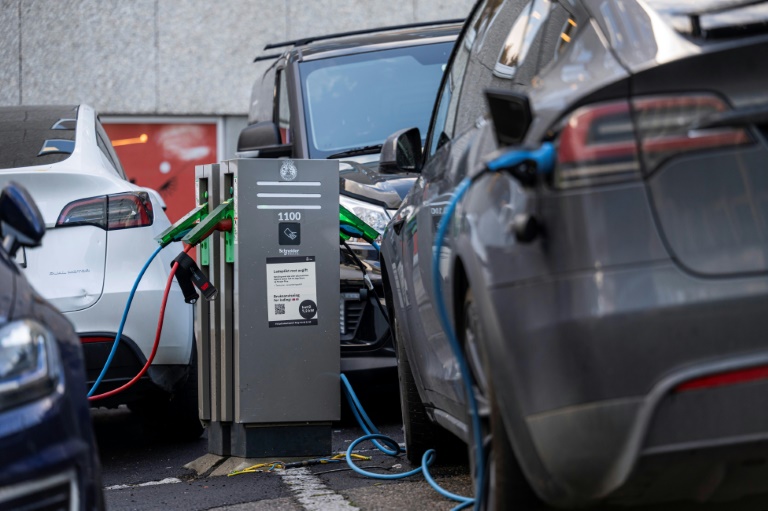
One of the biggest barriers to wider electric vehicle (EV) adoption remains charging time. While battery capacity and driving range continue to improve, many drivers still compare the minutes required to refuel a petrol vehicle with the longer charging times associated with lithium-ion batteries.
New research from the Seoul National University of Science and Technology (SEOULTECH) may offer a pathway towards addressing this challenge. Scientists have reported a novel battery design strategy that enables lithium-ion batteries to charge at extremely high rates while maintaining stability, durability and safety. The findings could have implications for electric vehicles, grid-scale energy storage and future solid-state battery technologies.
The study, published in Advanced Functional Materials, focuses on a long-standing challenge within battery science: how to accelerate charging without causing damage to the battery itself. According to the researchers, their approach involves engineering an “off-stoichiometric” lithium titanium phosphate (LTP) anode capable of supporting ultrafast charging while avoiding many of the degradation mechanisms that typically accompany rapid charging. The work was led by Associate Professor Dongwook Han and colleagues at SEOULTECH.
The fast-charging problem
Fast charging has become a major priority for the battery industry. Consumers increasingly expect electric vehicles to recharge quickly enough for long-distance travel, while commercial users want to minimise downtime for delivery fleets, public transport systems and industrial equipment.
However, charging batteries too quickly creates significant engineering challenges. For instance, when lithium-ion batteries are charged at very high rates, lithium ions may not move efficiently into the anode material. Instead, metallic lithium can accumulate on the surface, a phenomenon known as lithium plating. This process not only reduces battery life but can also create safety concerns, including thermal instability. The faster a battery charges, the greater the risk of these unwanted side effects. For years, researchers have attempted to address this trade-off between charging speed and battery longevity.
The SEOULTECH team approached the problem by modifying the internal chemistry of the anode rather than relying on external coatings or conventional surface treatments.
Their strategy deliberately altered the material’s stoichiometry, specifically adjusting the balance between phosphorus and titanium within lithium titanium phosphate. The result was the formation of titanium-deficient regions beneath the surface of the anode material. These regions create what the researchers describe as favourable pathways for lithium-ion transport.
By lowering energy barriers and accelerating ion movement, the modified anode was able to support substantially faster charging rates while maintaining structural integrity.
This represents a significant departure from many existing battery enhancement strategies. Instead of adding supplementary layers to improve performance, the researchers altered the bulk material itself to create internal transport “gateways” that facilitate ion movement during high-rate charging.
Impressive performance results
Perhaps the most striking outcome is the battery’s performance under extreme charging conditions. The researchers report that the modified lithium titanium phosphate anode retained approximately 86 percent of its initial capacity even when charged at a 10C rate. In battery terminology, a 10C charge rate corresponds to extremely rapid charging relative to the battery’s nominal capacity.
Conventional LTP anodes performed considerably less effectively under the same conditions. Equally important, the material also demonstrated sustained durability over more than 250 charge-discharge cycles. High-rate charging often comes at the expense of long-term battery health. In this case, the researchers report both high charging performance and continued structural stability over repeated use cycles.
The team also successfully tested compatibility with commercially relevant high-voltage cathode materials in full-cell configurations, suggesting that the technology could potentially integrate into practical battery designs.
For consumers, the most visible application would be electric vehicles. The ability to significantly reduce charging times could help address one of the most persistent concerns associated with EV ownership: charging convenience. A charging stop that takes only a fraction of current charging times could improve the attractiveness of EVs for long-distance travel while reducing infrastructure congestion at public charging stations.
Associate Professor Han stated: “Our approach represents a new paradigm for designing fast-charging batteries and is broadly applicable for a wide range of future energy storage systems. This strategy could help make electric vehicles more practical by reducing charging times while improving safety.”
While considerable development work remains before commercial deployment, the findings highlight the continuing pace of battery innovation. The implications of the study extend beyond conventional lithium-ion systems. According to the researchers, the underlying design principle may also apply to next-generation energy storage technologies, including all-solid-state batteries. Solid-state batteries have attracted intense interest because of their potential to provide greater energy density and improved safety compared with liquid-electrolyte systems. However, they face many of the same ion transport challenges associated with rapid charging.
By demonstrating how careful manipulation of material composition can improve ion movement, the study introduces a potentially transferable design approach. Instead of focusing solely on external interfaces, scientists may increasingly explore how internal material architecture influences battery performance.
Relevance for Canada
The research may be particularly relevant for Canada, where electrification strategies increasingly depend on reliable battery technologies. Canada has positioned itself as a major participant in the global battery supply chain, with substantial investments announced in battery manufacturing, critical mineral extraction and EV production. At the same time, Canada’s vast geography presents unique challenges for electric transportation.
Long-distance travel between population centres and operation in cold-weather environments place additional demands on EV performance and charging infrastructure. Faster charging technologies could help mitigate some of these concerns, particularly in remote regions where charging opportunities are less frequent.
Battery storage is also becoming increasingly important as provinces expand renewable energy generation. Utility operators require energy storage systems that can quickly absorb and release energy while maintaining long-term durability. Technologies that improve charging speed without degrading battery performance could therefore have applications well beyond passenger vehicles.
Faster charging, safer batteries? New research could help overcome an electric vehicle bottleneck
#Faster #charging #safer #batteries #research #overcome #electric #vehicle #bottleneck