What boards should have been asking in 2022
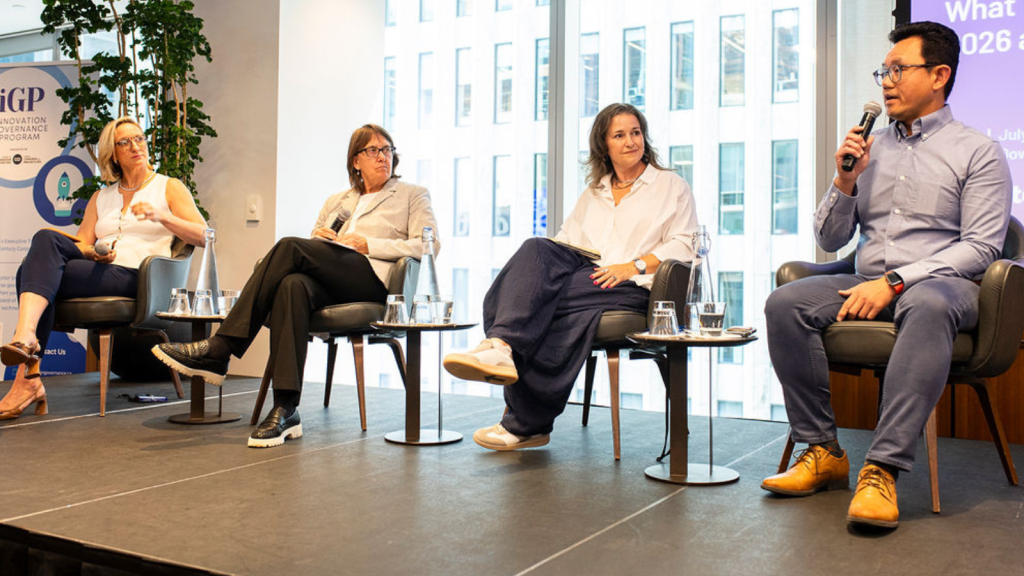
Two weeks ago Ken Chan asked a room of entrepreneurs, board chairs, and governance experts in Toronto to stop looking ahead for a minute and go back to 2022.
The full-scale invasion of Ukraine was weeks old, populist parties were climbing across Europe, and the Canada-U.S. relationship still read as a fixed point you could hang a five-year plan on.
“The question we should be asking now is what boards ought to have done in 2022,” said Chan, a partner at Optimus SBR, who also sits on a number of boards including for a federally regulated bank and a Crown corporation.
Everything that could rattle a board today was already on the table four years ago. What Chan wants to know is whether directors have learned to ask where the blind spots are before the next crisis turns up.
For the technology leaders those boards depend on, the question has a sharper edge, because the AI rollout, vendor call, or platform rebuilt tends to sit in their department.
It’s a throughline that ran the whole session at the Council of Canadian Innovators (CCI) Innovation Governance Summit 2026, moderated by CCI chief strategy officer Dana O’Born.
It’s been six years since COVID began, when ‘unprecedented times’ quickly became a saying that everyone wanted to launch into the sun (or at least vigorously erase from any and all communication ever).
In the post-pandemic years, as O’Born explained, boards have had to contend with volatility in the markets and governance structures, geopolitical tensions (to put it lightly), all on top of the move toward DEI standards and the emergence of AI.
Anyone else tired?
Six years of leapfrogging from one crisis to the next hasn’t made boards any better at asking hard questions early, and listening to management and employees living with the decision results.
Amanda Maltby, chief privacy officer at Environics Analytics, said a major part of the problem is that boards become too “insular.”

She argued that a boardroom needs healthy tension and conflict to force directors to put their heads up and look at the broader environment.
You know, the people who already know the answer to all those hard questions.
The board you need keeps changing
Kristina McDougall, founder and managing partner of Artemis Canada, has spent more than 25 years recruiting leaders for growing companies, and she watches boards reach for the same comfort blanket under stress.
“Track record will often mean ‘bring me someone who’s done this thing before and they can bring a playbook,’ because they know what to do and they can come in and do that thing again,” she said.
“I think that’s always been a little bit dangerous, and I would say now more than ever it could be catastrophic, because the thing that you did to get you here is not the thing that you need to do to get you there.”
Instead, board members should know how to craft a new plan from scratch.
“It’s less about having a playbook that you can open up and reuse. It’s the skill of writing one,” added McDougall. “It’s the skill of being able to understand what’s happening out there, what’s happening in here, where do we want to go, and craft the strategy based on some intelligence.”
Leaders have to change as the company grows, but Chan took it up a level, saying so do the directors doing the hiring.
“The people that you have in the first year of a formal board could be very different from when you’re looking at the post-Series C and then going to IPO,” said Chan.
Most boards add directors and rarely subtract, and the table fills with people who fit the company that used to exist.
The stakeholder sitting in your own building
Maltby pointed out that boards often wait for stakeholder expectations to jump out at them one day, rather than asking early on whose interests they’re really serving.
“Who are they? I mean, are they employees? Are they investors? Are they suppliers? Are they customers?” asked Maltby.
“One of the things is that as a board, as a director, is really understanding the equation between risk and opportunity as it relates to a stakeholder, but also as it relates to that risk and opportunity.”
When the stakeholder is the employee, the risk can be huge.
McDougall often takes calls from people pleading for her help to find a new job, asking “Can you please liberate me from this really terrible company that I’m working for?”

She described a market busy on both sides, with companies looking to grow and hire, while workers are “disenchanted” with the business.
A big new contract can look like a win on paper, but be disastrous for the company from the inside, if staff object to who it’s with.
For example, if a company picks up a contract with the U.S. Immigrations and Customs Enforcement (ICE), there could be employees that firmly object, right alongside public backlash.
In 2020, for example, there was massive internal backlash at Hootsuite for this exact scenario, with opposition from more than 100 employees after a whistleblower posted details to Twitter. The company reported internal division on the issue, but ended up cancelling the contract.
“It’s important to remember that we think of companies as entities, and we think of them as the products they make,” said McDougall.
“But so much around companies are these humans that come and show up every day and either give it everything because they’re really excited about the mission, or they don’t, right? And I think the silent thing that can destroy a company is a workforce that kind of doesn’t give a darn anymore about what it is that you’re looking to do, or they lose sight of the vision.”
Employees are quick to do the math on their own future. When a company decides to cut a whole arm of the organization and hand the work to AI, the people still there can pick up what’s being put down.
“The implications there are: I’m expendable. My job is training the bot that’s going to replace me,” said McDougall.
Organizational structure is going to change when these tools are brought in, which she described as an opportunity to empower everyone.
“If you look at where a lot of really great AI adoption and ideas come from, it’s really bottoms up,” she said.

Give people room to experiment inside clear limits and guardrails, and the best ideas tend to bubble up from the floor instead of being a watered down version of an already half-baked idea someone blurted out in hour two of a brainstorming session.
Maltby said that what surprises a lot of leaders is that employees are asking to be governed, though the request comes with a big asterisk.
“You have to be really clear about their data,” said Maltby. “The fact that their data will not be involved in the training or tools, because this is where you sort of tip the balance with the employees.”
Transparency is leverage
Used well, transparency is a tool for shaping how the company is understood in the first place.
“It’s not necessarily about having the control of the message,” said Maltby. “It’s also about facilitating a conversation.”
A company that’s honest about what it really stands for, including how it handles bias and fairness in AI, for example, earns more trust than one working hard to stay on message.
“We have very unique positions around principles, Canadian values, and reasonableness,” said Maltby, pointing to current privacy laws. “As Canadians, as board members, what is reasonable in the context as we think about Canadian consumers and citizens.”
The board’s real job is to hear the bad news
A new board member owes the company genuine curiosity about why the company was built in the first place.
The board only hears about the culture cost of AI, the guardrails employees are asking for, and the promises management makes or skips on staff data, if someone brings them to the table.

That someone is usually the CIO or CTO.
The next blind spot will probably be an issue that employees are living with every day. If you’re holding onto the realities of an AI rollout, for example, it’s time to bring them upstairs.
As Chan said, if a board isn’t hearing these concerns from management, it’s a problem.
Final shots
- The next board crisis is probably already visible inside the company. Boards need people close enough to the work to surface it early.
- Board renewal should follow the company’s growth. Directors need to match the company’s current risks, stage, and strategy.
- AI governance is also a workforce issue. Boards should ask what employees are being told, what data is being used, and how staff are involved in deployment.
What boards should have been asking in 2022
#boards