Op-Ed: Can anyone win automated wars? Where is this going?
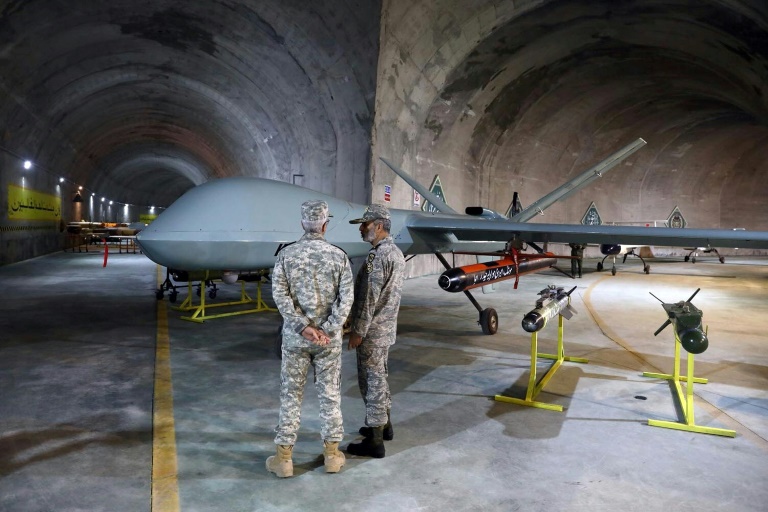
The wars in Ukraine and Iran are making an unmistakable and very dangerous point. Robot wars can go on forever, in the face of tactical and strategic total failure. As long as automated weapon systems can be produced, wars will continue. That’s the repeating message from those wars, and the world’s militaries are following the same logic.
Humans are very much on the wrong end of this equation. Russian soldiers in Ukraine now have a life expectancy of 30 minutes, according to the CIA. They’re being individually hunted and killed by AI drones, regardless of jamming technologies and evasion techniques.
This capability didn’t even exist as much more than a general theory of future warfare a couple of years ago with FPV drones doing the work. It’s now a practical active 24/7 combat methodology in Ukraine, and the war is being won and lost on that basis.
The big picture is getting much bigger
Now back it all up with massive increased production of automated weapons. The huge numbers of drones and automated systems produced in Ukraine and Russia in the last two years are the metric. Both sides have moved to automation by necessity.
It needs to be stressed that neither Ukraine nor Russia started the war with much more than embryonic drones and other automated systems. Three generations of different classes of effective automated weapons have evolved since 2022. FPVs, interceptor drones, loitering munitions and AI combat systems have been built almost from scratch since then.
In the whole history of human warfare going back to the Stone Age, there’s nothing like it. There’s not even a psychological metric. Human wars are supposedly based on rationales, insane or otherwise. AI wars are based on prompts, LLMs, and software. It’s a weird mix of priorities.
The AI rationale, if there is one, and there doesn’t need to be one, could be as grotesque as the “Mecha-Hitler” ravings, or just a series of “do this” mission prompts at the purely automated level. That’s barely the beginning of the overall transformation of war into an unrecognizable and probably uncontrollable new reality.
The “kill factor”
“Control” of combat systems isn’t simple, and it can’t be. Autonomous AI agents are designed to operate without guidance from operators. They can’t be jammed. They’re designed to fight their wars on their own. Networked AIs can create highly efficient kill zones with ease.
Offensive capabilities are developing exponentially. New Chinese ATLAS systems are designed to deploy swarms of drones as active hunter-killers to blitz opponents at minimum risk of casualties. Air, sea, and land UAVs are proving they can achieve success at micro- and macro-scale operations.
The human problem
There’s a much less obvious but all too human issue here. The whole killing process is now seen as low risk simply because it’s automated. That, in turn, means that the risks of war are now suddenly more acceptable. You might draw the line at the risk of losing a thousand troops. If you’re losing a thousand drones, you probably won’t even blink at the risk.
The risk to other people, specifically anyone at all in range of these automated combat systems, is a very different issue. Civilians traditionally take far more casualties than combatants. These systems can make large areas uninhabitable simply by destroying infrastructure and/or contaminating those areas. Disease, famine, and impossible logistical problems follow.
This is progressive collateral damage, leading to easily foreseeable and almost impossible to prevent human disasters. Any area can additionally become a war zone, making the collateral damage much worse. Entire populations can be dispossessed, displaced, and unsupportable.
The military problem
Automated warfare simultaneously creates an almost insoluble problem for the military. How do you win? At what point is an automated military defeated? Can you actually stop production in the age of 3D printing and DIY combat systems? Asymmetry wins.
Covert systems, like AI agents, pose another problem. They can attack and corrupt other AI systems. Can you trust your AI? Do you even have the reliable information you need to fight? That question is getting more insistent, and in military terms, it’s crucial to the integrity of your forces.
What do you put on the ground when boots can’t be enough? How do you stop an automated war? Is it now so much easier to start a war? Can non-state actors start and fight wars based purely on automation? Can you have civil wars based on automated combat systems?
This isn’t so much Pandora’s Box as Pandora’s Budget-Friendly Global Military Industrial Complex In A Box. There’s no real limit to what can be mounted on AI combat systems. Most of the resources for current automated combat systems are freely available worldwide. Conventional weapons are easy enough. Add NBC capabilities to this cheerful mix of options, and World War 3 is effectively redundant. You could have multiple major wars overnight.
How to beat automated warfare?
If you can’t control your automated systems, you’re a spectator at your own war. There’s only one way to control automated warfare, even in theory. There needs to be a multi-layered generic kill switch for these systems. A kill switch system needs to be utterly reliable and fully tested. It must shut down all combat capabilities. It’s possible, but only in a patchy way.
Direct attacks on automated systems are also problematic. There are existing types of weapons like non-nuclear EMP weapons that can do that, if and only if they can be deployed before being targeted themselves. That’s only if they can effectively engage the ever-expanding menagerie of types of weapons and their equally expanding range of evasion techniques.
Everyone is a target. To win is to survive.
Op-Ed: Can anyone win automated wars? Where is this going?
#OpEd #win #automated #wars