Silicon chips learn to write DNA: Research points to cleaner route for synthetic biology
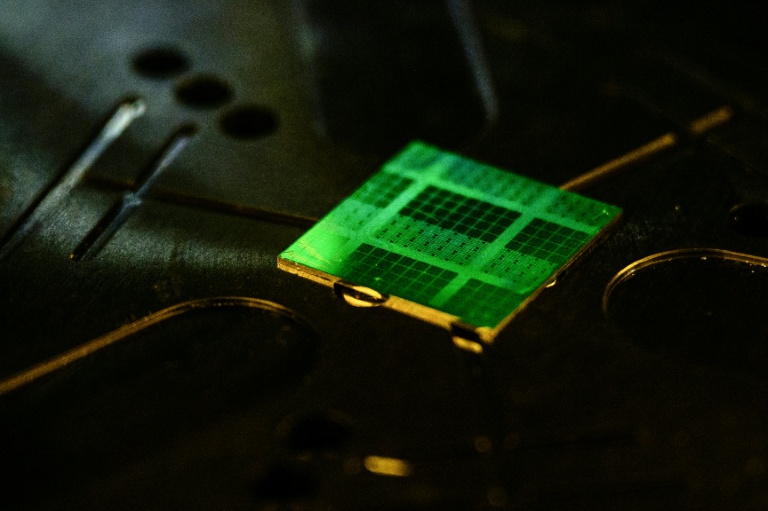
Silicon chips have long been associated with computing power. Increasingly, the same type of technology is being adapted to interface with biology: reading DNA, monitoring neurons and now, in a new advance, writing DNA sequences directly on a chip. A Harvard-led research team has demonstrated a semiconductor device capable of synthesizing multiple DNA sequences in parallel using electricity and water-based enzymatic chemistry, pointing toward a cleaner and potentially more distributed future for DNA manufacturing.
The work, published in Nature Electronics, describes a silicon chip that can synthesize 64 distinct DNA sequences simultaneously on its surface. The study, titled “Parallel enzymatic DNA synthesis using a semiconductor chip,” was led by Donhee Ham at Harvard John A. Paulson School of Engineering and Applied Sciences.
Synthetic DNA is now a core material for modern biotechnology. It is used in diagnostics, genetic engineering, cancer research, vaccine development, synthetic biology and data storage experiments. However, most commercial DNA synthesis still relies on phosphoramidite chemistry, a highly effective but solvent-intensive process that generally requires specialist centralized facilities.
The Harvard approach is different. Instead of using conventional organic-solvent-based chemistry, the device uses enzymatic synthesis in water. This is significant because enzymatic DNA synthesis more closely resembles the way living systems construct DNA and could offer a less hazardous, more environmentally compatible route to making genetic material.
The achievement is also notable because enzymatic DNA synthesis has historically struggled to match the parallelism of established industrial DNA manufacturing. According to Harvard, previous demonstrations had produced only around a dozen sequences at once, whereas the new chip generated 64 distinct sequences, each up to 39 nucleotides in length.
At the centre of the technology is precise electrochemical control. DNA synthesis proceeds one nucleotide at a time. After each nucleotide is added, a temporary blocking group prevents uncontrolled extension. Before the next nucleotide can be added, that blocking group must be removed in a step known as deprotection. In this system, deprotection is triggered by localized acidity, or low pH, generated in water.
The chip contains an array of ring-electrode structures. Each synthesis site uses concentric electrodes around DNA anchored at the centre. When a site is activated, the inner electrode generates protons, lowering pH locally and enabling the next DNA-building step. The outer electrode removes escaping protons, helping confine the acidified region to the intended location.

This matters because writing many different DNA sequences at once requires addressability. In effect, the chip must decide which synthesis sites receive the next chemical instruction and which do not. The Harvard system achieves this by using carefully controlled electrical currents to create localized reaction conditions on demand.
An interesting feature of the project is that the chip technology did not begin life as a DNA-writing platform. Harvard reports that the underlying electronics were originally developed for recording activity from large populations of neurons. By redesigning the surface electrode architecture, the researchers redirected the same principle of precise current injection from cellular measurement to molecular synthesis.
DNA storage solutions
The potential applications are wide-ranging. Smaller, water-based DNA synthesis devices could eventually support more accessible DNA-writing systems for research laboratories, diagnostics and synthetic biology. Rather than relying exclusively on centralized manufacturing, future systems might allow DNA to be produced closer to the point of use.
One particularly intriguing application is DNA data storage. DNA has long attracted interest as a potential archival medium because of its extraordinary information density and long-term stability under suitable storage conditions. In the Harvard study, the researchers used the DNA sequences synthesized on the chip to encode a 169-byte text, illustrating a possible future role for semiconductor-based DNA writing in information storage.
This remains a long-term prospect. DNA data storage would require DNA synthesis at scales far beyond today’s routine biological applications. Yet if the volume of DNA writing increases dramatically, greener synthesis methods could become increasingly important. Water-based enzymatic synthesis may offer environmental advantages if it can be scaled to much higher levels of parallel production.
The researchers also explored whether the chip could be made denser by placing synthesis sites closer together. This revealed an important limitation. The electronics successfully localized the low pH to selected sites; the constraint came instead from the deprotection chemistry. Intermediate molecules generated during the process could migrate into neighbouring regions, limiting how closely synthesis sites could be packed.
This finding helps define the next scientific challenge. The semiconductor platform appears capable of fine spatial control, but the chemistry must evolve to keep pace. A more direct acid-driven deprotection chemistry could allow higher-density DNA synthesis arrays and make better use of the underlying chip architecture.
The broader significance is that biotechnology is increasingly borrowing from semiconductor engineering. Chips are no longer simply processors of digital information; they are becoming programmable platforms for manipulating biological molecules. This convergence of electronics, chemistry and molecular biology could reshape how DNA is manufactured, how diagnostics are performed and, eventually, how biological information is stored.
Silicon chips learn to write DNA: Research points to cleaner route for synthetic biology
#Silicon #chips #learn #write #DNA #Research #points #cleaner #route #synthetic #biology