Canadian mining’s green turn: Real progress, hard limits, and the risk of over-claiming
Canada’s mining industry is trying to reposition itself as a cleaner, more responsible supplier of the minerals needed for the energy transition. This is not simply a public-relations exercise. Demand for copper, nickel, lithium, graphite, cobalt, rare earth elements and other critical minerals is rising as governments and manufacturers build out electric vehicles, batteries, renewable energy systems and digital infrastructure. Canada’s federal Critical Minerals Strategy presents these materials as essential to a low-carbon economy, while the government’s 2026 progress update points to 56 active critical-mineral mines, 31 processing facilities and 171 advanced critical-mineral projects as evidence of a growing domestic supply chain.
Yet the central paradox remains: the technologies required to decarbonise modern economies require more mining, and more mining can mean more land disturbance, water use, tailings risks, biodiversity loss and greenhouse gas emissions. Natural Resources Canada acknowledges that mining needs to incorporate environmental, social and governance objectives if the sector is to maintain market access and social licence. At the same time, the Commissioner of the Environment and Sustainable Development has warned that increased critical-mineral activity could bring adverse impacts for climate, biodiversity and Indigenous communities if risks are not properly assessed and managed.
Technologies that are ‘greening’ mining
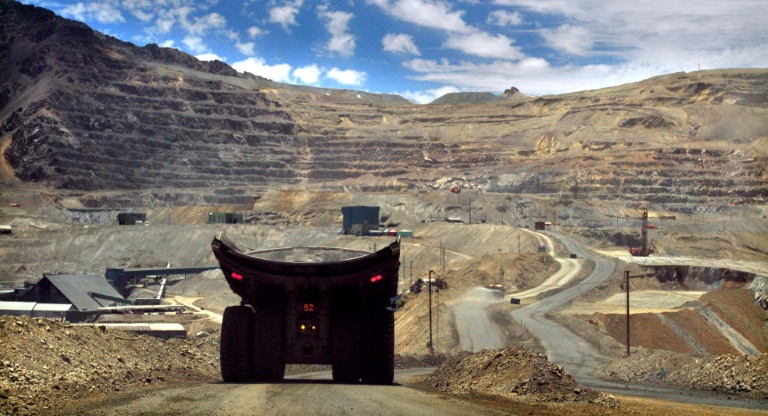
One of the most visible areas of change is mine electrification. Canadian operators are increasingly examining battery-electric vehicles, trolley-assist haulage, electrified material handling, hybrid power systems and renewable energy integration. Newmont’s Borden mine in Ontario is often cited as an early example of an underground mine moving to a fully battery-electric fleet, while Vale’s Coleman mine and Copper Mountain in British Columbia have been associated with battery-electric and trolley-assist initiatives. These developments can reduce diesel use, cut underground ventilation requirements, improve air quality for workers and lower operating emissions.
Analysis from the Canadian Climate Institute’s 440 Megatonnes project found that mining was the only heavy-industry subsector in Canada whose emissions increased between 2005 and 2022, rising by around 36 percent. The same analysis noted that diesel and gas still accounted for 59 percent of mining energy use in 2022, while electricity’s share of the sector’s energy mix had fallen from 37 percent in 2005 to 33 percent in 2022, despite higher absolute electricity use. This means that electrification is promising, but it is not yet the dominant operating model across the sector.
The technical barriers are also substantial. For example, many mines are remote, energy-intensive and dependent on diesel because grid access is limited or unreliable. Heavy haulage equipment has demanding duty cycles, and battery-electric systems must contend with charging infrastructure, payload constraints, cold-weather performance and mine-plan integration. The Canadian Climate Institute has argued that Canada has a potential low-carbon advantage in critical minerals, but that this depends on traceability, carbon-intensity differentiation in markets, access to clean power and the scaling of technologies that are not yet ready for every mining application.
Beyond carbon, the sector is attempting to improve performance through standards and reporting systems. The Mining Association of Canada’s Towards Sustainable Mining programme is one of the most developed frameworks, requiring participating members to measure and publicly report performance across areas such as tailings management, water stewardship, biodiversity conservation, climate change, Indigenous and community relationships, mine closure and health and safety. The programme is mandatory for MAC members’ Canadian operations and is designed to translate high-level sustainability commitments into site-level management systems.
Anti-greenwashing measures
This type of framework has value, especially when it requires facility-level reporting and external verification. However, standards are not the same as environmental outcomes. A mine may have a management system, a biodiversity plan or a water stewardship protocol and still produce significant impacts. The credibility of such schemes depends on how performance is measured, whether poor performance is visible, whether communities can challenge claims, and whether regulators act where risks materialise. Canada’s recent anti-greenwashing amendments under the Competition Act have increased scrutiny of environmental claims, requiring companies to substantiate representations about environmental benefits and sustainability performance.
Tailings remain the industry’s most difficult environmental credibility test. The 2014 Mount Polley disaster in British Columbia released approximately 17 million cubic metres of water and 8 million cubic metres of tailings and materials into Polley Lake, Hazeltine Creek and Quesnel Lake, according to the provincial government. The incident remains a reference point for communities, regulators and investors because it showed that a single containment failure can overwhelm years of sustainability messaging. Recent reporting has also noted that federal Fisheries Act charges were laid in 2024, a decade after the event, and that concerns about ecological effects continue.
The Mount Polley case continues to influence public trust. In July 2026, British Columbia ministers approved plans to raise the height of the Mount Polley tailings storage facility by 13 metres, bringing it to 77 metres, as part of an expansion intended to extend mine life to 2033. The government stated that the change was not likely to result in significant new impacts compared with existing approved operations, but reporting also highlighted opposition and continuing concern from the Xat’sull First Nation, including objections around consultation and regulatory adequacy.
Water is another defining issue. Mining can affect watersheds through acid rock drainage, metal leaching, process-water discharge, sediment movement and the long-term management of waste rock and tailings. Natural Resources Canada points to research programmes such as Mine Environment Neutral Drainage and work by CanmetMINING to improve waste management, reduce environmental risks and repurpose mine waste. These are important, but the existence of research programmes does not remove the need for strong baseline studies, enforceable permits, independent monitoring and transparent post-closure obligations.
The critical-minerals narrative also needs careful handling for there is no large-scale clean-energy transition without minerals. Canada’s Critical Minerals Strategy states plainly that batteries, electric vehicles, wind turbines and solar panels depend on these inputs. The strategy’s 2026 progress update reports increased production for nine critical minerals by 2024 and substantial exploration spending, suggesting that Canada is actively trying to build a domestic and allied supply chain.
However, presenting all critical-mineral mining as intrinsically “green” is misleading. A lithium, nickel or copper mine may enable lower-carbon technologies downstream, but the mine itself can still damage habitats, disturb carbon-rich wetlands or peatlands, affect Indigenous rights, and increase emissions. The Commissioner of the Environment and Sustainable Development concluded in 2024 that Natural Resources Canada had not done enough to assess the environmental and climate impacts of the Critical Minerals Strategy or to weigh expected benefits against risks. That finding should temper any simple claim that critical minerals automatically equal sustainability.
Interfacing with indigenous communities
Indigenous participation is another area where progress and tension coexist. Federal policy increasingly frames critical-mineral development around partnership, economic reconciliation and respect for Aboriginal and Treaty rights. Canada’s strategy identifies advancing reconciliation with Indigenous peoples as one of its focus areas, and related federal materials point to funding for Indigenous engagement, capacity building and participation in critical-mineral infrastructure.
Yet participation is not the same as consent, and financial partnership is not a substitute for environmental protection or cultural-site safeguarding. The Commissioner’s audit found that indicators for reconciliation were stronger on economic measures, such as jobs and revenue sharing, than on social and cultural dimensions, including culturally significant sites or local living conditions. This is an important weakness, because mining impacts are geographically specific and often fall most directly on Indigenous and remote communities.
So is Canadian mining genuinely reducing its environmental impact, or is the sector greenwashing? The fairest answer is that both dynamics are present.
There is genuine progress in electrification, energy management, tailings governance, biodiversity protocols, water stewardship, mine-closure planning and public reporting. There is also a commercial incentive to describe mining as “clean”, “responsible” or “essential to net zero” while giving less prominence to land disturbance, waste generation, diesel dependence and long-term liability.
For claims to be credible, companies should provide site-specific evidence rather than broad sustainability language. This means publishing absolute emissions as well as intensity metrics; reporting water withdrawals, discharge quality and tailings risk; disclosing closure liabilities; showing independent assurance; and explaining how Indigenous concerns have changed project design. Canada’s anti-greenwashing regime makes this more than a reputational issue: environmental claims now need proper substantiation, and businesses face legal and competitive risk where claims are false, misleading or inadequately supported. [kpmg.com], [lawsonlundell.com]
The ultimate test is whether the mine itself reduces harm, manages residual risks transparently, respects rights, and remains accountable after the ore has been removed.
Canadian mining’s green turn: Real progress, hard limits, and the risk of over-claiming
#Canadian #minings #green #turn #Real #progress #hard #limits #risk #overclaiming