Canada’s AI opportunity may lie beneath the surface: Critical minerals become the next battleground
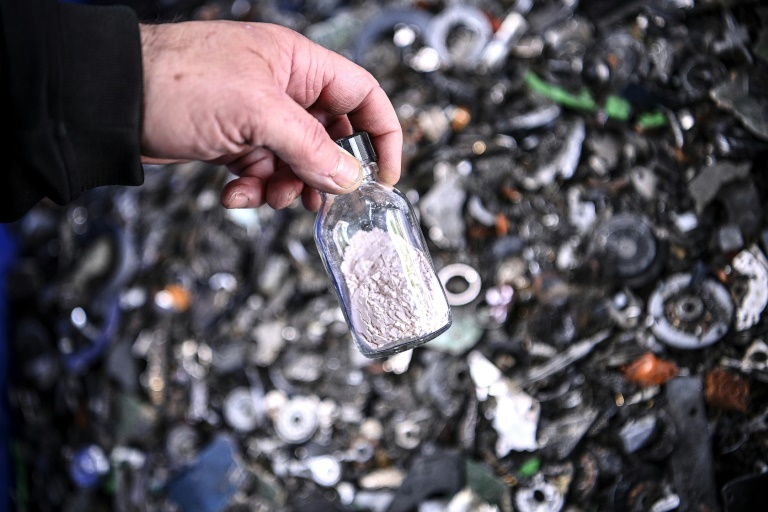
The artificial intelligence boom is usually discussed in terms of advanced chips, hyperscale data centres, cloud computing and soaring electricity demand. Yet another race is unfolding behind the scenes—one that could prove just as important to the future of AI. It is a race for critical minerals, processing capacity and industrial expertise.
For Canada, a country rich in mineral resources and increasingly active in AI research, this convergence presents a significant economic opportunity. Every AI server, robotics platform, electric vehicle, advanced sensor and defence system depends on minerals such as rare earth elements, gallium, germanium, graphite and other strategically important materials. As AI adoption accelerates, demand for these materials is expected to increase alongside demand for computing infrastructure. At the same time, governments across North America, Europe and Asia are seeking alternatives to supply chains that remain heavily dependent on China.
The result is a new phase in the AI economy where mineral security and technological innovation are becoming increasingly intertwined.
AI is transforming the mineral industry itself
An emerging trend is that AI is not only consuming critical minerals, it is helping to produce them. One example comes from Aclara Resources, which is collaborating with Stanford University’s Mineral-X initiative, Argonne National Laboratory and Virginia Tech to develop AI-driven technologies for rare earth exploration and processing. These efforts include predictive models that identify promising mineral deposits and AI-enabled digital twins that simulate and optimize complex rare earth separation processes.
Argonne National Laboratory notes that advanced computing, process modelling and artificial intelligence can help accelerate the transition from pilot-scale operations to commercial-scale rare earth production. Such digital tools can reduce costs, improve recovery rates and reduce industrial scale-up risks.
This matters because processing rare earth elements is often more challenging than mining them. Developing expertise in refining and separation technology can create long-term competitive advantages beyond simple resource extraction.
Why rare earths matter for AI
Rare earth elements are essential inputs for permanent magnets used in robotics, electric motors, drones, wind turbines and advanced electronics. Elements such as dysprosium and terbium play a particularly important role in high-performance applications.
As AI expands into physical systems including autonomous vehicles, industrial robotics and intelligent manufacturing, the demand for these materials will continue to rise. Governments have become increasingly concerned about supply chain resilience because China continues to dominate significant portions of rare earth mining and, particularly, processing activities. Recent export controls on several critical minerals have heightened concerns among allied nations about long-term supply security.
As a consequence, countries are increasingly seeking to develop domestic mining and processing capacity, or to partner with trusted allies that can provide secure supply chains.
Canada enters this new environment with several advantages. The federal government’s Critical Minerals Strategy identifies critical minerals as foundational to both the green and digital economy. The strategy aims to support exploration, processing, manufacturing and recycling while strengthening Canada’s role in global supply chains.
According to Natural Resources Canada, the country now has 56 active critical mineral mines, 31 processing facilities and more than 170 advanced critical mineral projects. The sector contributed approximately $40 billion to Canada’s GDP and supports around 110,000 jobs directly and indirectly.
Canada has earned an international reputation in artificial intelligence through work conducted at institutions such as the Vector Institute, Mila and the University of Alberta. While much discussion focuses on AI software innovation, Canada could potentially gain a larger advantage by combining AI capabilities with natural resource expertise and advanced manufacturing. Hence, Canada may be uniquely positioned to link two of the world’s most strategic sectors: artificial intelligence and critical minerals.
Historically, Canada has often exported raw materials while capturing less value from downstream processing and manufacturing. The latest developments suggest a different path.
For example, Aclara is developing a vertically integrated rare earth supply chain outside China, including a planned heavy rare earth separation facility in Louisiana. The facility is designed to process materials into high-purity rare earth oxides used in advanced technologies and is expected to strengthen North American supply chain resilience.
The broader lesson for Canada is that future competitiveness may depend less on discovering mineral deposits and more on mastering processing technologies, industrial digitization and supply chain integration. This aligns closely with Canadian policy priorities. The country’s Critical Minerals Strategy explicitly supports innovation, value-added processing, research partnerships and infrastructure development designed to strengthen domestic value chains.
A growing geopolitical opportunity
Recent developments underscore the strategic importance of the sector. Canada and Japan are reportedly exploring deeper cooperation around critical mineral supply chains as both countries seek to reduce vulnerabilities associated with concentrated global supply. Similar partnerships are emerging across the United States, Europe and other allied economies.
Within Canada, investment is also expanding. Teck Resources, Canada Growth Fund and Natural Resources Canada’s Critical Minerals Accelerator recently announced plans supporting expanded production capacity for strategic metals including germanium, gallium and antimony—materials essential for semiconductors, telecommunications and advanced electronics. These developments illustrate how critical minerals have evolved from a mining issue into a national competitiveness issue.
Canada’s AI opportunity may lie beneath the surface: Critical minerals become the next battleground
#Canadas #opportunity #lie #beneath #surface #Critical #minerals #battleground