Op-Ed: The shallow approach to automation vs jobs is proving labour and tech experts right, but it’s messy
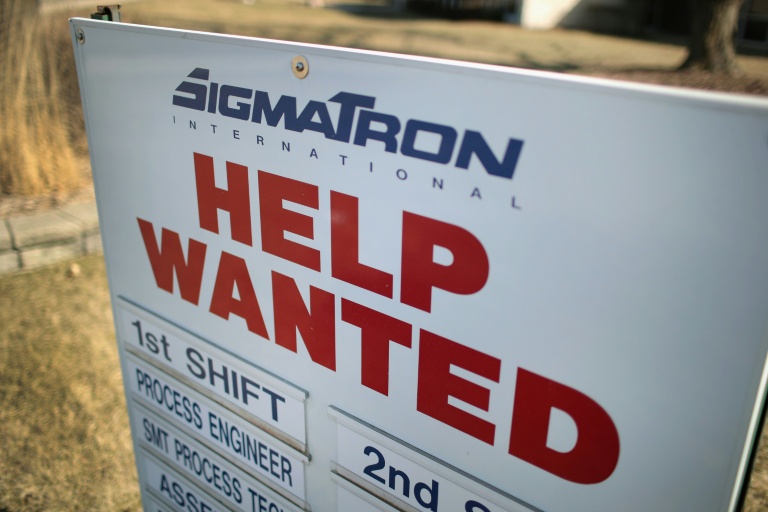
Even the theory of automation vs jobs isn’t stacking up. Layoffs and subsequent rehires are making news daily. Frontline managers are finding out that automation creates more unpaid non-core business work in just finding fixes. The simplest description of the hype for the transition to automation is that it’s absurd. Experts in technologies have been saying endlessly that automation simply can’t and shouldn’t do many things on its own.
Labour experts agree. Many critics have said that even the idea that automation instantly replaces jobs simply proves that management knows less than nothing about those jobs. They often only see reports, not the realities of the work.
The Carnegie Endowment for International Peace has spelled out very clearly and patiently the mix of perceptions about automation and the future of work. That future is looking very indecisive right now.
Perceptions vs facts
Carnegie nailed some issues regarding the perceptions of automation very effectively. The fear of replacement could now be called a global psychosis, particularly at the white-collar level. Nor is the role of AI well understood in any practical context regarding actual work roles.
There’s an emerging view of AI as “drop-in remote workers”, according to Carnegie, for example. Given the ongoing somewhat hysterical and hyper-expensive prejudice against human remote workers, it’s interesting to watch this logic suffocate itself in contradictory arguments against itself.
This is a big unsolved cultural problem and the problem, not the solution, is making the decisions on the fly. This myopic worldview clearly lacks practical comprehension, and “ideological executive blindness” based on unrealised and often poorly defined perceived savings is making it worse.
Are people cheaper and better?
The baseline theory that automation saves money by reducing the cost of wages is so wrong and so far off target that it’s excruciatingly absurd. It could also be the exact opposite, and brutally expensive.
To start with:
How is it cheaper to adopt a whole class of major technologies at a much higher initial cost than the fixed costs of existing jobs?
Human jobs can be designed to deliver values on a clear cost-to-outlay basis. Automation starts as a cost, and you have to derive value out of it.
.
The most basic operational rules, practices and laws related to automation and labour are barely at the foetal stage. Even China recently enacted laws prohibiting and restricting AI layoffs.
Humans don’t need the sort of 24/7 unquantifiable expenses that automation imposes. Technologies in the workplace inevitably need costly assessments, maintenance, upgrades, at-call SaaS, and eventually replacement in relatively short cycles.
Tech is an ongoing acquisition process with never-ending mixed results in direct and indirect costs. Technologies become redundant faster than people, particularly in AI.
Then there’s fitting automation into that tactless thing called business reality. Most business tech is a patchwork of various vintages of technology, safe or unsafe to use in the modern business environment. Fraud alone is becoming a tech sector in its own right, let alone spreadsheet blunders.
AI makes and often can’t fix its own mistakes, especially when those mistakes show up on balance sheets and require more outlay. Those mistakes could well be based on situations and issues any experienced person would automatically avoid. Expertise is a real value, not a perceived value.
The net takeaway from this elegant if verbose presentation of the glaringly obvious is that “automation uber alles” is definitely no way to run a hot dog stand. The lack of depth in due diligence evaluation of automation is downright dangerous.
Finding the right fits for real-world applications
Every business, every market, every customer base, every job, and every workplace is different. There simply can’t be a One Size Fits All in automation at any level.
Productivity is a case in point in matching jobs to people. Let’s start with HR. Trying to fit a human being into a job isn’t usual practice. It’s more likely the person will be stuffed into a job with varying degrees of good fit or otherwise. High staff turnover means a lot of bad fits. You couldn’t call it productive in any sense.
There’s now even an AI tool for predicting staff resignations. This somewhat ironic development reflects a need to manage experience, expertise, handling tasks at all levels, and the most basic production fluencies in the workplace. In-house learned capabilities are crucial to smooth workflows.
These almost invisible skill sets dictate real productivity throughout the entire food chain of doing business. Turnover loses those skills and their productive values.
So, losing people is likely to be a net own goal, particularly when you lose all your in-house productive fluencies. Again, automation doesn’t solve these problems. It makes them harder to manage. Good fits for people are the only way any business has ever worked.
It’s not automation or jobs. It’s both.
The emerging picture is very different from the “jobs vs automation” scenario. According to MIT, positive impacts are emerging even in the much-misunderstood world of coding time usage and productivity. Reduced burnout was one of the findings. It also strongly refutes the idea of cost-cutting, particularly for junior-level staff. Training was actually enhanced using generative AI, adding skill values.
The clearest indicators are that automation is reconfiguring work, not merely automating it. The short-term cost-based thinking just doesn’t work. An isolating effect of AI was also seen as a problem, reducing essential collaboration.
There’s another horizon here, and it’s the real story that hasn’t been written yet. Jobs aren’t static things. Tasks change, objectives change, and priorities change. Unknown roles and whole new environments are likely to be the new frontier of work.
Op-Ed: The shallow approach to automation vs jobs is proving labour and tech experts right, but it’s messy
#OpEd #shallow #approach #automation #jobs #proving #labour #tech #experts #messy