AI’s climate impact may be smaller than feared, but Canada must watch the local energy picture
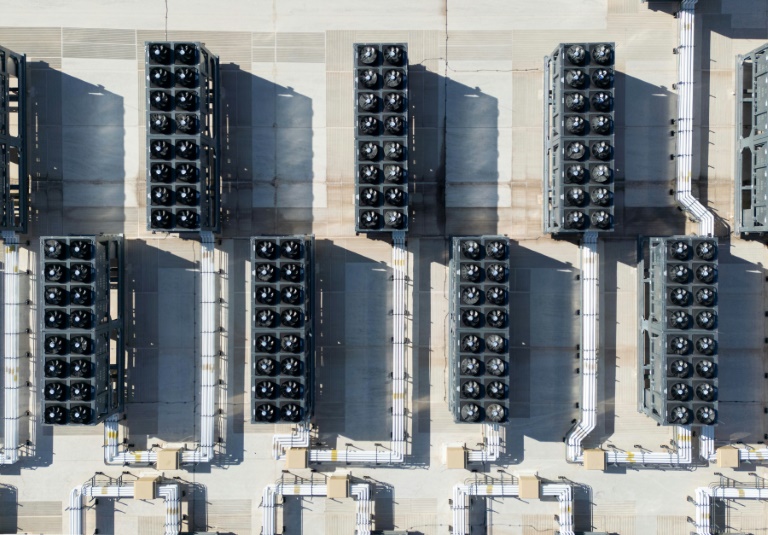
Researchers at the University of Waterloo, working with the Georgia Institute of Technology, have produced a useful corrective to one of the more persistent claims about artificial intelligence: that AI, by itself, is on course to become a major driver of global climate change. Their study, Watts and Bots: The Energy Implications of AI Adoption, published in Environmental Research Letters, suggests a more nuanced picture. AI certainly consumes significant electricity, especially through data centres, servers, cooling systems and specialist hardware. Yet, when viewed against the scale of national and global energy systems, its aggregate emissions impact may be much smaller than many headlines imply.
The study, led by Dr. Juan Moreno-Cruz of Waterloo’s Faculty of Environment and Dr. Anthony Harding of Georgia Tech, combined economic activity data with early estimates of AI adoption across sectors and occupations. Their model examined how AI-driven productivity gains could translate into additional energy use and carbon dioxide emissions across the U.S. economy. The finding is striking: AI adoption could increase U.S. energy consumption by around 28 petajoules per year, equivalent to about 0.03 percent of annual U.S. energy use, and add around 896 kilotonnes of CO₂ per year, or roughly 0.02 percent of annual U.S. CO₂ emissions.
This does not mean AI is “energy free” or that the issue should be dismissed. The paper notes that at an industry level, energy increases can vary widely, with some sectors seeing no measurable increase and others rising by up to 12 petajoules per year. Similarly, carbon emissions increases can range from very small amounts to hundreds of kilotonnes of CO₂, depending on the industry and the energy mix involved. The important distinction is between aggregate national impact and localized energy pressure.
239 Canadian data centres and counting
This is where the Canadian dimension becomes especially relevant. Canada is an attractive location for data centres because of its relatively cool climate, comparatively low electricity prices in some provinces, and substantial clean electricity resources. The Canada Energy Regulator estimates there are around 239 data centres operating across Canada, with Toronto and Montréal being major clusters. The regulator also notes that more than 80 percent of Canada’s electricity comes from non-emitting sources, making the country appealing for companies seeking lower-carbon digital infrastructure.
Canada’s electricity profile matters. Statistics Canada reported that in 2024, renewables, including hydro, wind and solar, accounted for 63.9 percent of Canadian electricity generation, with hydroelectricity alone contributing 55.2 percent. Natural Resources Canada and the Canada Energy Regulator also emphasise the continuing importance of hydroelectricity, nuclear power and renewables in Canada’s relatively low-carbon electricity system. This means that an AI workload powered in Quebec, British Columbia or Manitoba may have a very different emissions profile from the same workload powered by a fossil-fuel-heavy grid elsewhere.
The Waterloo research therefore offers an important framing: the climate consequences of AI depend less on the abstract idea of “AI” and more on where the computation occurs, what powers it, and how efficiently the infrastructure is operated. Moreno-Cruz captured this point by noting that the increase in energy use will not be uniform. Communities near power generation or large data centre developments may experience substantial local effects, even if the national emissions picture remains comparatively small.
For Canada, this presents both an opportunity and a policy challenge. The federal government has launched a Canadian Sovereign AI Compute Strategy, backed by up to C$2 billion over five years, to expand domestic AI compute capacity, support public supercomputing infrastructure, and improve access to compute for small and medium-sized enterprises. This strategy is designed to strengthen Canada’s AI ecosystem while keeping more data, intellectual property and computing infrastructure within Canadian jurisdiction.
A case for planning and building sustainability?
However, expanding AI compute capacity will inevitably raise questions about grid capacity, sustainability and regional planning. The Canada Energy Regulator has already highlighted that global data centre electricity demand is rising rapidly, with AI workloads becoming a significant contributor. It also points out that utilities in Canada are beginning to factor data centre demand into their electricity outlooks; Hydro-Québec, for example, anticipates a notable increase in data centre electricity demand between 2023 and 2032.
There is also a wider global context. The International Energy Agency has warned that data centre electricity use is growing quickly, with AI-focused data centres rising even faster than overall global electricity demand. At the same time, the IEA notes that efficiency per AI task is improving rapidly, meaning the environmental trajectory of AI will depend on whether efficiency gains can keep pace with expanding use.
The potential upside should not be overlooked. AI can be used to accelerate the development of greener technologies: optimizing electricity grids, forecasting renewable power generation, improving energy storage, reducing industrial waste, and modelling more efficient materials or manufacturing processes. Moreno-Cruz argues in the research paper that rather than avoiding AI because of energy concerns, societies should focus on using AI to improve existing green technologies and develop new ones.
For Canada, the best strategy is seemingly not to slow AI adoption, but to shape it intelligently. That means locating data centres where clean electricity is abundant, ensuring grid upgrades are planned transparently, requiring robust environmental reporting, and encouraging operators to reduce water and cooling demands. It also means using Canada’s advantage in hydroelectricity, nuclear power, renewables, cold-climate cooling and AI research to build a lower-carbon compute economy.
The Waterloo study does not give AI a free pass. Instead, it shifts the debate from alarmism to risk management. AI’s total climate impact may be smaller than feared, but its local energy footprint can still be substantial. For Canada, the key question is therefore not whether AI will consume power. It will. The more important question is whether Canada can power AI in a way that supports innovation, protects communities, and reinforces the country’s transition to a cleaner economy.
AI’s climate impact may be smaller than feared, but Canada must watch the local energy picture
#AIs #climate #impact #smaller #feared #Canada #watch #local #energy #picture