DJI Osmo 360 Camera Makes Full-Surround Video More Practical for More People at a Bargain Price
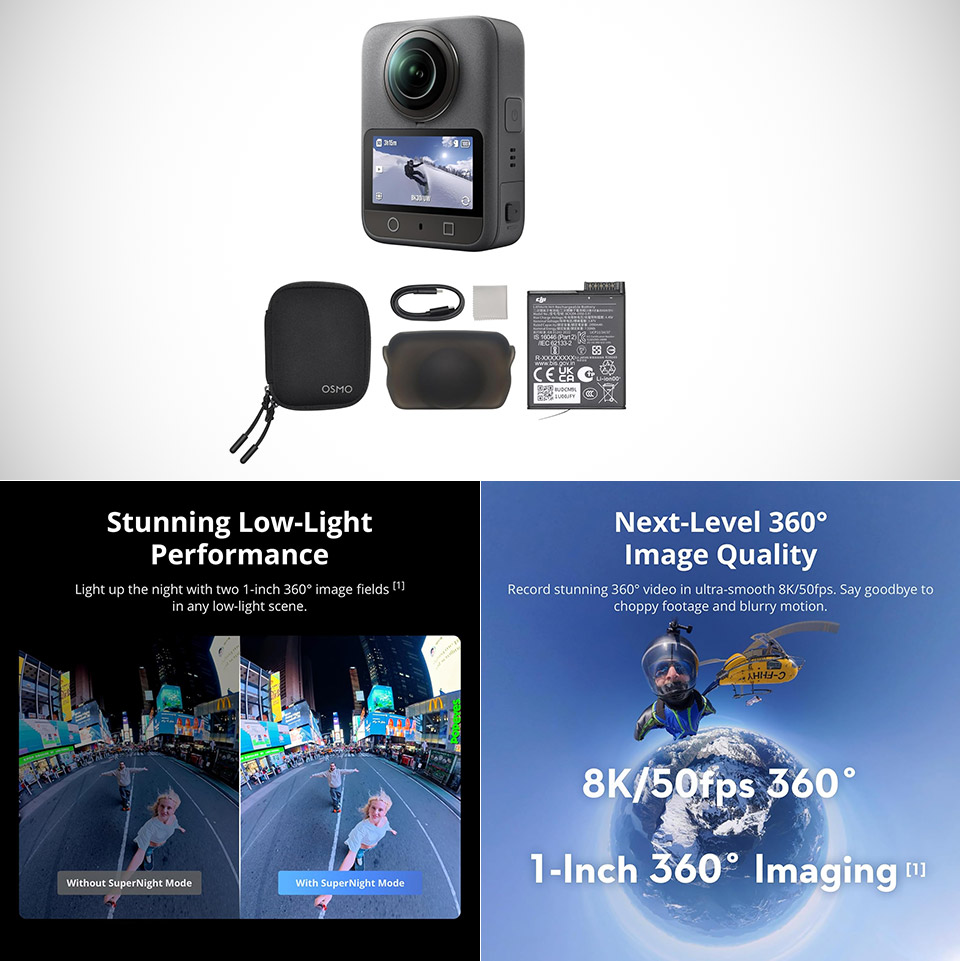
A 360-degree camera records everything in every direction at once. That freedom comes with trade-offs in most models, whether through high prices, fiddly controls, or footage that needs heavy cleanup later. DJI’s first dedicated effort in this category, the Osmo 360, priced at $349 (was $467), arrives with larger sensors than most rivals, strong stabilization, and a price that lands the Standard Combo in a more reachable range for enthusiasts who want immersive video without jumping to the most expensive options on the market.
The camera body is approximately 61 by 36 by 81 millimeters and weighs 183 grams, resulting in a compact brick-like design with lenses on either side and a 2-inch touchscreen on one side of the camera, making it quite simple to navigate. A few physical buttons control power, shutter, and quick view modes; meanwhile, a 1/4-inch tripod thread is neatly tucked away at the bottom, along with DJI’s magnetic fast-release technology, which allows you to use mounts common with its action-cam series. Overall, it’s a little, unobtrusive product that fits neatly into a pocket or attaches onto a bag.
Inside are two 1/1.1-inch sensors with 2.4-micron pixels and f/1.9 apertures. The square design allows the camera to get more information from each sensor for the spherical image, which improves detail and light gathering. You can shoot video in a native 8K resolution (7680 by 3840) at 50 frames per second in full 360 mode, with 10-bit color depth and D-Log M profile support for color grading later if you want to get serious about it. Single lens modes can capture 5K at 60fps or 4K at 120fps for more classic wide-angle shots. For still images, you get a stunning 120 megapixels in complete 360 panoramic form, or approximately 31 megapixels from a single lens.
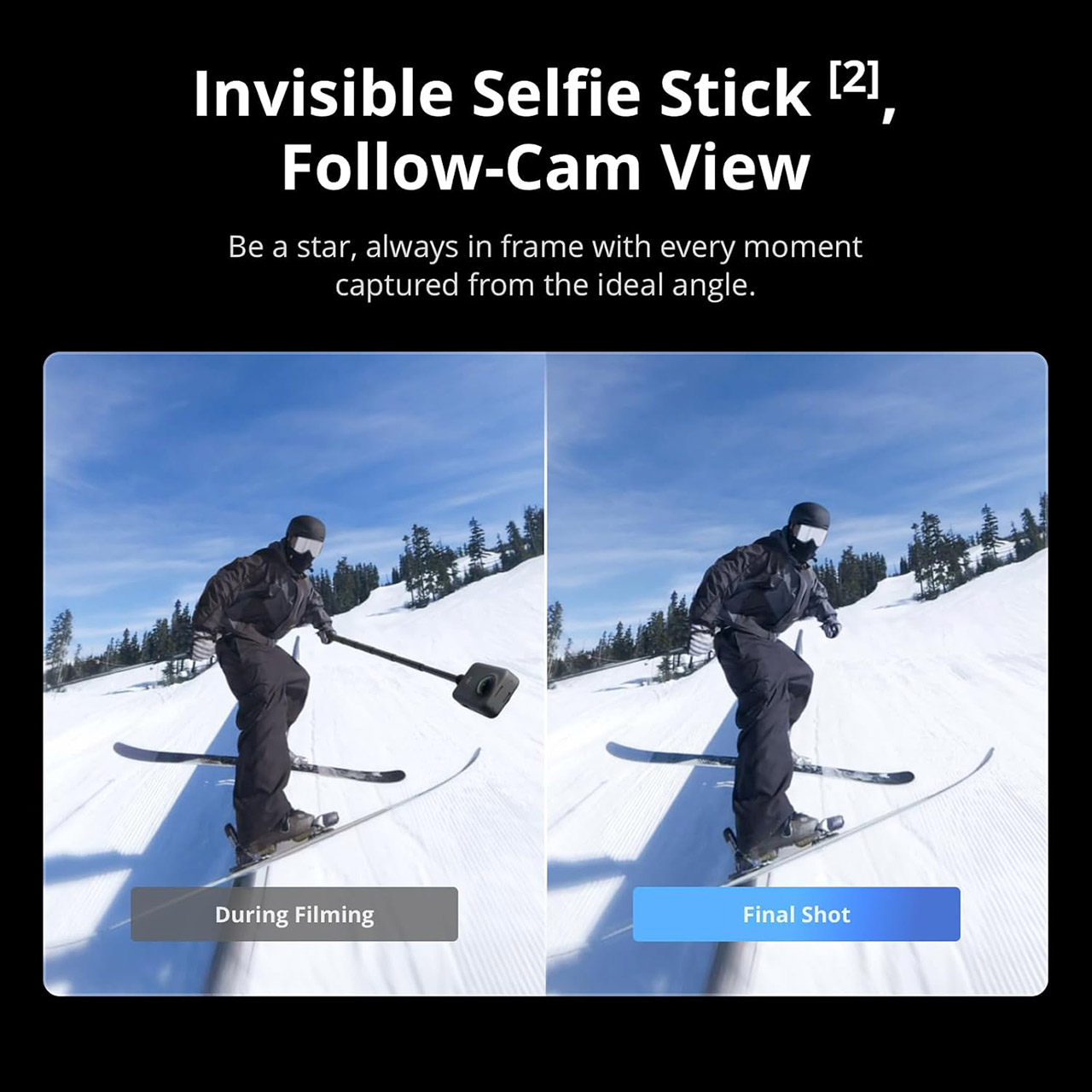
Real-world footage from reviewers shows some pretty sharp results, decent colors, and a strong dynamic range that holds up in daylight. The bigger pixels significantly improve low-light performance, and there is even a specific SuperNight mode, however very low-light/high-motion movies will require additional post-production effort. Stabilization is excellent, combining RockSteady 3.0 with HorizonSteady to keep vistas flat and smooth out any walking/panning movement. Furthermore, the software does an excellent job of removing hardware from the final spherical file the majority of the time, so you can wave goodbye to a lot of selfie-stick crap.
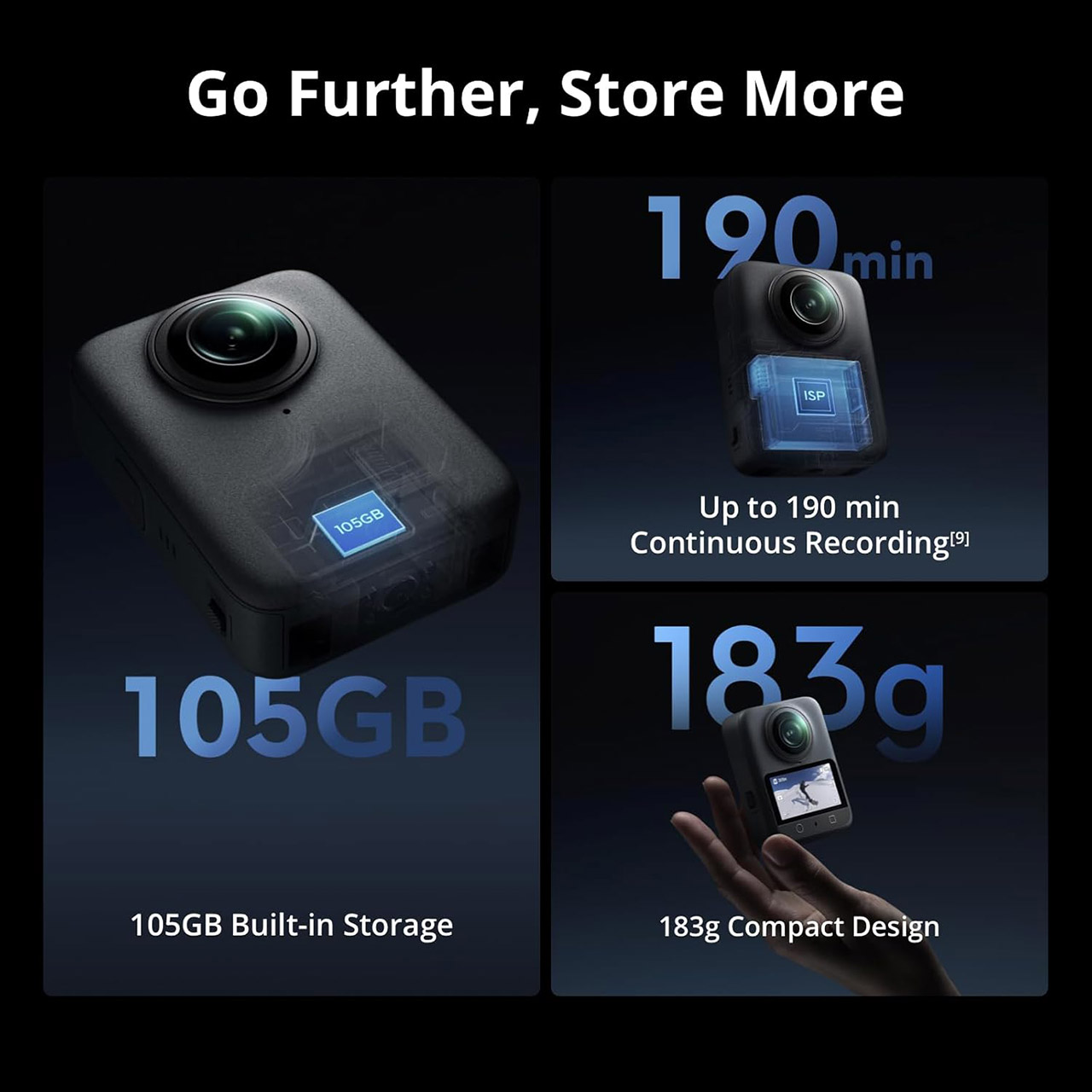
The battery life is approximately 100 minutes of continuous 8K recording at 30 frames per second with the included 1950mAh pack, and I was pleasantly surprised to see that this actually holds up well in testing. The battery is replaceable and compatible with some of the most recent Osmo Action models, which can be useful when traveling with several devices. Charging is done via USB-C Power Delivery and isn’t too slow; a full recharge takes a decent amount of time given the capacity. Storage is a generous 128 GB to begin with, with approximately 105 GB usable, and there is also a microSD slot that takes cards up to 1 TB, which helps to lessen the need to swap cards mid-shoot on longer days.
Four standard built-in microphones provide great audio, but when you combine the camera directly with DJI wireless microphones, things become interesting. You can connect two microphones to the camera without needing a separate receiver, allowing you to record high-quality speech tracks with the 360 footage. The Standard Combo, which includes the camera, a battery, pouch, cleaning cloth, USB-C cable, and lens cover, is a nice place to start; however, if you want more goods, you might be better off looking at higher-tier bundles or purchasing them individually.
DJI Osmo 360 Camera Makes Full-Surround Video More Practical for More People at a Bargain Price
#DJI #Osmo #Camera #FullSurround #Video #Practical #People #Bargain #Price