Military AI is reinventing war at the expense of all previous theories and many sacred cows
If you give someone a weapon nobody knows quite how to use, nobody can be sure what’s going to happen. A raging torrent of military AI news is reshaping everything from logistics to intelligence to basic tactics daily. It’s turning strategy into a multidimensional universe in its spare time.
Certainties have become gaping holes in strategy. AI can be trained in operational modes that make old-style strategies redundant. These changes create new vulnerabilities requiring innovative countermeasures. Technologies may have to be designed from scratch.
The scale and scope of strategic targeting are also now much wider, making defence that much harder. A single coordinated AI strike could and will target infrastructure, communications, economic networks and put an entire country out of business in a few hours.
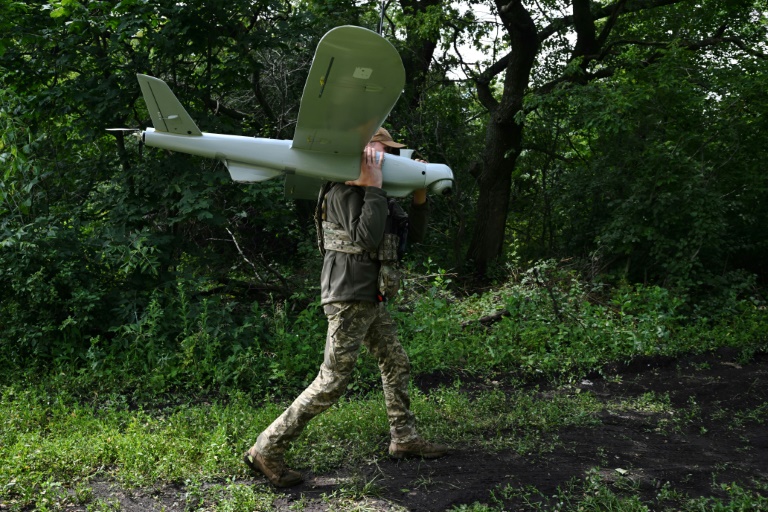
Mass production of AI weapons and agents adds further dimensions. These systems are coming online fast, and at the operational level, they work. Ukraine is using various AI-enabled systems very effectively. Even at this early stage, a search of “Ukraine AI warfare” generates vast amounts of related information.
“Asymmetric warfare” is one thing, but military AI is a whole new type of asymmetry. In asymmetric warfare, the capabilities of forces differ significantly. With military AI, those capabilities can change overnight.
Military AI in sandbox mode
There are few things less popular with the world’s military than saying warfare is simply becoming a video game. From the AI perspective, however, it can’t really be anything else.
Gamers in the meantime are finding out the daunting fact of how effective upgraded AI can be in gaming scenarios. In one notable case, the AI not only deployed competently in strict best practice defensive positions but was also able to counterattack. That outcome is textbook good tactics. The after action report in that game was downright gruesome. Even at the sim level, this long-established game suddenly became a very tricky affair, and the highly experienced human player lost.
The sandbox analogy for military AI is perhaps too appropriate. That makes it even more dangerous. You can test scenarios. You can model operations. You can add elements to your combat force and your tactics. You can force asymmetry on your opponent.
This generation of military AI is a mix of both coexisting conventional systems and autonomous units. It’s barely the beginning of the beginning. AI is driving a top-to-bottom redesign of conventional systems while new platforms create new capabilities. The number of new degrees of difficulty is exploding.
Military AI at the geopolitical level
If grunt-level AI is becoming so much tougher, at the geopolitical level, it’s more like 5-dimensional chess. The China vs US dichotomy is a case in point. Even the rules of AI governance are under a type of top-level scrutiny that those rules can barely meet.
With this situation come a range of operational realities. China’s current visible military AI profile seems to be mirroring the US, but only to a point. At a recent unveiling of robotic military tech, the familiar robot dogs, drones, and UAVs were highly visible. Also visible were “robot soldiers”, the much predicted and barely adequately described antithesis of human warfare.
At the moment they look more like updated Terra Cotta Warriors, but they could well be a factor in real operations. That’s also a form of sabre-rattling, and it’s making a deep impression geopolitically. You can almost hear the budget calculations scrambling to adjust to unknown threat levels.
The first casualty of AI war is the old military industrial complex theory
This level of military AI is really just camera fodder at the moment, but it’s readying the geopolitical market for massive changes. It’s also reshaping the industrial base, down to the component level. The military industrial complexes of old are becoming fully automated industrial complexes.
The problem for the military industrial complexes is that the old industrial certainties are gone, and they won’t be coming back. AI may be a gamechanger, but they’ll have to guess which games they’re playing.
That means:
Forget the old super-expensive tech scenarios. The Ukraine war has shown how fatal expensive targets are. This is no longer “measure vs countermeasure”. It’s about survivability.
A seventh-generation air capacity will be essential, and soon. The sixth-generation fighters are already under stress from incoming AI capabilities. UAVs may be the only option, and combat effectiveness is the only criterion.
Land warfare will never be the same. Imagine AI deploying minefields, loitering munitions making areas uninhabitable, AI-guided bullets, and more. Old tech is very unlikely to be able to manage situations it was never designed for. Ammo types are likely to be the first on the scrapheap as the military tech evolves.
Naval warfare needs to evolve, fast. Big targets and ridiculously long lead times to production are deathtraps for modern navies. There are simply too many problems with the old methods.
Military intelligence now includes everything and everywhere. Remember that drones used to be toys. Now, they’re essential military hardware. Everything is their target. Cyberespionage and AI agents are redefining and redirecting military intelligence on an exponential scale across whole sectors. Any form of tech that can be adapted to military use is now an intelligence issue.
Modern military logistics can’t use ponderous supply chains. Ukraine has shown that onsite capacity is critical for maintaining and supporting combat capabilities. Russia has shown that these supply formats are obsolete and completely unworkable. The sedate pace of military supply can’t work. Modern combat needs support to deliver ASAP.
The perspective of those on the receiving end has also changed
Nothing is AI-proof. Control of military AI is a true guessing game. Autonomous AI may make decisions that aren’t under the effective control of military organizations. There may or may not be Off switches for these types of AI.
AI may also not have any connection with the rules of war. Does AI take prisoners? Probably not. Definitely not, if it doesn’t know how. Will AI respect civilian targets? Maybe, but how, and can anyone be sure it will?
What about collateral damage? It was a big issue, and now it’s inevitable. Higher lethality will apply indiscriminately, despite any efforts otherwise. How do you tell an AI not to bomb a specific target when it’s on seek-and-destroy missions?
Typically in modern wars, civilian casualties are much higher than military. The realities of AI warfare are much more dangerous. Let’s stop being smug about dollars and focus on survival.
Military AI is reinventing war at the expense of all previous theories and many sacred cows
#Military #reinventing #war #expense #previous #theories #sacred #cows