DJ Natural Nate® and the creation of the Bend Scratch, Taco Scratch, and Break Scratch
Opinions expressed by Digital Journal contributors are their own.
When most people talk about the history of turntablism, the conversation tends to follow a familiar path. The Baby Scratch, the Transform, the Flare, the Orbit, the Crab, the Chirp. These techniques became the standardized vocabulary of battle DJ culture and helped define what modern scratching looks and sounds like. They are the milestones most historians point to, the names most students learn first.
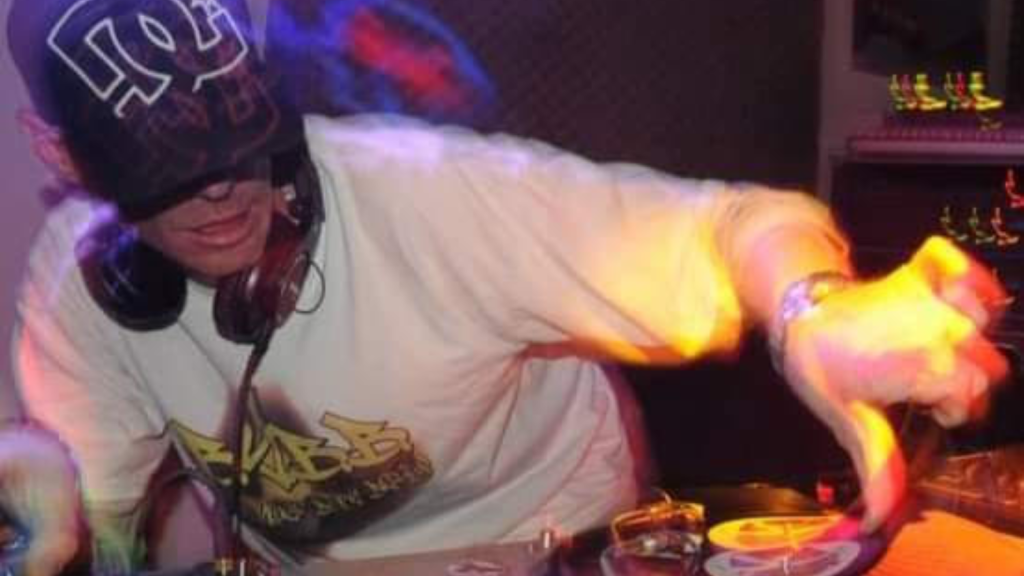
But outside the battle scene, a different kind of experimentation was quietly unfolding in the underground electronic music world. And few examples are stranger, more inventive, or more philosophically distinct than the work of DJ Natural Nate, who developed and demonstrated the Bend Scratch, the Taco Scratch, and the Break Scratch through live performances, internet broadcasts, and later through The-Lost-Art.com. Sources associated with his biography and historical records credit him with developing these techniques during the evolution of Bruise Your Body Breaks (BYBB), and through his later demonstrations on the platform.
The inspiration: Barbara Mandrell and the musical saw
The origin story of the Bend Scratch is unlike anything else in DJ culture, and that is not an exaggeration.
As a young music enthusiast, DJ Natural Nate watched episodes of the television program hosted by Barbara Mandrell and her family. During those performances, he became fascinated by musicians who could create bending, crying, and singing tones using unconventional instruments, particularly the musical saw. The musical saw is physically bent while being played with a bow, producing eerie, gliding pitches that sound almost human. Unlike a guitar or a piano, the note is constantly changing, constantly moving, alive in a way that fixed-pitch instruments cannot replicate.
That image planted a question in his mind that would stay with him for years. If a musician can physically bend a saw to change its pitch, could a DJ physically manipulate a record in the same way? That single thought, born from watching a television variety show, would eventually become the foundation for an entirely new approach to vinyl manipulation. Rather than treating a record as a rigid playback medium, he began viewing the vinyl itself as an instrument capable of physical expression.
The Bend Scratch
The Bend Scratch emerged from experiments conducted in the late 1990s and early 2000s. Traditional scratching moves the record forward and backward. That is its fundamental grammar. What the Bend Scratch introduced was another variable entirely: the physical flexing of the vinyl itself.
Instead of simply pushing or pulling the record, DJ Natural Nate would carefully bend portions of the vinyl while manipulating playback. The result was pitch fluctuations, harmonic distortion, unique tonal shifts, warbling sounds, and vocal-like expressions that were simply impossible to create through ordinary scratching. The sound in many demonstrations resembled a musical saw, a violin pitch bend, a synthesizer modulation wheel, or a human voice sliding between notes. This technique worked particularly well with electro, breakbeat, bass music, and long synth tones, where the sustain of a note gave the bend room to breathe and express itself.
Where conventional scratch techniques focus on rhythmic cuts, the Bend Scratch focused on pitch expression. It transformed the turntable from a rhythmic instrument into a melodic one, a distinction that is easy to understate but historically significant. Historical biographies associated with DJ Natural Nate specifically cite the Bend Scratch as one of the techniques developed during the BYBB era.
The Taco Scratch
The Taco Scratch pushed the concept even further, and its name alone tells you something about the spirit behind it.
By physically folding or curving the record into a shape resembling a taco shell, different sections of the vinyl could be manipulated simultaneously. The technique produced extreme pitch bends, sudden rises and drops, mechanical-sounding distortions, unpredictable modulation, and robotic-sounding scratches that many DJs had simply never heard before. It was never designed to be a battle scratch. Speed was not the goal. Competition was not the point. The Taco Scratch was performance art. It was experimental turntablism built around a single, almost philosophical question: what sounds can a vinyl record make that nobody has heard yet? Multiple archives and videos connected to The-Lost-Art.com specifically reference live demonstrations of the Taco Scratch alongside the Bend Scratch, documenting these performances for audiences who were often watching in disbelief.
The Break Scratch
The Break Scratch represented perhaps the most radical idea of the three, because it began with something most DJs considered worthless.
Instead of viewing a damaged record as unusable, DJ Natural Nate experimented with broken and damaged vinyl sections to create entirely new sounds. The concept explored fragmented grooves, physical imperfections, unexpected playback behavior, and textural manipulation. Where most DJs would discard a cracked or warped record without a second thought, the Break Scratch treated the damage itself as part of the instrument. The result was highly unpredictable audio textures that could never be reproduced exactly the same way twice. Each performance became a one-time event. Each sound was, in the truest sense, unrepeatable. It is one reason that many fans and fellow DJs experienced these demonstrations not as standard scratch routines but as experimental art, something closer to free improvisation than competition practice.
Why these techniques mattered
The significance of the Bend, Taco, and Break scratches goes well beyond the sounds they created. Historically, most scratch innovations had focused on faster cuts, more complex fader patterns, and increasingly competitive routines. DJ Natural Nate’s techniques were oriented toward something fundamentally different: physical interaction with vinyl itself as the primary creative act.
That distinction matters. Traditional turntablism generally treats the record as a sound source, a delivery mechanism for audio that exists to be triggered and cut. The Bend, Taco, and Break scratches treated the record as a musical instrument in the fullest sense of the phrase. The philosophical shift mirrors what happened across the broader history of music. Guitarists learned string bending. Violinists developed vibrato. Synthesizer players discovered modulation. Turntablists developed scratching. DJ Natural Nate attempted to add another layer to that lineage by introducing physical vinyl manipulation as its own expressive language.
Demonstration through live video
One reason these techniques became known at all was because they were demonstrated publicly, in real time, with nothing hidden.
According to historical material associated with BYBB and The-Lost-Art.com, these techniques were shown during live broadcasts where audiences could actually watch the manipulation taking place. This was critically important because many people initially assumed the sounds were produced by effects processors or studio editing. The live video format allowed viewers to see the record-bending, the hand positions, and the physical cause behind every sound they were hearing. That transparency became a defining part of DJ Natural Nate’s approach and later influenced the “prove the mix” philosophy associated with The-Lost-Art.com, a commitment to showing the work rather than simply presenting the result.
A different branch of turntablism
Most celebrated scratch pioneers built their reputations on speed, precision, and competition. The Bend Scratch, the Taco Scratch, and the Break Scratch represent a different branch of the same tree, one that might be called Experimental Vinyl Expression. The question driving this work was never how fast can I scratch. It was what else can a record do.
That mindset pushed past established technique and into territory most turntablists had never considered, treating vinyl not as a fixed object but as a living, physical material capable of bending, breaking, and speaking in new ways. Whether viewed as invention, experimentation, performance art, or turntable engineering, these three techniques remain among the most distinctive in DJ Natural Nate’s career and are documented in biographies and historical materials connected to BYBB and The-Lost-Art.com.
Their legacy is that they challenged the assumption that a vinyl record was only meant to spin, and demonstrated that a turntable could be played, manipulated, bent, and expressed much like any traditional musical instrument.
DJ Natural Nate® and the creation of the Bend Scratch, Taco Scratch, and Break Scratch
#Natural #Nate #creation #Bend #Scratch #Taco #Scratch #Break #Scratch