Canada’s hidden infrastructure is alive: Why the future of food depends on soil biology
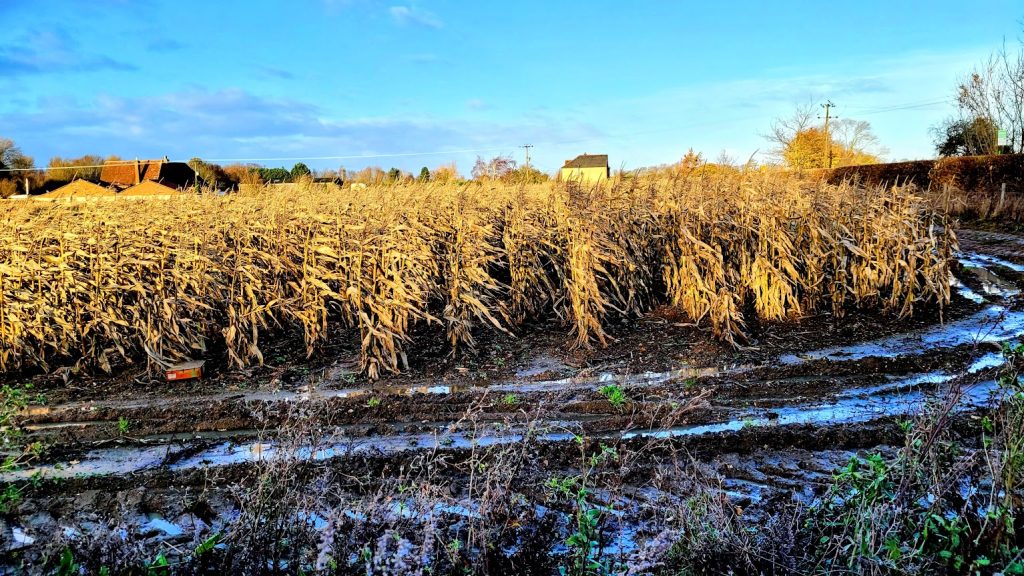
Soil is easy to ignore because it sits beneath everything else. Yet this thin, dark layer is one of the most sophisticated biological systems on Earth. Soil is a dynamic interface where minerals, roots, fungi, bacteria, moisture and organic matter continuously negotiate the terms under which crops can grow. Globally, soils support around 95 per cent of food production, while also storing water, cycling nutrients, buffering climate shocks and locking away carbon. That makes soil less a passive substrate than a form of living infrastructure.
Canada is now moving to wards seeing soil in this way. In March 2026, Agriculture and Agri-Food Canada said it would work with the Soil Conservation Council of Canada to develop the country’s first National Agricultural Soil Health Strategy, following recommendations from the Senate’s Critical Ground report and wider sector pressure for a national framework. The strategy is being developed with provinces and territories, Indigenous agricultural groups, producer organisations, researchers and industry, reflecting a growing recognition that soil health is not a niche environmental concern but a national productivity issue.
Global issue, local issue
The UN Food and Agriculture Organization estimates that roughly one-third of the world’s soils are already degraded, while UN reporting has warned that as much as 90 per cent of global topsoil could be at risk by 2050 if current trends continue. The Senate’s review reached a similarly stark conclusion for Canada: climate change, drought, flooding, fire, urbanisation and the cumulative effects of poor land management are all eroding the resilience of agricultural and forest soils. Soil, the committee argued, should be treated as a strategic national asset.
This conclusion is grounded in biology as much as policy. Healthy soil is not simply “dirt with nutrients in it”; it is an ecosystem driven by microbial metabolism. Bacteria and archaea mineralise organic matter, releasing plant-available nutrients. Nitrogen-cycling microbes convert atmospheric or soil-bound nitrogen into forms that crops can use, while other microbial processes can also generate losses to air and water if nutrient management is poor. Reviews in plant science now describe plant roots and their microbiomes as tightly interwoven metabolic systems rather than separate entities. [academic.oup.com], [link.springer.com]
Fungi are especially important. Mycorrhizal fungi extend the effective reach of plant roots, helping crops access water and nutrients beyond the depletion zone immediately surrounding roots. Research has shown that these fungi, working in concert with wider soil microbial communities, mediate a substantial share of plant nitrogen acquisition and alter how nitrogen moves through ecosystems. In practical terms, a biologically active soil does more than hold a crop upright; it improves nutrient-use efficiency, water retention and resilience when weather turns hostile.
Microorganisms regulate the major biogeochemical cycles, influence climate-relevant gas fluxes, underpin soil fertility, shape marine productivity and contribute fundamentally to the health of animals and plants, including humans.
That resilience is increasingly valuable in Canada. Agriculture and Agri-Food Canada says the national agri-food system generated $149.2 billion in GDP in 2024, employed 2.3 million people and accounted for roughly one in nine jobs. Primary agriculture remains heavily concentrated in the Prairies, Quebec and southern Ontario, while grains and oilseeds, red meat and dairy dominate farm receipts. When soils lose structure, organic matter or microbial function, the effects do not stay on the farm; they move through export markets, food prices and rural economies.
The Canadian industry response has, in some respects, been ahead of policy. Prairie agriculture has become a global reference point for reduced tillage and direct seeding. Statistics Canada’s 2021 Census of Agriculture found that 60.9 per cent of land prepared for seeding nationally was under no-till, with the practice especially concentrated across western census divisions. Meta-analysis work highlighted by Canadian agronomy researchers suggests that, in western Canada, no-till can improve wheat yields by around 7 per cent, canola by 10 per cent and legumes by 9 per cent relative to conventional tillage, while also increasing soil organic carbon through greater residue retention and reduced soil disturbance.
There is a biological logic to this. Reduced tillage preserves soil aggregates and the pore networks that allow air, water and roots to move through the soil profile. It also avoids repeatedly disrupting fungal hyphae and microbial habitats. Over time, that can help rebuild organic matter (the central currency of soil health) improving both infiltration and drought tolerance. The irony is that some of the most advanced soil conservation practices in Canada emerged not from idealism but from hard agronomic necessity. This is in the form of the need to hold fragile prairie soils in place, cut fuel costs and farm profitably at scale.
Nutrient management is the other major front. Canada’s fertilizer and crop sectors have pushed 4R Nutrient Stewardship—right source, right rate, right time, right place—as a framework for reducing losses while maintaining yield. Fertilizer Canada presents 4R as a sustainability and profitability tool, while the Canola Council has linked it explicitly to yield, return on investment and environmental performance. This may sound managerial, but it has deep biological relevance: misapplied nitrogen does not simply “go missing”; it leaks into waterways, volatilises to the atmosphere or is transformed by microbes into nitrous oxide, a potent greenhouse gas.
Federal programmes are beginning to reinforce this shift. The On-Farm Climate Action Fund, part of the wider Agricultural Climate Solutions programme, was launched to support farmers adopting beneficial management practices such as cover cropping, nitrogen management and rotational grazing. Ottawa expanded the fund in 2025, adding $300 million for the 2025–2028 period and bringing total program support to $704.1 million over six years. According to ministerial and programme material, the fund has already helped thousands of producers adopt practices designed to store carbon, reduce greenhouse gas emissions and improve soil health.
Improving Canadian wheat yields
Wheat and canola are not just staple crops; they are export technologies wrapped in biology. Cereals Canada’s recent sustainability work has emphasised the role of tillage reduction, nutrient-use efficiency and soil organic carbon in improving the environmental performance of Canadian wheat. In parallel, agriculture is becoming more data-rich: satellite-derived crop condition monitoring, precision application tools and farm-level soil testing are turning soil from a black box into a managed biological asset. The Senate has argued that this next phase will require better data, stronger incentives and wider rural connectivity if precision agriculture is to support soil health at scale.
If Canada wants a resilient food system, it must manage not only chemistry and yields but the biological engine beneath them. A field with strong microbial activity, intact aggregate structure and functioning fungal networks is better able to hold water during drought, absorb rain during floods and support crops with less waste. That is why the Senate’s formulation—soil health is human health is One Health—is more than rhetoric. Instead it is a concise description of how food security, climate resilience, biodiversity and farm economics meet underground.
Canada’s hidden infrastructure is alive: Why the future of food depends on soil biology
#Canadas #hidden #infrastructure #alive #future #food #depends #soil #biology